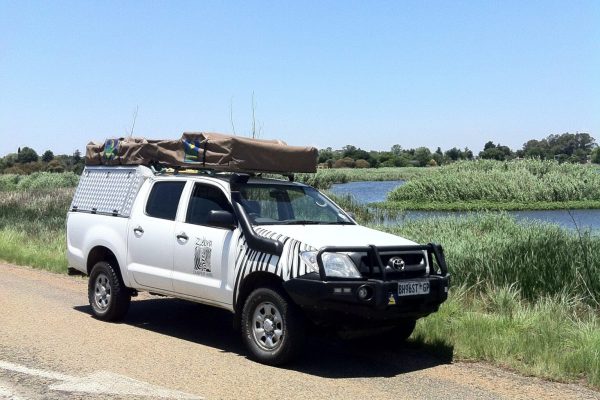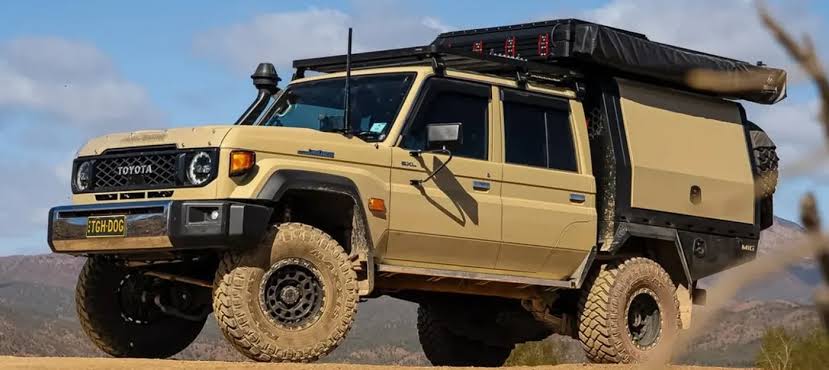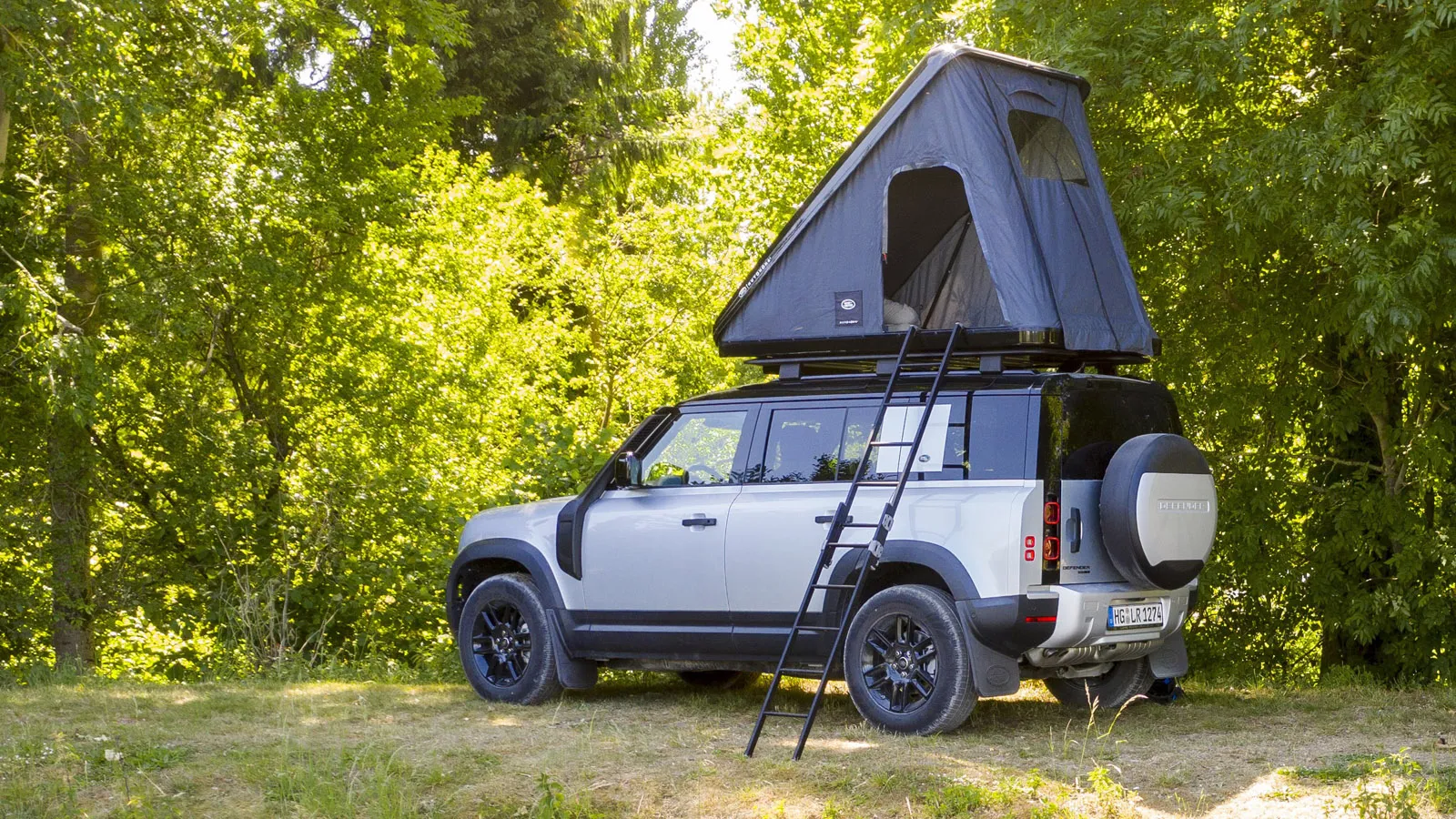
Rooftop Tent Hire Kenya gives independent travelers an affordable and flexible way to combine a…
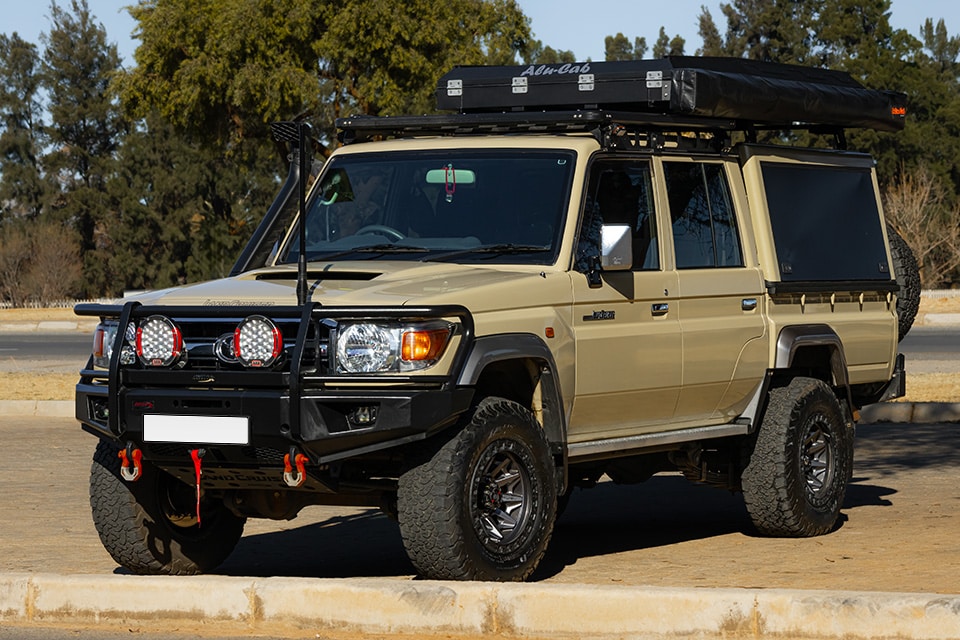
Land Cruiser roof-tent hire Uganda
Land Cruiser roof-tent hire Uganda is one of the most flexible ways to explore the Pearl of Africa. With a capable 4×4, camping equipment and a comfortable rooftop tent, you can turn a normal safari into a true African road trip.
Instead of moving from lodge to lodge every night, your accommodation travels with you. You can explore national parks, forest regions, lakes and remote roads at your own pace. At the end of the day, simply reach your campsite, open the tent and settle in for the night.
For many travelers, Uganda roof tent hire offers the ideal balance between freedom, comfort and adventure.
Uganda is especially well suited to this type of journey. The country combines paved highways with dirt roads, mountain routes and national park tracks. Therefore, a strong 4×4 can make a major difference.
A Toyota Land Cruiser gives you useful ground clearance, strong suspension and plenty of room for luggage. Add a rooftop tent, fridge, camping chairs and cooking equipment, and you have a practical mobile safari camp.
The experience also gives you more freedom than a fixed lodge safari.
You may wake beside a national park, enjoy an early game drive and then continue toward another region. On other days, you can stay longer in one destination and enjoy a slower pace.
This complete guide explains everything you should know about Uganda roof tent hire. It covers Land Cruiser models, rooftop tents, rental costs, camping gear, driving conditions, national parks, gorilla trekking, fuel planning, insurance, border crossings and the best self-drive safari routes.
Why Uganda Roof Tent Hire Is Perfect for a Self-Drive Safari
A normal rental car gives you transportation. A rooftop camper gives you transportation and accommodation at the same time.
That difference changes the entire safari experience.
With Uganda roof tent hire, travelers can plan a journey around campsites rather than hotels. This creates more freedom when visiting national parks and remote areas.
You are also closer to nature.
Imagine finishing a game drive in Queen Elizabeth National Park and returning to camp as the sun goes down. Later, you prepare dinner beside your Land Cruiser. Afterward, you climb into your tent and listen to the sounds of the African night.
The following morning, you wake early, close the tent and continue the journey.
There is no hotel checkout.
There is no need to repack your suitcase every day.
Most of your equipment remains inside the vehicle throughout the trip.
For couples, photographers and independent travelers, this simple style of travel can be very rewarding.
Families can also enjoy a rooftop tent safari. However, they should choose a vehicle with enough sleeping and luggage space.
What Is Uganda Roof Tent Hire?
Uganda roof tent hire normally means renting a 4×4 vehicle with a rooftop tent fitted to a strong roof rack.
The tent folds down while you drive.
Once you arrive at camp, you open it and extend a ladder. Most tents contain a mattress and provide enough sleeping space for two adults.
Some Land Cruisers can carry two tents.
This makes them suitable for families or groups of three to four travelers.
There are also larger family-style rooftop tents. Their design and capacity vary between rental companies.
The vehicle may come with full camping equipment as well.
A good camping setup often includes a table, chairs, cooking stove, gas cylinder, kitchen utensils, water container, sleeping equipment and cooler box or refrigerator.
However, packages are different.
One Uganda car rental company might include all camping equipment in the daily rate. Another may charge separately for the tent, fridge or cooking equipment.
For this reason, always compare complete packages.
Land Cruiser Roof-Tent Hire Uganda Versus a Normal Rental Car
Travelers planning a simple trip between Kampala, Entebbe and Jinja may not need a large Land Cruiser.
A national park safari is different.
Uganda’s safari routes can include gravel roads, potholes, steep hills and muddy tracks. During the rainy season, conditions may change quickly.
A Toyota Land Cruiser gives you extra ground clearance and proper four-wheel-drive capability.
That does not mean every road will be difficult. Many routes between the country’s main destinations are straightforward.
However, a capable vehicle gives you more confidence when conditions become rough.
The extra space is also valuable.
Camping equipment takes up room.
Besides personal luggage, you may carry drinking water, groceries, cooking tools, chairs, bedding and camera equipment.
A small SUV can quickly become crowded.
With the correct Land Cruiser, everything can be stored more efficiently.
That is one reason Uganda roof tent hire remains popular among travelers planning long self-drive safaris.
Why Choose a Toyota Land Cruiser for Uganda Roof Tent Hire?
Toyota Land Cruisers have been used throughout East Africa for decades.
Their reputation comes from durability, off-road ability and widespread availability of mechanical support.
That last point is important.
Even a good safari vehicle can have a mechanical problem. When a common vehicle is used throughout the region, finding mechanics and spare parts may be easier than with a rare model.
Land Cruisers also come in several forms.
A Prado may suit a couple.
A GX or VX can provide more space.
A V8 can offer strong performance and comfort.
Meanwhile, the classic 70 Series appeals to travelers planning serious overland journeys.
The right choice depends on your route, group size, budget and preferred level of comfort.
Best Land Cruiser Models for Uganda Roof Tent Hire
There is no single Land Cruiser that suits every traveler.
Different models serve different needs.
Before booking Uganda roof tent hire, ask which exact vehicle you will receive.
Photos are useful, but specifications are even more important.
You should know the fuel type, transmission, seating arrangement, tent configuration and storage space.
Uganda Roof Tent Hire With a Land Cruiser Prado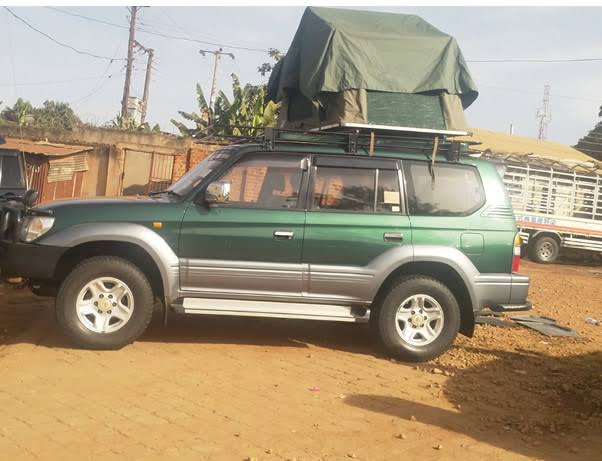
The Toyota Land Cruiser Prado is one of the most practical choices for couples.
TX and TZ models are common in East African rental fleets.
They are usually easier to drive than larger expedition vehicles. At the same time, they provide enough ground clearance for many popular Uganda safari routes.
A Prado with one rooftop tent works well for two travelers.
There is usually enough interior space for luggage and camping gear if you pack sensibly.
Some models use diesel engines, while others use petrol.
Automatic and manual versions are also available.
For travelers planning Bwindi, Lake Mburo, Queen Elizabeth, Kibale and similar routes, a well-maintained Prado can be a strong option.
Uganda Roof Tent Hire With a Land Cruiser GX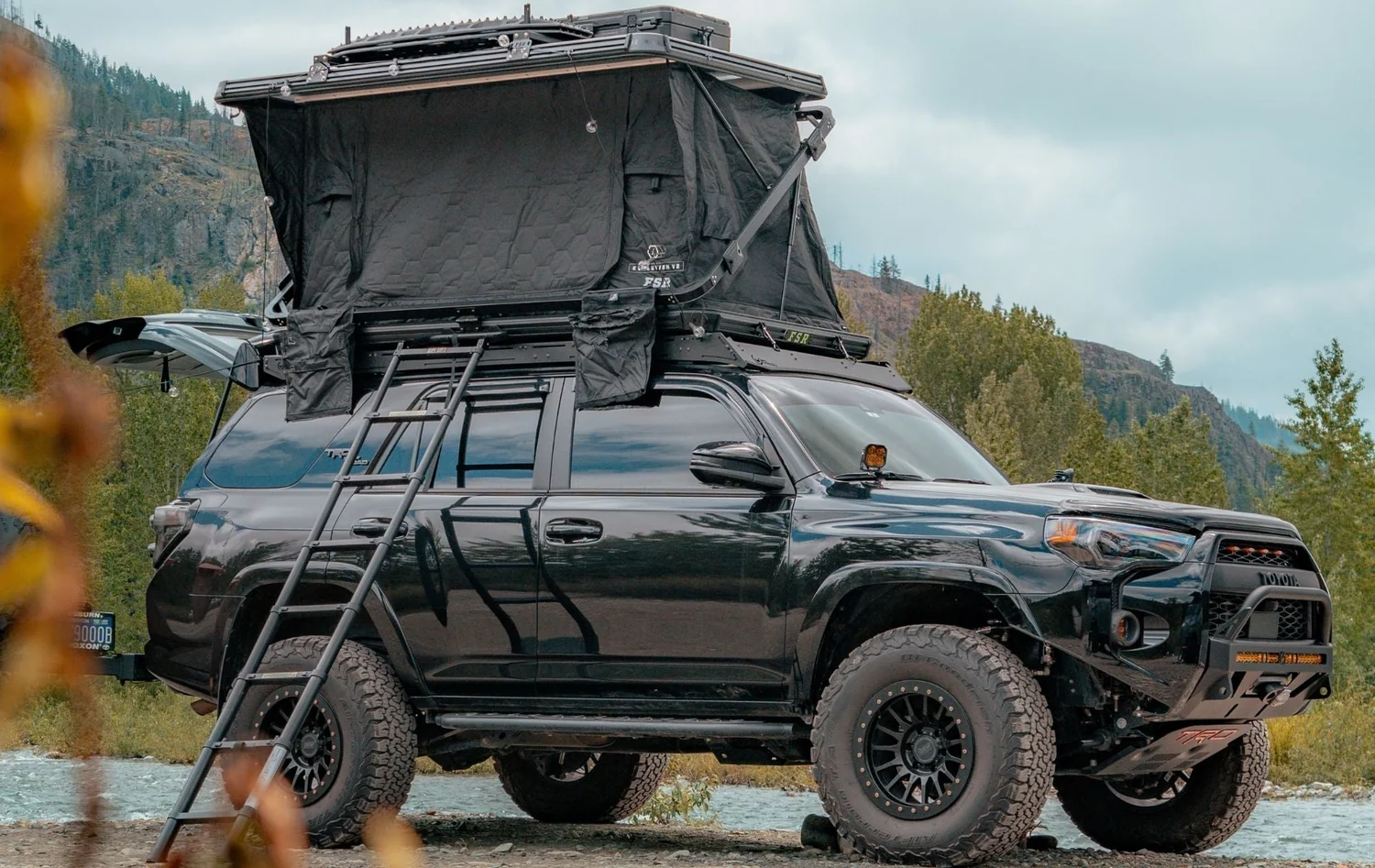
The Land Cruiser GX is popular with overland travelers because it combines strength with useful interior space.
Many GX vehicles can be fitted with one or two rooftop tents.
This makes them attractive for couples, friends and small families.
Diesel versions are especially popular for long road trips.
The larger body also gives travelers more storage space for camping equipment.
If you are planning several weeks on the road, that extra room can make daily life much easier.
Land Cruiser VX Rooftop Tent Rental
A Land Cruiser VX offers a similar advantage.
It provides a strong platform for camping equipment and works well on long-distance safaris.
Depending on the setup, a VX can carry more than one rooftop tent.
Before confirming the booking, ask how luggage is stored.
A vehicle may technically seat five people, but five people plus tents, food, water and luggage can become crowded.
Comfort matters on long driving days.
Land Cruiser V8 Roof-Tent Hire Uganda
The Land Cruiser V8 is another popular option.
It is strong, spacious and comfortable.
Some rental companies offer V8 vehicles with single or double rooftop tents.
A V8 can be particularly attractive for photographers carrying large camera bags and equipment.
Families may also appreciate the space.
However, fuel use can be higher.
This matters on a long Uganda road trip.
Do not compare vehicles only by the daily rental rate. Include fuel in your budget as well.
Land Cruiser 76 and 78 Series for Uganda Camping Safaris
Travelers planning remote routes may prefer a Toyota Land Cruiser 76 or 78 Series.
These vehicles have a reputation for rugged overland travel.
They are less focused on luxury.
Instead, they are designed around durability and load-carrying ability.
That makes them attractive for remote destinations such as Kidepo Valley National Park.
A 70 Series vehicle may also suit longer East African expeditions into Rwanda, Kenya or Tanzania.
On the other hand, the ride can feel more basic than a Prado or V8.
Choose the vehicle according to your journey rather than appearance alone.
Uganda Roof Tent Hire for Couples
Couples are ideal candidates for Uganda roof tent hire.
One tent is usually enough.
Luggage is easier to manage, while camp setup remains quick and simple.
Costs are also shared between two travelers.
A couple can rent a Land Cruiser, carry camping equipment and design a flexible safari without paying for a lodge every night.
That does not mean you need to camp throughout the entire holiday.
Many couples combine camping with lodge stays.
For example, you might camp in Lake Mburo, Queen Elizabeth and Murchison Falls. Later, you could book a lodge near Bwindi before gorilla trekking.
This mix gives you adventure without giving up every comfort.
It can also work very well for an active honeymoon.
Uganda Roof Tent Hire for Families
Family camping requires more planning.
A single rooftop tent normally cannot comfortably accommodate a large family.
Therefore, you may need two tents or a larger family-style setup.
Ask the rental company about the actual sleeping dimensions.
Do not rely only on the number of people shown in an advertisement.
Storage matters as well.
Four travelers need more clothes, water, chairs and cooking equipment.
A larger Land Cruiser may therefore be the better choice.
Driving distances should also remain realistic.
Adults may enjoy a seven-hour overland journey. Young children often do not.
Plan shorter days and spend more than one night at key destinations.
The goal is to enjoy Uganda, not simply cover the most kilometers.
Uganda Roof Tent Hire for Solo Travelers
Solo travelers can also enjoy Uganda roof tent hire.
The main advantage is complete freedom.
You control the route, pace and schedule.
However, solo driving creates extra responsibility.
There is nobody else to navigate while you drive.
Likewise, you handle all vehicle checks, tent setup and cooking yourself.
For an experienced independent traveler, that can be part of the appeal.
A smaller Land Cruiser Prado may be more practical than a large expedition vehicle.
It can also reduce fuel costs.
If you are less confident with remote driving, consider adding a local driver-guide for difficult sections.
Uganda Roof Tent Hire for Wildlife Photographers
Photography and self-drive safaris work very well together.
You can wait longer at a sighting without worrying about another group.
Morning and evening light can guide your schedule.
A Land Cruiser also provides space for camera equipment.
However, photographers should think about charging.
Ask whether the vehicle has USB ports, 12-volt sockets or an inverter.
A second battery system can be valuable when running a refrigerator and charging devices.
Protect equipment from dust.
A good camera bag is essential.
It is also wise to back up your photographs during the trip.
Long safaris can produce thousands of images.
Single or Double Rooftop Tent?
A single rooftop tent usually sleeps two adults.
Therefore, it is suitable for solo travelers and couples.
A double rooftop setup can provide sleeping space for three or four travelers.
However, tent capacity is only one part of the decision.
A vehicle carrying two tents also needs enough roof strength and interior storage.
Ask where your luggage will go.
Check whether the rear seats remain fully usable.
You should also confirm the vehicle’s roof rack setup.
A professional Uganda roof tent hire company should explain these details clearly.
Soft-Shell Rooftop Tents in Uganda
Soft-shell tents are common on safari vehicles.
They fold into a compact shape when you are driving.
At camp, the tent opens sideways and often creates a larger sleeping platform.
Soft-shell designs can be comfortable and practical.
They are also widely available.
The main point is condition.
Check the fabric.
Look at the mosquito screens.
Test the zippers.
Make sure the ladder feels stable.
An expensive tent with broken zippers will not improve your safari.
Hard-Shell Rooftop Tents
Hard-shell tents are becoming more common.
They usually open faster than traditional folding tents.
The rigid shell can also protect the tent during travel.
Some travelers prefer them because setup and packing are simple.
However, they can cost more.
Availability may also be limited.
For a normal Uganda safari, condition and setup matter more than the brand.
A clean and well-maintained soft-shell tent is better than a poorly maintained premium hard-shell model.
What Should Uganda Roof Tent Hire Include?
The contents of a rental package can vary widely.
For that reason, never assume that a low advertised price includes everything.
A complete Uganda roof tent hire package may provide a rooftop tent, mattress, bedding, chairs, table, gas stove, kitchen utensils, water storage and refrigerator.
Other operators charge separately for some of these items.
Ask for a written camping inventory.
This makes comparison much easier.
Pay attention to small items too.
A cutting board, can opener or cooking knife can make life easier at camp.
Lighting also matters.
A headlamp is useful even when the rental provides a camp lantern.
Camping Fridge and Cooler Box
A refrigerator is one of the best additions to a long camping safari.
It keeps drinking water cold.
You can also carry fresh food for longer periods.
However, ask how the fridge receives power.
Some safari vehicles use a dual-battery system.
This allows camping equipment to run from an auxiliary battery rather than the main starter battery.
Simpler vehicles may use one battery.
Understanding the system is important.
You do not want to wake in the morning with cold drinks and a Land Cruiser that cannot start.
If the rental includes a fridge, test it before departure.
Kitchen Equipment for Uganda Roof Tent Hire
Cooking on a self-drive safari does not need to be complicated.
Simple meals work best.
Pasta, rice, vegetables, eggs, bread and grilled food are easy to prepare.
Fresh supplies are available in towns along many major routes.
Stock up before entering remote areas.
A good camping set should provide the basic tools needed for meal preparation.
Keep the cooking area clean.
Food scraps can attract animals.
Inside national parks, always follow the campsite’s food-storage rules.
Wildlife should never associate people with food.
Sleeping Equipment and Bedding
Find out whether bedding is included.
Some Uganda roof tent hire companies provide pillows, sheets and sleeping bags.
Others only provide a mattress.
This matters because Uganda has different climates.
Nights around Entebbe can feel warm.
Mountain regions around Bwindi and Mgahinga can become much cooler.
A lightweight blanket may not be enough everywhere.
Ask about expected temperatures before traveling.
If you are sensitive to cold, bring an additional warm layer.
Comfort improves sleep, and good sleep improves driving.
Uganda Roof Tent Hire Cost
There is no single price for Uganda roof tent hire.
Rates depend on the Land Cruiser model, rental period, season, number of tents and equipment included.
Current rental listings in Uganda show a wide market range.
Some basic Land Cruiser and rooftop tent combinations are advertised from roughly US$75–100 per day. Larger or more fully equipped options can rise well above US$120–150 per day.
Prices can change, so use these figures only as a planning guide.
Long-term rentals often receive better daily rates.
A rental lasting three weeks may cost less per day than one lasting four days.
Extra equipment can change the final amount too.
A fridge, second tent, GPS unit or additional insurance may cost more.
Always ask for the total price.
What Is Usually Excluded From Uganda Roof Tent Hire?
Fuel is normally separate.
Park entrance fees are also separate unless you book a complete safari package.
Likewise, gorilla permits, chimpanzee permits, campsite charges and meals are usually not part of a vehicle-only rental.
Border paperwork may also involve an extra fee.
Insurance often has conditions and exclusions.
Read them carefully.
A cheap daily price is not useful if important costs appear after booking.
Ask for a final quote that clearly shows what is included and excluded.
How to Compare Uganda Roof Tent Hire Prices
Start with the complete package.
Do not compare one advertised number with another.
One rental company may advertise a lower vehicle price but charge extra for the tent.
Another company may include a tent, chairs, table, bedding and fridge.
The second quote could be better value.
Vehicle condition should also influence your decision.
Losing safari days because of mechanical problems can cost far more than saving US$10 per day.
Support matters too.
A dependable rental company should be reachable when you need help.
That is especially important if you plan to travel far from Kampala.
Self-Drive Uganda or Driver-Guide?
Both options work.
The best choice depends on your confidence and travel style.
Self-drive gives you complete control.
You decide when to leave camp and how long to stay at wildlife sightings.
It also creates a stronger road-trip feeling.
On the other hand, a driver-guide removes much of the stress.
Local guides understand road conditions, park layouts and driving culture.
They may also know productive wildlife areas.
For first-time visitors to East Africa, this knowledge can add real value.
You can still enjoy rooftop camping even when traveling with a guide.
Uganda Roof Tent Hire and Self-Drive Freedom
The greatest appeal of Uganda roof tent hire is independence.
Your route does not need to revolve around hotel check-in times.
Instead, you can build the journey around parks, campsites and experiences.
A beautiful viewpoint can become an unplanned stop.
You may spend longer photographing wildlife.
Perhaps you decide to stay a second night at a campsite you love.
This flexibility is difficult to achieve on a tightly scheduled group safari.
However, freedom still needs planning.
Gorilla permits are date-specific.
Popular campsites can fill up.
Border paperwork must be arranged in advance.
Good preparation gives you more freedom once the journey begins.
Is Uganda Easy for Self-Driving?
Uganda can be an enjoyable self-drive destination, but conditions vary.
Many highways connecting important towns are paved.
National park tracks and rural roads can be rougher.
Rain may create mud.
Potholes can appear unexpectedly.
Traffic around Kampala can also be busy.
Drive defensively and leave enough time.
Distances on a map can be misleading.
A journey of 250 kilometers may take much longer than expected.
Roadworks, town traffic and mountain roads all affect travel time.
Avoid creating an itinerary that depends on perfect conditions every day.
Driving at Night in Uganda
Try to reduce long-distance driving after dark.
Visibility is lower.
Motorcycles, bicycles, pedestrians and animals may be difficult to see.
Some vehicles also have poor lighting.
Road hazards become harder to judge.
Instead, leave early.
Aim to reach your campsite before sunset.
You will have enough light to inspect the site, prepare dinner and open your rooftop tent.
This simple habit can make the safari safer and more relaxing.
Uganda Roof Tent Hire and Road Safety
A strong Land Cruiser does not remove the need for careful driving.
Speed should match road conditions.
Slow down on rough tracks.
Leave enough distance between vehicles.
Watch carefully for motorcycles when passing through towns.
Inside national parks, follow official speed limits.
Wild animals can cross the road without warning.
Off-road driving should never be attempted unless it is allowed.
Protected landscapes can be damaged easily.
Your 4×4 should help you travel responsibly, not encourage unnecessary risk.
Vehicle Inspection Before Starting Your Safari
Never rush the vehicle handover.
Walk around the Land Cruiser first.
Take photographs of existing scratches and body damage.
Check the tires.
The spare tire should also be inspected.
Make sure a jack and wheel tools are available.
Test the headlights, indicators and brake lights.
Turn on the air conditioning.
Check the windshield wipers.
Next, inspect the camping equipment.
Open the rooftop tent yourself.
Climb the ladder.
Check the mattress and mosquito screens.
Test the stove and refrigerator.
It is much easier to solve a problem in Kampala or Entebbe than in a remote national park.
Learn How to Use the Rooftop Tent
Ask the rental representative to show you how the tent works.
Watch once.
Then open and close it yourself.
This small practice session is valuable.
At a campsite, you may be setting up near sunset.
You do not want your first attempt to happen in darkness.
Make sure the tent is fully secured before driving.
Loose straps can damage the tent.
Likewise, bedding must be positioned correctly before folding the structure.
A few minutes of practice can prevent many problems.
Insurance for Uganda Roof Tent Hire
Insurance should be discussed before payment.
Ask what is covered.
Then ask what is not covered.
Find out the insurance excess.
Check the conditions for tire damage, glass damage, underbody damage and accidents.
Some policies exclude damage caused by driving on prohibited roads.
Others may not cover negligence.
Border travel can require additional insurance.
Do not rely on general statements such as “fully insured.”
Request clear terms.
Insurance becomes especially important during long self-drive safaris.
Roadside Assistance and Mechanical Support
Even a well-maintained Land Cruiser can have problems.
A puncture is possible.
A battery can fail.
A suspension component can break.
Therefore, roadside assistance matters.
Ask how the company responds when a vehicle cannot continue.
Do they send a mechanic?
Can they arrange repairs in another town?
Is replacement transport available after a major breakdown?
What happens outside normal office hours?
These questions become more important when your route includes Kidepo or other remote areas.
Good support is part of the rental product.
Best Time for Uganda Roof Tent Hire
Uganda can be visited throughout the year.
However, seasons influence road conditions and camping comfort.
Drier months often make self-driving easier.
Park tracks are generally more predictable, while packing and opening a tent is simpler when the fabric is dry.
Wet months have their own beauty.
Landscapes become green.
Clouds can create dramatic photography.
Some places may also feel quieter.
The main challenge is mud.
A route that is easy during dry weather can become difficult after heavy rain.
For this reason, a proper 4×4 becomes even more important.
Uganda Roof Tent Hire During the Rainy Season
Rain does not automatically ruin a camping safari.
A waterproof rooftop tent can remain very comfortable.
The key is preparation.
Keep rain jackets easy to reach.
Store electronics in waterproof bags.
Avoid packing wet bedding.
When possible, allow the tent to dry before folding it for a long period.
Road conditions should also guide your decisions.
If local drivers advise against a route after heavy rain, take that advice seriously.
A Land Cruiser is capable, but it is not unstoppable.
Turning around can sometimes be the smartest choice.
Camping Inside Uganda National Parks
Rooftop camping does not mean parking anywhere you like.
National parks operate designated campsites and rules.
Some sites are basic.
Others offer toilets, showers or cooking areas.
Facilities depend on the location.
Advance booking may be necessary.
Always check current regulations with Uganda Wildlife Authority or your tour operator before travel.
Fees and policies can change.
Wild camping inside protected areas should never be assumed to be allowed.
Use authorized sites and follow ranger instructions.
Uganda Roof Tent Hire in Lake Mburo National Park
Lake Mburo National Park makes an excellent beginning to a self-drive journey.
It is easier to reach from the Kampala and Entebbe area than many other safari parks.
Therefore, first-time self-drivers can use it as an introduction to Uganda’s park roads.
The landscape includes open grassland, woodland and wetland.
Zebras are one of the park’s most recognizable animals.
Travelers may also see buffalo, impala and many bird species.
A rooftop camping night here can be a gentle start before continuing toward southwestern Uganda.
From Lake Mburo, the route toward Bwindi or Queen Elizabeth becomes part of a classic Uganda road trip.
Uganda Roof Tent Hire for Bwindi Gorilla Trekking
Bwindi Impenetrable National Park is one of Uganda’s most famous destinations.
Many visitors come for mountain gorilla trekking.
Combining the experience with Uganda roof tent hire creates an exciting safari.
You can drive through rural landscapes before reaching the forested highlands.
However, gorilla trekking requires careful planning.
A gorilla permit is separate from ordinary vehicle rental.
Permit availability should be checked before fixing the entire road-trip schedule.
The permit also relates to a specific trekking location.
Bwindi has different sectors.
Your campsite or hotel should be selected according to your permit.
Do not assume all Bwindi locations are close to each other.
Mountain roads can make transfers longer than they appear on a map.
Camping Before Your Gorilla Trek
Arrive near the trekking point the day before.
Do not plan a long drive that reaches Bwindi late at night.
Gorilla trekking begins early.
A calm evening and good night’s sleep will help you enjoy the experience.
Prepare your trekking clothes before sleeping.
Keep rain protection ready.
Strong walking shoes are useful.
Depending on the trek, hiking may last several hours.
Afterward, consider spending another night nearby.
There is no need to rush away immediately after one of Africa’s most memorable wildlife experiences.
Uganda Roof Tent Hire in Mgahinga Gorilla National Park
Mgahinga is another strong destination for travelers exploring southwestern Uganda.
The park lies near the borders with Rwanda and the Democratic Republic of Congo.
Volcanic scenery dominates the region.
Travelers may combine mountain landscapes with gorilla trekking or golden monkey tracking.
The area also works well in a Rwanda-Uganda road trip.
If your Land Cruiser will cross the border, tell the rental company in advance.
Cross-border travel requires correct documents.
Never assume a vehicle can leave Uganda simply because you have rented it.
Uganda Roof Tent Hire in Queen Elizabeth National Park
Queen Elizabeth National Park fits naturally into many Uganda self-drive routes.
It can be reached after Bwindi or before traveling toward Kibale.
The park offers varied scenery and rich wildlife.
A 4×4 is especially useful on park tracks after rain.
Travel slowly.
Wildlife sightings are often better when you stop and observe.
There is little benefit in driving rapidly from one part of the park to another.
Camping allows you to remain close to the safari environment.
Early mornings then become easier.
Close your rooftop tent, organize the vehicle and begin the game drive while temperatures are still cool.
Ishasha and the Southern Sector
Travelers driving between Bwindi and central Queen Elizabeth often pass through the Ishasha region.
The area is famous for its wildlife and open landscapes.
Road conditions can vary.
Rain may make sections slower.
Therefore, ask for recent route information before departure.
A properly equipped Land Cruiser gives you a better margin of safety than a low-clearance road vehicle.
Still, drive according to the conditions.
Adventure does not require taking unnecessary risks.
Uganda Roof Tent Hire Around Kibale Forest
Kibale is another major stop on the western safari circuit.
The region is known for chimpanzee trekking.
Nearby Fort Portal also offers attractive crater landscapes and green highlands.
After several nights of camping, this can be a good place to slow down.
You might even book a lodge for one night.
There is no rule saying a rooftop camper must be used every evening.
Mixing camping with hotel stays can improve a long journey.
A hot shower and comfortable bed may feel especially good after several days on the road.
Uganda Roof Tent Hire in Murchison Falls National Park
Murchison Falls is another major destination for a Land Cruiser safari.
The Nile shapes much of the experience.
Travelers can combine game drives with boat activities and viewpoints.
Because distances can be significant, fuel planning becomes important.
Fill the tank before entering remote sections.
Do not wait until the fuel warning light appears.
Game drives can use more fuel than highway driving.
Low speeds, rough tracks and air conditioning all affect consumption.
Carrying tents, water and camping equipment also adds weight.
Keep a sensible reserve.
Uganda Roof Tent Hire for Kidepo Valley
Kidepo Valley National Park appeals to travelers seeking a more remote experience.
The journey is longer than the classic southwestern circuit.
That is part of its attraction.
Wide landscapes and distant mountains create a strong sense of wilderness.
For Kidepo, vehicle condition matters greatly.
Check tires carefully.
Carry a good spare.
Plan fuel stops.
Discuss current roads before leaving.
A properly maintained Land Cruiser is one of the best vehicles for this type of journey.
However, remote travel should be approached with patience.
Do not rush.
Jinja and the Nile
A rooftop-tent trip does not need to include only national parks.
Jinja can add variety.
The area is closely connected to the Nile and offers several adventure activities.
It can work well at the start or end of a road trip.
After many days of driving, a slower final stop can be refreshing.
You can relax before returning the vehicle.
This also gives you time to organize luggage and prepare for your flight.
Sipi Falls and Eastern Uganda
Eastern Uganda offers another change of scenery.
Sipi Falls and the Mount Elgon region attract travelers interested in hiking and landscapes.
Coffee experiences are also popular in the area.
Adding Sipi can make a longer Uganda road trip more diverse.
Instead of focusing only on wildlife, you experience rural communities and mountain scenery as well.
That is one advantage of having your own vehicle.
The road connects different sides of Uganda.
Seven-Day Uganda Roof Tent Hire Itinerary
Seven days is enough for a focused safari.
It is not enough to explore the whole country.
A good route can begin around Entebbe.
From there, travel toward Lake Mburo National Park.
Continue into southwestern Uganda for Bwindi and gorilla trekking.
Afterward, explore Queen Elizabeth National Park.
The final days can be used for the return toward Kampala or Entebbe.
This route combines wildlife, landscapes and primates.
More importantly, it keeps driving distances reasonable.
Trying to add Murchison Falls and Kidepo to the same seven-day trip would create too much driving.
Ten-Day Uganda Roof Tent Hire Itinerary
Ten days creates more freedom.
Begin with Lake Mburo.
Continue toward Bwindi.
Spend enough time in the gorilla region before driving toward Queen Elizabeth.
Next, travel through the western region toward Kibale.
Chimpanzee trekking can be included.
Depending on your pace, you may then return toward Entebbe or extend north.
Two-night stays become easier with ten days.
This improves the safari because you do not need to pack the rooftop tent every morning.
Slower travel usually creates better memories.
Fourteen-Day Uganda Roof Tent Hire Itinerary
Two weeks is ideal for many self-drive travelers.
A 14-day itinerary can include Lake Mburo, Bwindi, Queen Elizabeth, Kibale and Murchison Falls without constant rushing.
Experienced overlanders may also consider Kidepo.
However, distance should still be respected.
Do not judge the trip by the number of parks visited.
A safari becomes more enjoyable when you have time to stop.
Spend two or three nights in selected places.
Enjoy a quiet afternoon.
Visit a local market.
Watch sunset without thinking about tomorrow’s departure.
That is the real advantage of Uganda roof tent hire.
Uganda Roof Tent Hire From Entebbe
Entebbe is a practical starting point because Uganda’s main international airport is located there.
Many rental companies can arrange vehicle delivery near the airport.
Some may also deliver to hotels.
Confirm the fee before arrival.
If your flight lands late at night, consider sleeping in Entebbe first.
Complete the vehicle handover the following morning.
Daylight makes inspection easier.
You will also begin the journey rested.
A long drive immediately after an international flight is rarely a good start to a safari.
Uganda Roof Tent Hire From Kampala
Kampala offers another common rental starting point.
The capital has supermarkets, fuel stations and shops where you can prepare for the journey.
Before leaving, buy food and drinking water.
Check the vehicle one final time.
Download your maps.
Save the rental company’s emergency contacts.
Kampala traffic can be busy, so leave enough time when driving out of the city.
Starting very early may help you avoid the busiest periods.
Grocery Shopping Before a Camping Safari
A well-stocked vehicle makes camping easier.
Buy simple foods that can survive road travel.
Rice, pasta, oats, bread and canned foods are easy options.
Fresh fruit and vegetables can be purchased regularly.
Eggs also work well for camp breakfasts.
Carry enough drinking water.
Do not depend on finding a shop inside a national park.
Restock when you pass through larger towns.
A fridge helps with fresh food, but space is limited.
Plan meals rather than filling the vehicle with unnecessary groceries.
Fuel Planning for Uganda Roof Tent Hire
Fuel can become a major cost during a long safari.
Large Land Cruisers use more fuel than small cars.
A petrol V8 may consume much more than a diesel Prado.
Therefore, ask the rental company for realistic fuel consumption.
Then estimate your route distance.
Add extra kilometers for game drives.
Do not calculate only the highway distance between towns.
Park exploration can add significant mileage.
Refuel when you have the opportunity.
Waiting for the tank to become almost empty is unnecessary.
A little planning removes a lot of stress.
Diesel Versus Petrol Land Cruiser
Diesel vehicles are popular for overland travel.
They often provide strong low-speed torque and reasonable fuel economy.
Petrol Land Cruisers can be smooth and powerful.
However, larger petrol engines may use more fuel.
Neither option is automatically better.
Think about the trip as a whole.
For a short safari, the difference may be small.
Over several thousand kilometers, fuel economy matters much more.
Ask about the actual vehicle rather than relying on general assumptions.
Automatic Versus Manual Transmission
Choose the transmission you already know well.
Manual Land Cruisers remain common.
Many travelers like the direct control they offer.
However, an automatic vehicle can reduce driver workload.
This can be useful when you are already adapting to unfamiliar roads and traffic.
Do not learn manual driving during your safari.
Likewise, do not choose a vehicle because it sounds more adventurous.
Choose the one you can operate confidently.
Comfortable drivers make better decisions.
Tires Are Critical on a Self-Drive Safari
Tires are easy to overlook during vehicle collection.
Do not make that mistake.
Check tread depth.
Look for visible damage.
Inspect the spare tire too.
A perfect spare wheel sitting in Kampala is useless when you have a puncture in Kidepo.
Know where the jack is stored.
Make sure the wheel wrench fits.
Ask the rental company what to do after a puncture.
Some travelers can change a tire themselves.
Others may prefer roadside help.
Understand the process before you leave.
Recovery Equipment and Difficult Roads
Some Land Cruisers carry recovery straps or other equipment.
That does not mean every traveler should attempt difficult vehicle recovery.
Deep mud can be dangerous.
So can steep slopes and flooded roads.
If conditions look beyond your experience, stop.
Ask for local advice.
Another driver or park ranger may know a safer route.
Sometimes the correct decision is simply to wait.
A 4×4 expands your options, but it does not make every road safe.
Navigation During Uganda Roof Tent Hire
Online maps are useful.
However, do not depend on mobile data everywhere.
Download offline maps before departure.
A rental company may also provide GPS navigation.
Keep a paper route overview as a backup if possible.
Digital navigation should support local knowledge rather than replace it.
Apps can suggest poor roads.
They may also show outdated routes.
When local people, park staff and current road signs disagree with your phone, investigate before continuing.
The shortest route is not always the best route.
Mobile Network and Internet Access
Mobile coverage is available in many populated areas.
Remote national parks can have weaker service.
Therefore, tell someone about your broad route.
Keep important phone numbers available offline.
Do not store every contact only in an internet-based application.
Power banks are useful too.
Charge devices whenever you have the opportunity.
A vehicle charger can help while driving.
If your trip depends heavily on photography or navigation equipment, bring backup charging options.
Uganda Roof Tent Hire and Gorilla Permits
A rental Land Cruiser does not automatically include gorilla permits.
These must be arranged separately unless you book a complete safari package.
Permit rules and prices can change.
Therefore, check current information before confirming your trip.
If gorilla trekking is a priority, secure the trekking date early.
Then arrange Uganda roof tent hire around that date.
This order reduces risk.
A Land Cruiser can often be changed more easily than a sold-out gorilla trekking date.
Universal Ventures Rwanda can also assist with Uganda gorilla safari planning and permit arrangements.
Uganda Roof Tent Hire and Chimpanzee Trekking
Chimpanzee trekking combines naturally with a western Uganda self-drive route.
Kibale National Park is one of the best-known destinations for the activity.
A route linking Bwindi, Queen Elizabeth and Kibale gives travelers a strong mix of primates and wildlife.
Again, activity permits are separate from normal vehicle rental.
Book important activities before arrival.
The rest of the road trip can remain flexible around those fixed dates.
This approach gives you structure without creating an overly rigid itinerary.
Can You Sleep Anywhere in a Rooftop Tent?
No.
A rooftop tent does not give you permission to camp anywhere.
Inside national parks, use recognized campsites.
Private land also requires permission.
Some lodges and camps allow rooftop campers to use their facilities for a fee.
Ask before arriving.
In towns, use established accommodation or camping areas rather than sleeping in random parking places.
Responsible camping protects travelers and local communities.
It also reduces conflict with landowners.
Freedom works best when combined with respect.
Wildlife Safety While Camping
A rooftop tent raises your sleeping area above the ground.
However, you still need to follow wildlife rules.
Never feed animals.
Do not leave food around camp.
Keep cooking areas clean.
Follow instructions from rangers and campsite staff.
Some campsites may have elephants, hippos, buffalo or other animals moving nearby.
Do not approach them for photographs.
After dark, avoid unnecessary walking in wildlife areas.
If staff say you need an escort, use one.
The aim is to observe wildlife safely without disturbing it.
Camp Setup Before Sunset
Try to reach camp while daylight remains.
Choose the parking position carefully.
Use a level area where possible.
Make sure there is enough room to open the tent.
Check overhead branches too.
Once the vehicle is positioned, open the tent and organize your cooking area.
Preparing everything early creates a relaxed evening.
Arriving in darkness does the opposite.
You may struggle with equipment and miss problems that would be obvious during daylight.
Good campsite timing is one of the simplest improvements you can make.
Morning Routine on a Roof-Tent Safari
Morning routines become quick after a few days.
Wake up.
Organize bedding.
Prepare a simple breakfast.
Close the rooftop tent.
Check that nothing is left around camp.
Then inspect the vehicle.
A short walk around the Land Cruiser can reveal a soft tire or loose equipment.
Once everything is secure, continue the safari.
This rhythm soon becomes natural.
Many travelers enjoy it as much as the destinations themselves.
What to Pack for Uganda Roof Tent Hire
Pack light.
Soft travel bags are easier to store than large hard suitcases.
Bring comfortable safari clothes.
Include a warm layer for cool highland mornings.
Rain protection is useful throughout the year.
Good walking shoes are essential if you plan to trek.
A headlamp makes camping much easier.
Carry sunscreen and insect repellent.
Bring a small personal first-aid kit.
Keep passports and important documents protected from rain.
Photographers should also bring dust protection.
Most importantly, leave some free space in the vehicle.
Living for two weeks inside an overloaded Land Cruiser becomes frustrating.
Laundry During a Long Uganda Road Trip
Clothing can be kept simple.
Instead of packing three weeks of clothes, plan occasional laundry stops.
Many lodges and guesthouses offer laundry services.
A rest day gives clothes time to dry.
Lightweight safari clothing usually washes easily.
This approach reduces luggage.
It also improves storage inside the vehicle.
A less crowded Land Cruiser makes daily camp life much easier.
Combining Camping With Lodge Accommodation
You do not need to choose between camping and hotels.
Use both.
For example, spend two nights camping and then enjoy one lodge night.
This gives you access to a private bathroom, laundry service and restaurant.
Afterward, return to the rooftop tent.
The contrast makes both experiences more enjoyable.
Camping feels adventurous.
A lodge feels luxurious.
A mixed itinerary can also work well around gorilla trekking, where an early start and comfortable sleep may be useful.
Uganda Roof Tent Hire Versus Lodge Safari
A lodge safari is easier.
Meals are prepared.
Beds are ready.
Staff handle most daily details.
A rooftop-tent safari requires more participation.
You drive.
You set up camp.
You cook or arrange meals.
You manage luggage.
For some travelers, those tasks are exactly what make the trip special.
Others prefer to relax completely.
Neither style is better for everyone.
Choose the one that matches your personality.
If you enjoy road trips and independence, Uganda roof tent hire can be extremely rewarding.
Uganda Roof Tent Hire Versus Ground Camping
Ground tents remain another option.
They can be cheaper and provide flexible sleeping arrangements.
However, setup may take longer.
Rain can also make the ground wet or muddy.
A rooftop tent keeps the sleeping platform elevated.
It is usually faster to set up when moving often.
Ground tents have one advantage when you stay several nights.
You can leave the tent at camp while driving away.
With a rooftop tent, the sleeping setup must be closed whenever the vehicle moves.
Consider how often you plan to change campsites.
Long-Term Uganda Roof Tent Hire
Long rentals can offer better value.
Travelers staying several weeks should ask about discounted rates.
However, long-distance travel creates additional maintenance needs.
A vehicle covering thousands of kilometers may require servicing during the rental.
Ask how this is handled.
Find out where oil changes or routine maintenance should be completed.
Clarify who pays.
Long-term travelers should also inspect tires regularly.
Small problems are easier to solve before they become major failures.
Uganda Roof Tent Hire for East Africa Overland Travel
Uganda can be the beginning of a larger East African road trip.
Some rental companies allow their vehicles into Rwanda, Kenya or Tanzania.
However, permission is not automatic.
Tell the company your entire route before booking.
Cross-border paperwork may be required.
Insurance conditions can also change outside Uganda.
Ask about roadside support in each country.
A Uganda-based company may have excellent support at home but limited assistance far away.
Long overland trips require more planning than domestic rentals.
Uganda and Rwanda Self-Drive Safari
Uganda and Rwanda combine particularly well.
A traveler can explore Bwindi or Mgahinga and then cross toward Rwanda.
From there, possible destinations include Volcanoes National Park, Lake Kivu, Kigali and Akagera National Park.
The reverse route is also possible.
Starting in Kigali can be practical for some travelers.
Universal Ventures Rwanda can help arrange cross-border safari planning between the two countries.
Before driving across the border, make sure your rental company has approved the journey.
Vehicle documents must be correct.
Uganda, Kenya and Tanzania Road Trips
Longer road trips can extend into Kenya and Tanzania.
This creates an exciting overland journey.
However, distances become large.
Border formalities also increase.
You should allow enough days.
Do not attempt to cover four countries in two weeks simply because the route looks possible on a map.
Spend time in each region.
Fuel, insurance and one-way drop fees should also be included in the budget.
For a multi-country trip, choose a rental provider with proven cross-border experience.
One-Way Uganda Roof Tent Hire
Some companies may offer one-way rental arrangements.
For example, you could collect a Land Cruiser in one country and return it in another.
This can save driving time.
However, relocation fees can be substantial.
The vehicle has to return to its original fleet eventually.
Ask for the exact one-way charge.
Also confirm where the final vehicle inspection will take place.
One-way rentals are useful, but only when the logistics are clear.
Common Uganda Roof Tent Hire Mistakes
One of the biggest mistakes is planning too much driving.
Another is comparing rental companies only by price.
Travelers may also forget to inspect tires or learn how the tent works.
Some arrive at camp after dark every night.
Others carry too much luggage.
Another common problem is relying completely on online navigation.
All of these issues are easy to prevent.
Keep the itinerary realistic.
Choose a reliable vehicle.
Learn the equipment.
Allow enough daylight.
Pack simply.
Good preparation turns a difficult trip into an enjoyable adventure.
Why Cheap Uganda Roof Tent Hire Is Not Always Better
Everyone likes a good price.
However, the lowest daily rate may not offer the best value.
Vehicle condition matters.
Insurance matters.
Camping equipment matters.
Roadside support matters.
A cheaper Land Cruiser that loses two days to mechanical problems can become very expensive.
Likewise, an advertised rate may exclude important items.
Add the tent, fridge, camping gear and insurance before comparing totals.
Ask for the final amount in writing.
Good value means receiving a dependable vehicle and clear support at a fair price.
How to Choose a Uganda Roof Tent Hire Company
Start with communication.
A professional company should answer basic questions clearly.
Ask which Land Cruiser model will be provided.
Request recent photographs.
Confirm the tent type.
Ask about fuel type and transmission.
Find out what camping equipment is included.
Read the insurance conditions.
Ask about emergency support.
Confirm border permission if required.
You should understand the booking before sending money.
Vague answers are not helpful.
A self-drive safari works best when both traveler and rental company know exactly what has been agreed.
Questions to Ask Before Booking Uganda Roof Tent Hire
Before paying, confirm the exact vehicle.
Ask whether the Land Cruiser is automatic or manual.
Check whether it uses petrol or diesel.
Confirm the number of rooftop tents.
Ask about bedding and kitchen equipment.
Find out whether a fridge is included.
Check mileage limits.
Review insurance.
Ask about roadside support.
Confirm security-deposit rules.
If you plan to cross a border, request written approval.
These questions do not make the booking complicated.
They make the safari simpler.
Responsible Camping in Uganda
Leave each campsite clean.
Dispose of waste properly.
Avoid unnecessary plastic.
Use reusable water containers when practical.
Respect quiet hours.
Do not play loud music around wildlife.
Never cut vegetation simply to create a camping space.
Support recognized campsites and local businesses.
When visiting communities, ask before photographing people.
Safari travel should benefit the places being visited.
A responsible traveler leaves little physical impact while taking home many memories.
Why Uganda Is Ideal for Rooftop Camping
Uganda offers remarkable variety within a relatively compact part of East Africa.
Savannah landscapes sit alongside rainforest.
Volcanic mountains rise in the southwest.
The Nile crosses the country.
Large lakes shape several regions.
Wildlife viewing can be combined with mountain gorillas and chimpanzees.
A road trip lets you experience these changes gradually.
You see the vegetation shift through the windshield.
Temperatures change.
Towns and communities change.
The journey itself becomes part of the safari.
That is something travelers often miss when flying directly between destinations.
Uganda Roof Tent Hire Gives You More Than Accommodation
Uganda roof tent hire is not simply a cheaper replacement for hotel rooms.
Its real value is the style of travel it creates.
You become more involved in the journey.
Instead of waiting for transfers, you make decisions.
You choose when to stop.
You organize your camp.
You learn the roads.
You discover small places between major attractions.
For independent travelers, these moments can become as memorable as the national parks.
The rooftop tent provides a bed.
The Land Cruiser provides mobility.
Together, they create freedom.
FAQ: Uganda Roof Tent Hire
How Much Does Uganda Roof Tent Hire Cost?
Uganda roof tent hire prices depend on the vehicle, rental duration, season and camping equipment.
Basic options may begin around the lower US$75–100 range per day, while larger Land Cruisers and fully equipped camping packages can cost more than US$120–150 per day.
Always request a current quotation.
Is Uganda Roof Tent Hire Suitable for Two People?
Yes.
A couple is one of the easiest groups to accommodate.
One rooftop tent is usually enough.
A Prado, GX, VX or similar 4×4 can provide enough luggage space when packed carefully.
Can Four People Use Uganda Roof Tent Hire?
Yes, but you need the correct setup.
A double-tent Land Cruiser or family rooftop tent may be required.
Check sleeping dimensions and luggage capacity before booking.
Do I Need a 4×4 in Uganda?
Not every road requires four-wheel drive.
However, a 4×4 is strongly recommended for many national park and safari routes.
It provides better ground clearance and traction when conditions become rough.
Can I Camp Anywhere With a Rooftop Tent?
No.
Use approved campsites, especially inside national parks.
Private land requires permission.
Always check current camping rules before traveling.
Is Camping Equipment Included?
It depends on the rental company.
Some packages include everything.
Others charge extra for a fridge, bedding or kitchen equipment.
Ask for a complete inventory.
Is Fuel Included in Uganda Roof Tent Hire?
Normally, no.
Fuel is usually paid by the traveler.
A full safari package may operate differently.
Can I Take the Land Cruiser Into Rwanda?
Some companies allow cross-border travel.
You must receive permission in advance and carry the correct vehicle documents.
Can I Combine Uganda Roof Tent Hire With Gorilla Trekking?
Yes.
It is an excellent combination.
Secure your gorilla permit and then design the road trip around your trekking date.
Which Land Cruiser Is Best for Uganda?
Couples often find the Prado practical.
A GX or VX provides more room.
The V8 offers greater comfort and space.
A 76 or 78 Series Land Cruiser suits more demanding overland journeys.
Is a Rooftop Tent Safe?
A properly fitted rooftop tent is designed for camping.
However, wildlife and campsite rules must still be followed.
Being above the ground does not mean you can ignore safety advice.
Is Uganda Roof Tent Hire Good During the Rainy Season?
Yes, but conditions can be more difficult.
Choose a proper 4×4 and check road conditions regularly.
Make sure the rooftop tent is waterproof.
Can I Get an Automatic Land Cruiser?
Yes.
Many rental fleets include automatic vehicles.
Manual options are also common.
Book early if transmission type is important to you.
Do I Need an International Driving Permit?
Requirements depend on your driving licence and nationality.
Check current rules before travel and carry all required original documents.
Your rental company should also explain what vehicle documents must remain in the Land Cruiser.
Is Unlimited Mileage Included?
This varies.
Some rental companies offer unlimited mileage.
Others have daily or total limits.
Always confirm this before booking.
What Happens if the Land Cruiser Breaks Down?
Contact the rental company immediately.
The response may include telephone support, a local mechanic, recovery or a replacement vehicle.
Ask about these procedures before beginning the trip.
How Many Days Do I Need for a Uganda Self-Drive Safari?
Seven days can cover a focused southwestern route.
Ten days offers more flexibility.
Around fourteen days is ideal for travelers who want to combine several parks without rushing.
Can I Sleep in the Rooftop Tent Every Night?
Yes, if suitable campsites are available.
However, many travelers mix camping with occasional lodge stays.
Is Uganda Roof Tent Hire Cheaper Than Lodges?
It can reduce accommodation costs, especially on longer trips.
However, compare total costs.
Vehicle rental, camping fees, fuel, park fees and food must all be considered.
Can Universal Ventures Rwanda Arrange Uganda Roof Tent Hire?
Universal Ventures Rwanda can assist travelers planning Uganda and Rwanda safaris, including self-drive and 4×4 travel arrangements, gorilla trekking, accommodation and cross-border itineraries.
Final Advice for Uganda Roof Tent Hire
A successful Uganda roof tent hire safari is built around three things: a dependable Land Cruiser, a realistic route and enough time.
Do not rush the country.
Uganda has much more to offer than a collection of famous attractions.
Allow the road journey to become part of the experience.
Spend two nights in places you enjoy.
Stop at viewpoints.
Take time for local meals.
Watch wildlife without constantly checking the clock.
Your rooftop tent gives you flexibility, so use it.
At the same time, prepare properly.
Inspect the Land Cruiser.
Understand the insurance.
Learn how to open the tent.
Check your camping equipment.
Download maps.
Carry water.
Plan fuel.
Secure important permits.
Follow park regulations.
Once those details are handled, the journey becomes much easier.
From Lake Mburo and Bwindi to Queen Elizabeth, Kibale, Murchison Falls and distant Kidepo Valley, Uganda roof tent hire gives adventurous travelers a memorable way to experience one of East Africa’s most diverse destinations.
A Land Cruiser becomes more than a rental vehicle.
It becomes your transport, safari platform, storage space and mobile camp.
For couples, families, photographers and independent explorers, that freedom can transform an ordinary holiday into a genuine African road trip.
Book Uganda Roof Tent Hire With Universal Ventures Rwanda
Planning a Uganda self-drive safari or a combined Rwanda-Uganda road trip?
Universal Ventures Rwanda can help arrange a tailored journey based on your travel dates, preferred Land Cruiser, route and safari interests.
We can also assist with gorilla trekking, wildlife safaris, accommodation, airport transfers and cross-border Rwanda-Uganda itineraries.
Universal Ventures Rwanda
Address: KK 15 Road, Opposite IPRC Main Entrance, BGRD Building, Kigali, Rwanda
Phone / WhatsApp: +250 781 441 853
Email: info@universalventuresrwanda.com
Website: www.universalventuresrwanda.com

Related Posts