Rooftop Tent Hire Kenya gives independent travelers an affordable and flexible way to combine a…
Roof-tent car hire Kenya
When you want to experience Kenya beyond traditional lodge-based safaris, hiring a four-wheel-drive vehicle fitted with a rooftop tent opens an entirely different style of adventure. Roof-tent car hire Kenya combines transportation, accommodation and independence in one safari setup, allowing you to travel between wildlife reserves, lakes, mountains, small towns and coastal destinations while carrying your sleeping space with you.
Rather than following a fixed safari timetable, you decide where to stop, how long to stay and which roads to explore. Wake up close to the landscapes of the Maasai Mara, watch elephants beneath Mount Kilimanjaro around Amboseli, cross the dramatic Great Rift Valley, continue north toward Samburu or drive southeast through Tsavo before reaching Kenya’s Indian Ocean coast.
A properly prepared rooftop-tent safari vehicle also offers something many traditional tours cannot: flexibility. You can mix camping nights with lodges, guesthouses and tented camps. You can stay longer when wildlife viewing is exceptional, change your route when weather conditions require it and design a Kenya road trip around your own interests instead of adapting your holiday to a group departure.
This guide explains almost everything travelers should consider before hiring a rooftop-tent vehicle in Kenya, including the best 4×4 models, rooftop-tent configurations, camping equipment, self-drive routes, national parks, road conditions, safety, fuel planning, insurance, campsite selection, cross-border travel and practical booking considerations.
What Is Roof-Tent Car Hire Kenya?
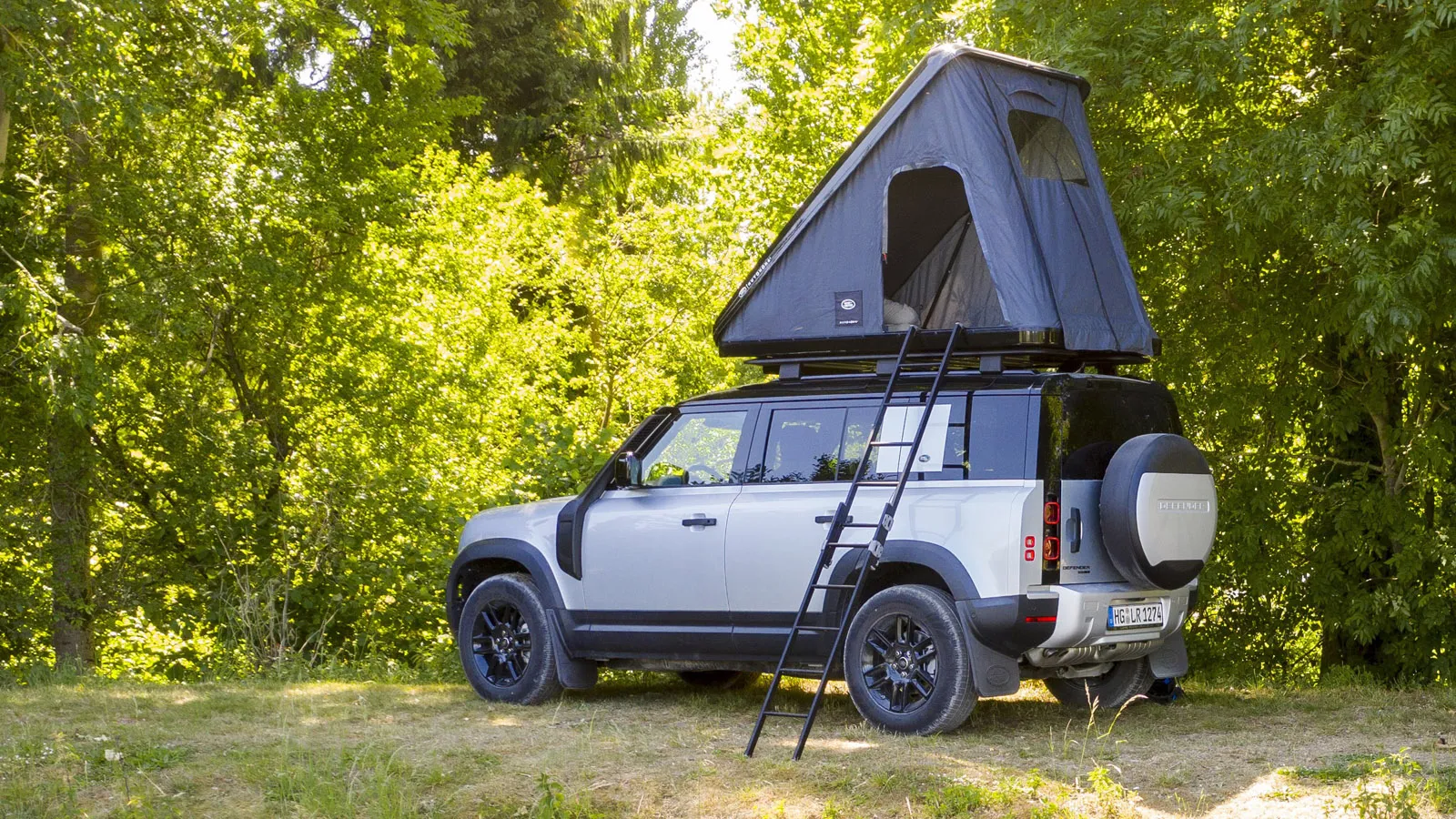
Roof-tent car hire Kenya refers to renting a vehicle, usually a capable 4×4, with a folding or hardshell sleeping tent installed on a reinforced roof rack. During the day, the tent remains folded securely above the vehicle. At camp, it opens into an elevated sleeping area accessed by a ladder.
Most rooftop tents contain a mattress, ventilated windows, mosquito mesh and weather-resistant canvas. Depending on the rental package, bedding may also be supplied. The vehicle can then carry additional camping equipment such as chairs, tables, cooking utensils, a gas stove, drinking-water containers, a refrigerator or cooler, lights and recovery equipment.
For Kenya, a rooftop tent is particularly attractive because the country’s best road-trip destinations are spread across very different landscapes. One holiday may include Nairobi, the Rift Valley, Maasai Mara, Lake Naivasha, Amboseli, Tsavo and the coast. Instead of checking into a hotel every evening, your accommodation travels with you.
The concept should not be confused with a safari vehicle fitted with a pop-up viewing roof. A pop-up roof opens during wildlife viewing so passengers can stand and photograph animals. A rooftop tent, by contrast, is designed for sleeping. Some specialized vehicles may offer configurations that address both camping and game-viewing requirements, but travelers should confirm this before booking.
Why Roof-Tent Car Hire Kenya Is Growing in Popularity
The popularity of independent travel has changed the way many visitors experience East Africa. Travelers increasingly want more control over their daily schedules, accommodation style and overall safari budget. A rooftop-tent vehicle responds to all three.
Kenya is especially suitable because several world-famous wildlife destinations can be linked by road. Nairobi provides an excellent starting point, while the country’s tourism infrastructure makes it possible to combine safari areas with highlands, lakes and beaches.
The attraction is not simply financial. Sleeping in a rooftop tent can become one of the most memorable parts of an African road trip. Evening meals prepared outside the vehicle, spectacular sunsets, clear skies, cool highland mornings and the sounds of nature create a very different atmosphere from moving between hotel rooms.
Travelers also appreciate having their belongings in the same vehicle throughout the journey. Instead of packing and unpacking suitcases for every overnight stop, camping equipment, food and luggage remain organized inside or around the 4×4.
Couples often choose rooftop camping because it gives them privacy and independence. Photographers appreciate being able to organize their mornings around the best light. Families can create a highly interactive holiday, while long-term overlanders can significantly reduce their dependence on conventional accommodation.
Roof-Tent Car Hire Kenya Versus a Traditional Safari
A traditional guided safari normally includes a professional driver-guide, prearranged accommodation, scheduled meals and an established itinerary. It is convenient and particularly suitable for visitors who want someone else to manage every detail.
A self-drive rooftop-tent safari operates differently. The traveler takes more responsibility for navigation, campsite planning, fuel, food, road conditions and daily decisions. In exchange, the journey becomes more flexible.
Neither style is automatically better. They serve different types of travelers.
Someone visiting Africa for the first time and interested mainly in maximizing wildlife sightings may appreciate a professional guide. Experienced road travelers may prefer the freedom of self-driving. Others choose a middle ground by renting a rooftop-tent vehicle together with a driver-guide.
Mixing the styles is also possible. You might camp independently around Naivasha and Samburu, stay in a lodge in the Maasai Mara and then return to camping around Amboseli or Tsavo.
This flexibility is one reason rooftop-tent travel has become an important segment of Kenya’s safari market.
Choosing the Right 4×4 for a Rooftop-Tent Safari
The quality of your safari depends far more on the vehicle than many travelers initially realize. A beautiful tent will not compensate for unreliable tyres, weak suspension or mechanical problems hundreds of kilometres from Nairobi.
Kenya’s highways between major destinations can be excellent, but national-park tracks, rural roads and campsite approaches can change dramatically with weather. Dry tracks can become slippery or muddy after heavy rainfall. Corrugated surfaces can punish suspension systems, while rocks and deep ruts require adequate ground clearance.
For these reasons, Toyota Land Cruisers and similar four-wheel-drive vehicles dominate the rooftop-tent safari sector.
Toyota Land Cruiser Prado for Roof-Tent Car Hire Kenya
The Toyota Land Cruiser Prado is one of the most practical vehicles for two travelers. It combines reasonable road comfort with four-wheel-drive capability and enough interior space for luggage and essential camping equipment.
Automatic and manual versions exist, so travelers should confirm transmission preferences when requesting a quotation.
A Prado with a single rooftop tent works particularly well for couples who want to combine national parks with longer highway journeys. Compared with larger expedition vehicles, it can also feel easier to handle in Nairobi and other busy areas.
Fuel consumption, model year, engine size and storage arrangements vary considerably, so these details should be requested from the rental company rather than assuming every Prado offers the same specification.
Land Cruiser Hardtop for Tough Safari Routes
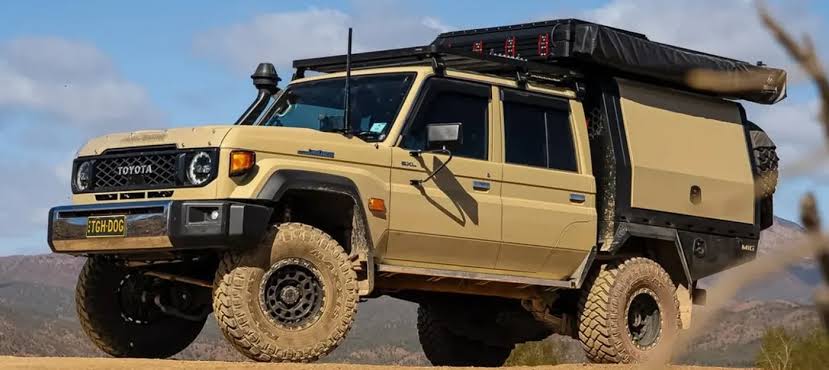
The Toyota Land Cruiser Hardtop has earned a strong reputation throughout Africa because of its durability and straightforward construction.
It is especially appropriate for longer trips involving remote areas, challenging tracks or substantial amounts of camping equipment. Its boxier shape can provide useful storage space, while the strong roof structure makes it suitable for professional rooftop-tent installations.
Travelers prioritizing ruggedness over luxury often choose this vehicle.
On longer Kenyan routes involving Samburu, northern Kenya, remote conservancies or cross-border travel, the Hardtop can be particularly attractive.
Land Cruiser V8 for Comfort and Power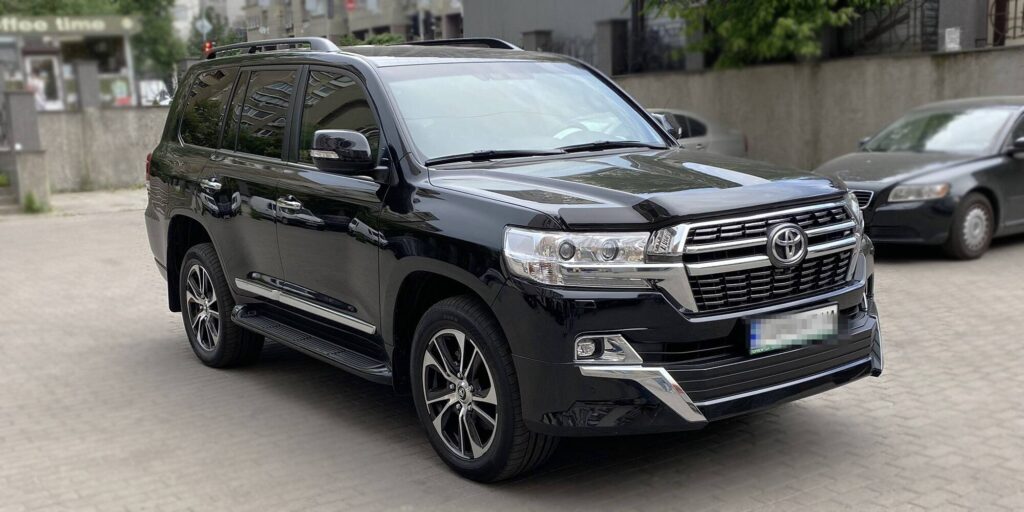
A Land Cruiser V8 provides more interior comfort and stronger road performance than many older safari vehicles. It can suit travelers who want rooftop camping without sacrificing too much comfort between destinations.
The additional space becomes valuable during a two- or three-week journey when luggage, food, water, photographic equipment and camping supplies all need secure storage.
However, increased comfort often comes with higher rental and fuel costs.
For couples traveling long distances or clients combining camping with premium lodges, a V8 can provide a strong balance between safari capability and road comfort.
Toyota Hilux and Pickup-Based Rooftop Campers
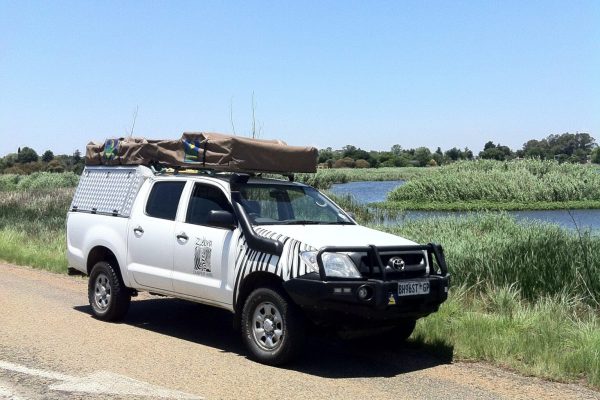
Double-cab pickup vehicles are another popular platform for rooftop tents. A Toyota Hilux, for example, can separate passenger space from equipment stored in a rear canopy.
This configuration is particularly useful for campers carrying substantial amounts of food, water, recovery equipment and luggage.
Some vehicles can support two separate rooftop tents, making them suitable for families or groups of three or four travelers.
Before booking, confirm the legal seating capacity and the recommended sleeping capacity rather than assuming a large vehicle automatically accommodates a large group comfortably.
Single, Double and Family Rooftop Tents
Selecting the correct tent is just as important as choosing the vehicle.
A standard rooftop tent generally suits one or two adults. For a couple, this configuration keeps the vehicle relatively compact and simplifies opening and closing the sleeping area.
Groups of three or four may require either one larger family tent or two separate rooftop tents. Two tents can provide more privacy, especially when friends or two couples travel together.
Families traveling with children should discuss ages, heights and sleeping arrangements with the rental provider. A sleeping configuration that looks acceptable on paper may feel cramped during a two-week safari.
Tent weight also matters. Rooftop equipment changes the vehicle’s center of gravity, so professional installation and appropriate roof-load capacity are essential.
For a long journey, convenience matters as much as size. Ask the rental company to demonstrate the tent before leaving. Opening and closing it yourself during handover helps prevent frustration when you arrive at your first campsite after sunset.
Softshell Rooftop Tents Versus Hardshell Tents
Softshell rooftop tents are common across East African rental fleets. They normally fold outward and use a ladder for support. Their biggest advantages are relatively low weight, good sleeping space and the ability to fit different vehicle designs.
Hardshell tents generally open vertically or in a wedge configuration. They can be particularly fast to set up and close.
Which design is better depends on your itinerary, budget and rental fleet availability.
For travelers moving camp almost every morning, setup speed becomes important. Someone staying two or three nights in each location may care more about internal sleeping room.
Wind resistance, waterproofing, ventilation, mattress comfort, mosquito netting and ladder stability deserve more attention than whether a tent looks impressive in photographs.
What Should Be Included in Roof-Tent Car Hire Kenya?
Never assume that the term “fully equipped” has the same meaning at every rental company.
One operator may include almost everything required for camping, while another may provide the vehicle and rooftop tent but charge separately for bedding, refrigerator, kitchen equipment or additional chairs.
Before paying a deposit, request a written equipment inventory.
A well-prepared camping vehicle will normally address sleeping, cooking, water storage, camp furniture, lighting, basic vehicle recovery and emergency needs.
For sleeping, check whether the tent includes only a mattress or also sheets, pillows, blankets or sleeping bags.
For food preparation, establish whether you receive a gas stove, fuel cylinder, cooking pans, plates, cups, knives, cutlery, washing equipment and food-storage containers.
A table and comfortable camping chairs make a significant difference after several days on the road.
Water containers are essential, particularly when visiting remote camping areas. The amount you need depends on your route and how frequently you can replenish supplies.
A powered refrigerator is highly convenient during a Kenya camping safari, especially on longer journeys. Check whether the fridge runs reliably when the vehicle is stationary and how the electrical system prevents the starter battery from being drained.
Camping Gear Matters More Than Travelers Expect
When planning a safari online, most attention naturally goes toward the vehicle and destinations. After several nights of camping, however, smaller items become equally important.
Poor chairs, missing cooking utensils or inadequate lighting can quickly make evenings uncomfortable. A reliable headlamp, for example, is one of the most useful pieces of personal equipment you can carry.
Your kitchen arrangement should be simple enough to use after a long game drive. Travelers rarely want complicated cooking after spending ten hours exploring a park.
A practical system includes basic ingredients, drinking water, tea or coffee, breakfast food and simple evening meals. Fresh supplies can be purchased in major towns before entering remote destinations.
Food should always be stored properly. Campsites near wildlife require responsible behavior, particularly regarding food waste and anything with strong smells.
Never leave food scattered around camp, and follow the campsite manager’s instructions about wildlife.
The Real Cost of Roof-Tent Car Hire Kenya
The advertised vehicle rate is only part of the cost of a self-drive safari.
Travelers should budget for the vehicle, rooftop tent, additional camping gear, insurance, fuel, park fees, campsite charges, food, drinking water and optional activities. Cross-border paperwork or one-way drop-off arrangements can create additional expenses.
Season and rental duration also influence the daily rate.
Long rentals sometimes qualify for better pricing, while high-demand periods can increase vehicle and campsite availability pressure.
Fuel deserves careful attention because Kenya safari routes can involve substantial distances. A larger Land Cruiser carrying rooftop tents and camping equipment will consume more fuel than a compact road vehicle.
National-park access also represents an important safari expense. Park-entry systems and fees can change, so travelers should check the latest official rates during trip planning rather than relying on an old blog article.
Campsites range from simple public sites with basic facilities to private camping areas with showers, restaurants, electricity or swimming pools.
Consequently, rooftop camping should not automatically be described as “cheap travel.” It can reduce accommodation spending, but a properly prepared 4×4 safari remains a substantial travel investment.
Its real value lies in combining mobility, accommodation and independence.
Why the Cheapest Roof-Tent Rental Is Not Always the Best Value
A low advertised daily rate can look attractive when comparing rental companies, but several questions should be answered before focusing on price.
How old is the vehicle? When were the tyres replaced? Is the rooftop tent included? Does the rate include unlimited mileage? What insurance applies? Is roadside support available? Is a refrigerator included? Are bedding and cooking equipment included? Are cross-border documents extra?
A cheaper rental can become considerably more expensive once necessary equipment is added.
Mechanical reliability deserves even greater attention.
Losing two safari days because of preventable vehicle problems can cost more than the original rental saving.
When comparing quotes, request the complete price for the same requirements and route rather than comparing headline rates.
Nairobi as the Starting Point for a Kenya Rooftop-Tent Safari
Nairobi is the natural hub for many Kenya self-drive journeys.
International flight connections, vehicle-rental companies, supermarkets, outdoor suppliers, hotels and major roads all make the city a convenient starting point.
Some travelers collect their vehicle shortly after arriving at Jomo Kenyatta International Airport, while others stay one night in Nairobi before beginning their road trip.
For international visitors unfamiliar with local driving, resting after the flight can be sensible. You can then complete the vehicle handover during daylight, buy food and supplies and leave the city the following morning.
A proper handover should never feel rushed.
Use the opportunity to inspect tyres, lights, spare wheels, jack, tools and camping equipment. Test the rooftop tent. Ask how the four-wheel-drive system works. Confirm emergency contacts and discuss the first day’s route.
If possible, organize luggage before leaving Nairobi rather than trying to redesign your storage system at the first campsite.
Driving in Kenya on a Self-Drive Safari
Kenya follows left-hand traffic, something visitors from many Commonwealth countries will find familiar.
Driving style, road surfaces and traffic conditions vary considerably.
Major highways can be busy with trucks, buses, motorcycles, pedestrians and livestock. Small towns may have speed-calming features and heavy roadside activity.
Inside wildlife areas, driving becomes slower and requires concentration. Tracks may be rocky, sandy, muddy or heavily corrugated.
Distances shown on a map therefore do not always translate directly into predictable travel times.
A 200-kilometre journey involving park roads can feel completely different from 200 kilometres of highway driving.
Plan conservative travel days and avoid trying to cover excessive distances simply because online mapping software suggests it is possible.
Avoid Driving Long Distances After Dark
Night driving should generally be minimized during a self-drive safari.
Outside major cities, roads may have poorly illuminated vehicles, pedestrians, bicycles or livestock. Wildlife can also move near roads in rural regions.
Arriving at campsites during daylight makes setting up your rooftop tent much easier.
It also allows you to see campsite facilities and receive any wildlife or security instructions before darkness.
A good Kenya road-trip schedule therefore prioritizes early starts and sensible afternoon arrival times rather than extremely long driving days.
Roof-Tent Car Hire Kenya for Maasai Mara Adventures
The Maasai Mara is one of Kenya’s most famous wildlife destinations and an obvious target for many self-drive itineraries.
The wider Mara ecosystem supports extraordinary concentrations of wildlife, and the landscapes of open plains, river systems and rolling grasslands are among the classic images associated with East African safari travel.
Road conditions toward and within the region vary with route and weather.
During heavy rain, some tracks can become challenging, making a capable four-wheel-drive vehicle especially valuable.
Campsite regulations and vehicle-access arrangements should be confirmed for the exact reserve, conservancy or community area you intend to visit. Do not assume that one rule applies across the entire Mara ecosystem.
For first-time self-drivers, discussing the chosen approach road, fuel stops and campsite location with the rental company is strongly recommended.
The Maasai Mara can be combined naturally with Lake Naivasha or Lake Nakuru as part of a Rift Valley itinerary.
Amboseli National Park by Rooftop-Tent 4×4
Amboseli offers one of Kenya’s most recognizable safari settings, particularly when Mount Kilimanjaro is visible beyond the plains.
The ecosystem is famous for elephants, wetlands, open landscapes and excellent birdlife.
From Nairobi, Amboseli can form the beginning of a southern Kenya road trip.
Travelers may spend several nights in or around the park before continuing toward Tsavo West, Tsavo East or the coast.
Because the landscape can change significantly between dry and rainy periods, route advice should always consider seasonal conditions.
A rooftop-tent vehicle allows photographers to organize early mornings efficiently and gives travelers flexibility in choosing camps close to their preferred wildlife areas.
Lake Naivasha and the Great Rift Valley
Lake Naivasha makes an excellent transition between intensive wildlife safaris.
The freshwater lake area offers beautiful scenery, birdlife, boat activities and convenient accommodation ranging from campsites to luxury properties.
For self-drive travelers, Naivasha is also a useful place to rest, shop and reorganize before continuing deeper into Kenya.
Nearby attractions can be incorporated depending on your interests and available time.
Because the destination is relatively accessible from Nairobi, some visitors use it as their first rooftop-camping experience before attempting more remote areas.
This can be a smart strategy for first-time campers who want to become comfortable with the vehicle and tent system.
Lake Nakuru and Central Rift Valley Road Trips
Lake Nakuru is another popular component of Kenya self-drive circuits.
The park’s compact nature makes it possible to enjoy productive game viewing without extremely long internal driving distances.
Combining Naivasha and Nakuru creates a logical Rift Valley stage between Nairobi and destinations farther west or north.
Travelers heading toward the Maasai Mara can also incorporate the region depending on their preferred routing.
The central lesson for self-drive itinerary planning is to avoid treating every park as an isolated destination. Kenya works particularly well when locations are connected into geographically sensible circuits.
Samburu and Northern Kenya
Travelers seeking a more rugged landscape can head north toward Samburu and the surrounding regions.
The scenery changes dramatically as you move away from central Kenya, creating a strong feeling of expedition travel.
A well-equipped 4×4 becomes increasingly important when routes extend into drier and less densely populated areas.
Fuel planning, water storage, spare tyres and mechanical preparation deserve extra attention.
Samburu also pairs well with Mount Kenya and Laikipia, allowing travelers to create a northern circuit rather than repeatedly returning toward Nairobi.
For many experienced African road travelers, this area represents exactly what rooftop-tent travel is designed for: long horizons, striking landscapes and the independence to explore at a comfortable pace.
Laikipia and Mount Kenya
Laikipia combines conservation areas, ranch landscapes and views toward Mount Kenya.
The region can provide a different safari atmosphere from Kenya’s more famous national parks.
Travelers interested in wildlife conservation, walking activities, private conservancies and varied scenery can incorporate the area between Nairobi and Samburu.
Because some accommodation properties and conservancies operate private access arrangements, camping availability should be confirmed before arrival.
Never assume that having a rooftop tent means you may simply camp anywhere.
Responsible self-drive travel relies on designated campsites and permission from landowners or protected-area management.
Tsavo East and Tsavo West
Together, Tsavo East and Tsavo West create an enormous safari region between Nairobi and the coast.
This makes them especially attractive for travelers planning a bush-and-beach road trip.
Amboseli can be combined with Tsavo before continuing to Mombasa, Diani, Kilifi, Watamu or other coastal areas.
The distances are substantial enough that itinerary planning matters.
Rather than rushing through both parks, allow enough time for wildlife viewing and relaxation.
A rooftop-tent Land Cruiser provides the flexibility to stay in safari areas before moving gradually toward the Indian Ocean.
This route also demonstrates why roof-tent car hire Kenya appeals to adventurous travelers: a single vehicle can support mountain views, big-game safaris, semi-arid wilderness and tropical beaches during one journey.
Combining Safari and the Kenyan Coast
Few destinations allow such a dramatic transition between wildlife safari and beach travel.
After several days driving dusty park tracks, reaching the Indian Ocean can feel like entering another country.
Mombasa, Diani Beach, Kilifi, Watamu and Malindi offer different coastal experiences.
Some travelers return the rental vehicle on the coast if one-way arrangements are available, while others drive back toward Nairobi.
One-way rental can save time but often involves repositioning fees, so it should be discussed when requesting your quotation.
If keeping the vehicle during a beach stay, consider whether you actually need a rooftop tent every night. Mixing campsites with hotels can give you showers, air conditioning and a comfortable rest before continuing the road trip.
Camping in Kenya’s National Parks and Conservancies
Rooftop-tent travel does not mean parking anywhere and opening your tent.
Travelers should use authorized campsites and respect the rules of each protected area.
Facilities differ enormously. Some campsites provide toilets, showers, water and staff. Others are intentionally basic.
Remote camps may have wildlife moving through the area, which is part of their attraction but requires disciplined behavior.
Listen carefully to local campsite staff.
Never walk around unnecessarily after dark in areas where wildlife may be present. Use a powerful torch before leaving your tent. Keep food secure and avoid leaving waste outside.
Children require especially close supervision.
Camping responsibly protects both travelers and wildlife.
Wildlife Safety During a Roof-Tent Safari
A rooftop tent elevates you above the ground, but it should never create a false sense of security.
Wild animals remain wild.
Elephants, buffalo, hippos, hyenas and other animals may move through unfenced camping areas.
Do not approach animals for photographs, block their movement with your vehicle or attempt to feed them.
At night, remain aware of your surroundings when climbing down the ladder.
If camp management provides instructions about animal activity, follow them.
Food storage is particularly important. Animals that associate campsites with human food can become dangerous and may ultimately suffer because of irresponsible visitor behavior.
The best wildlife encounters come from observing quietly and giving animals space.
Roof-Tent Camping During Kenya’s Dry Seasons
Dry months generally make road travel easier because tracks are less likely to become deeply muddy.
Wildlife may also concentrate around reliable water sources.
However, dry-season conditions create their own challenges.
Dust enters vehicles and camping equipment easily. Temperatures may fluctuate considerably between hot afternoons and cool nights depending on altitude.
Popular parks can also become busy during peak safari periods.
Travelers visiting during high season should therefore reserve popular campsites and specialized rooftop-tent vehicles well in advance.
Rooftop-Tent Safaris During the Rainy Season
Rain transforms Kenya’s landscapes.
Vegetation becomes greener, skies can be dramatic and many areas feel quieter than during the busiest months.
For photographers and returning visitors, this can be extremely rewarding.
Driving conditions, however, become less predictable.
Black-cotton soils can become exceptionally slippery when saturated. Tracks that are easy in dry weather may become difficult or temporarily unusable.
This is when vehicle choice, tyre condition and local advice matter most.
Travelers should remain flexible and avoid forcing a route simply because it appeared in the original itinerary.
If heavy rain affects an area, changing plans is better than becoming stuck in a remote location.
Understanding Four-Wheel Drive Before Leaving Nairobi
A surprising number of travelers rent a 4×4 without knowing how its four-wheel-drive system works.
Do not wait until the vehicle is stuck before learning.
During handover, ask the rental company to explain normal road mode, four-wheel-drive engagement and any low-range system fitted to your vehicle.
Understand how differential locks operate if the vehicle has them.
Ask where the towing points are and how the recovery equipment should be used.
Tyre-pressure recommendations may also change between highway driving and difficult terrain.
The goal is not to turn every traveler into an off-road specialist. It is simply to ensure that you understand the equipment you are paying for.
Vehicle Inspection Before Your Kenya Road Trip
Your inspection should start with the tyres.
Look at tread condition, sidewalls and the spare wheel. For remote travel, ask whether the vehicle carries one or two spares.
Confirm that the jack is appropriate for the vehicle and understand how to use it.
Check lights, indicators, windscreen wipers, air conditioning and charging outlets.
Inspect the rooftop tent fabric, zips, ladder and securing straps.
Open the tent completely before departure.
Check the refrigerator, stove, lights and other camping equipment.
Take photographs of existing vehicle damage during handover and ensure everything is recorded on the rental agreement.
A careful inspection may consume part of your morning, but it can save significant problems later.
Insurance for Roof-Tent Car Hire Kenya
Vehicle insurance deserves careful reading.
Do not assume that every type of damage is automatically covered.
Rental contracts often contain exclusions for tyres, windscreens, underbody damage, negligent driving, water damage or unauthorized routes.
The rooftop tent itself may have separate damage conditions.
Cross-border travel can also require additional documentation or insurance.
Ask specifically about the excess or deductible, what happens after an accident and which emergency numbers must be contacted.
If the vehicle becomes undriveable, establish whether the operator provides roadside assistance, mechanical support or a replacement vehicle and under what conditions.
Travel insurance should also be arranged separately because vehicle insurance does not cover all personal travel risks.
Breakdown Support and Mechanical Problems
Even well-maintained safari vehicles operate under demanding conditions.
A puncture should not automatically ruin a trip, but you need the correct equipment and confidence to handle basic situations.
For more serious mechanical issues, communication with the rental company becomes essential.
Ask which regions their support network covers and how they respond when a vehicle develops a problem far from Nairobi.
Do not continue driving if warning lights, overheating or unusual mechanical noises suggest serious trouble.
Stopping early can prevent a small problem from becoming expensive damage.
Mobile coverage exists across much of Kenya but may disappear in remote locations, so discuss communication strategy when planning isolated routes.
Fuel Planning for Kenya Self-Drive Safaris
Major towns provide fuel stations, but remote safari routes require planning.
Refuel whenever it makes practical sense rather than waiting until the tank is nearly empty.
Know your vehicle’s approximate fuel range.
A heavily loaded Land Cruiser using four-wheel drive on rough roads may consume significantly more fuel than it does on a highway.
If your itinerary requires spare fuel containers, make sure they are approved, securely mounted and permitted under the rental agreement.
Never store fuel carelessly near cooking equipment.
Long-distance route planning should identify reliable refueling points before departure.
Food and Supplies for Rooftop Camping
Nairobi is the easiest place to buy comprehensive supplies before starting your safari.
Large supermarkets allow travelers to purchase dry food, drinks, fresh produce, toiletries and basic cooking ingredients.
You can restock in larger towns during the journey.
Avoid carrying excessive fresh food during very long stages unless you have reliable refrigeration.
Simple meals work best.
Breakfast can consist of coffee or tea, fruit, cereal, eggs or bread. Lunch may be prepared quickly during a rest stop, while evenings provide more time for cooking at camp.
Keep an emergency food reserve in case weather or road conditions delay arrival at the next town.
Most importantly, carry sufficient safe drinking water.
Roof-Tent Car Hire Kenya for Couples
Couples are arguably the ideal market for a single-tent 4×4.
Two people can share driving responsibilities, while a standard rooftop tent generally provides sufficient sleeping room.
Luggage requirements also remain manageable.
For a honeymoon or anniversary journey, rooftop camping can be combined with selected luxury lodges.
Spend several nights camping around national parks, then book an exceptional lodge for a break before continuing.
This combination often delivers more variety than staying exclusively in either campsites or hotels.
Couples should prioritize mattress comfort, refrigerator space and well-organized storage when comparing vehicles.
Roof-Tent Car Hire for Families
Family rooftop safaris require more planning but can be extremely rewarding.
Children often enjoy the camping experience because each evening feels adventurous.
The most important considerations are sleeping arrangements, vehicle seating, luggage space and campsite safety.
A double rooftop tent or large family configuration may be necessary.
Never exceed the manufacturer’s recommended roof load or tent occupancy.
Long driving days should also be reduced when traveling with younger children.
Including swimming pools, shorter activities and occasional lodge nights can create a better rhythm than attempting continuous camping.
Parents should discuss children’s ages with the rental company because ladder access may not be suitable for everyone.
Solo Roof-Tent Travel in Kenya
Solo self-driving offers maximum freedom but places every responsibility on one person.
Navigation, driving, camp setup, cooking and vehicle checks all need to be managed independently.
Experienced overlanders may love this arrangement.
First-time visitors should be more conservative with routes and daily distances.
A smaller rooftop-tent Prado may be easier to manage than an oversized expedition vehicle.
Stay connected with your rental operator and share your general route with someone you trust.
Most importantly, do not push yourself to continue driving when tired simply because nobody else can take the wheel.
Photography and Rooftop-Tent Safaris
Wildlife photographers benefit substantially from itinerary independence.
You can organize departures around sunrise, spend longer in productive wildlife areas and change locations when lighting or animal activity suggests it.
Photography equipment, however, creates additional storage and charging requirements.
Ask whether the vehicle has sufficient 12-volt or USB charging points and whether the electrical system can support camera batteries and laptops.
Dust protection is essential.
Use closed bags and clean equipment carefully rather than leaving lenses exposed inside the vehicle.
A beanbag can also be useful when photographing from vehicle windows.
Roof Tent Versus Ground Tent in Kenya
Ground tents remain a viable and economical option.
They are inexpensive, easy to replace and can allow you to drive away from the campsite without packing your entire sleeping arrangement.
Rooftop tents offer faster setup, an elevated sleeping platform and freedom from uneven ground.
They can also feel more secure to many travelers.
The main disadvantages are the ladder, additional roof weight and the need to close the tent before driving anywhere.
If you plan to stay in one campsite for several nights while making daily game drives, repeatedly closing a rooftop tent each morning may become less convenient.
Choosing between the two should therefore depend on your travel style rather than assuming the rooftop option is always superior.
Roof Tent Versus Safari Lodges
Safari lodges provide comfort that camping cannot completely replicate.
Private bathrooms, prepared meals, laundry services, lounges and swimming pools can be extremely welcome during a long holiday.
Camping provides independence, immersion and flexibility.
A mixed itinerary often delivers the best experience.
For example, spend two nights rooftop camping in one destination, then enjoy a lodge before returning to camping elsewhere.
This arrangement also allows you to experience high-end safari hospitality without paying luxury accommodation rates every night.
Planning a Seven-Day Kenya Rooftop-Tent Safari
A short safari should avoid excessive driving.
One practical concept begins in Nairobi, continues into the Great Rift Valley and then focuses on one major wildlife destination before returning.
Naivasha can provide an easy first night, allowing travelers to become comfortable with the vehicle.
From there, the route could continue toward the Maasai Mara for several nights.
Rather than changing camps every day, spend enough time in each area to enjoy the destination.
Return toward Nairobi with another Rift Valley overnight if necessary.
The exact route should depend on weather, campsite availability and your wildlife priorities.
Trying to include Maasai Mara, Amboseli, Samburu and Tsavo in seven days would create too much driving for most travelers.
Planning a Ten-Day Kenya Self-Drive Safari
Ten days creates greater flexibility.
One route could combine Nairobi, Naivasha, Maasai Mara and Amboseli.
Another might focus on Mount Kenya, Samburu and the Rift Valley.
Travelers interested in beach time could instead combine Amboseli and Tsavo before continuing toward the coast.
The key is geographical logic.
Each additional park adds entry fees and driving time, so visiting fewer destinations thoroughly often creates a better safari than racing through every famous name.
Planning a Two-Week Roof-Tent Safari in Kenya
Two weeks allows the rooftop-tent concept to shine.
Travelers can connect several ecosystems without needing to drive long distances every day.
A northern circuit might combine Nairobi, Mount Kenya, Laikipia, Samburu, Naivasha and Maasai Mara.
A southern circuit could connect Nairobi, Amboseli, Tsavo West, Tsavo East and the coast.
Another option combines the Rift Valley and Mara before crossing central Kenya toward Amboseli.
Build rest days into the schedule.
A full afternoon with no driving can transform the quality of a long road trip.
It also provides time for laundry, vehicle organization, shopping and simple relaxation.
Three Weeks or Longer in a Kenya Rooftop-Tent Vehicle
Three or four weeks allows you to stop thinking like a tourist rushing through an itinerary and begin traveling at a more natural pace.
You can spend extra nights when a destination feels special and include less-famous regions between major parks.
Long-term travelers should pay even closer attention to vehicle servicing.
Ask the rental company whether scheduled maintenance will be required during your hire and where it can be completed.
Storage also becomes more important.
A beautifully equipped vehicle can still become frustrating if every chair or cooking pot must be unloaded to reach your clothes.
Good organization is one of the secrets of enjoyable long-distance camping.
Cross-Border Roof-Tent Car Hire from Kenya
Kenya can also serve as the beginning of a longer East African overland journey.
Depending on the rental company, vehicle and documentation, routes may extend into Tanzania, Uganda or Rwanda.
Cross-border approval must be arranged before departure.
Never assume you can simply arrive at an international border with a rental vehicle.
The rental company may need to provide vehicle ownership documents, authorization letters, insurance and other paperwork.
One-way international rentals require even more planning because the vehicle eventually needs to return to its country of registration or another approved location.
Discuss every intended country before confirming the booking.
Kenya and Tanzania Rooftop-Tent Road Trips
Combining Kenya and Tanzania creates one of Africa’s classic road-trip concepts.
Travelers may connect southern Kenya with northern Tanzania or build a much longer itinerary through several national parks.
However, border procedures, rental permissions, park regulations and vehicle-entry arrangements need careful planning.
Driving a foreign rental vehicle across borders is not the same as crossing as an ordinary tourist.
Your rental operator should confirm the necessary paperwork in advance.
If the itinerary is primarily focused on Serengeti and Ngorongoro, also check whether your chosen rental configuration is practical and permitted for the exact areas you intend to visit.
Kenya, Uganda and Rwanda Overland Adventures
A longer East African trip can connect Kenya with Uganda and Rwanda.
This creates the possibility of combining Kenya’s savannah wildlife with Uganda’s diverse national parks and Rwanda’s mountain landscapes.
Travelers interested in primate trekking can add chimpanzee or gorilla experiences while continuing their overland journey.
Such a trip requires considerably more time than a Kenya-only safari.
Distances are substantial, border crossings take time and some destinations deserve several nights.
For travelers with three or four weeks, however, the combination can create an extraordinary East African adventure.
One-Way Roof-Tent Car Hire Kenya
A one-way rental allows travelers to collect a vehicle in one location and return it somewhere else.
Within Kenya, Nairobi-to-Mombasa or Nairobi-to-coast arrangements may be possible with certain companies.
This can be extremely useful for travelers who want to end their safari at the Indian Ocean rather than driving the same road back.
International one-way rentals are more complicated and normally cost more because the vehicle must eventually be repositioned.
Ask for the one-way charge separately so you can compare it against fuel, extra rental days and your own time.
Sometimes paying a relocation fee makes more sense than spending two days returning a vehicle.
Choosing Campsites Before Your Journey
Spontaneity is one of the attractions of rooftop travel, but arriving in Kenya with absolutely no campsite research is unnecessary.
Identify several suitable camps for each destination.
During busy periods, reserve important nights in advance.
For more flexible parts of the route, maintain alternatives.
Ask about toilets, showers, electricity, drinking water, food availability and wildlife conditions.
Coordinates can be valuable when camps are difficult to find.
Offline navigation tools are also helpful because mobile data may not always be reliable.
Do not depend entirely on one phone.
Navigation on a Kenya Self-Drive Safari
Online maps work well for major roads but should not be treated as perfect authorities inside remote wildlife areas.
Routes can change, roads can become seasonal and map applications may suggest tracks that are unsuitable for your vehicle.
Combine digital navigation with local information.
Campsite staff, park rangers and the rental company can provide valuable updates.
Download offline map data before leaving Nairobi.
A phone mount and vehicle charger make navigation much easier.
Photographers and solo drivers should avoid holding phones while driving, especially on rough tracks where sudden obstacles are common.
Responsible and Sustainable Rooftop Camping
Camping creates a close relationship with the landscape, which makes responsible travel especially important.
Take waste out of remote campsites when disposal facilities are unavailable.
Avoid single-use plastic where practical.
Never dispose of food or wastewater in ways that attract animals.
Stay on authorized tracks.
Off-road driving can damage vegetation and disturb wildlife.
Use established campsites instead of creating new fire rings or clearing vegetation.
If campfires are permitted, follow local instructions carefully and extinguish them completely.
Water should be used responsibly, particularly in dry northern regions.
The objective is simple: leave the campsite ready for the next traveler and safe for wildlife.
Common Roof-Tent Safari Mistakes
One of the most common mistakes is overplanning.
Travelers see Kenya on a map and underestimate how tiring repeated long drives can become.
Another mistake is choosing a vehicle entirely on price.
Reliability, tyre condition, equipment and support matter more than saving a small amount each day.
Packing too much is another problem.
Rooftop-tent travel becomes easier when luggage remains compact and organized.
Arriving at camp after dark, failing to refuel early enough and ignoring weather forecasts can all create unnecessary stress.
Perhaps the biggest mistake is assuming a 4×4 makes every road passable.
Four-wheel drive improves capability, but it does not eliminate mud, flooding, mechanical limits or poor judgment.
Packing for Roof-Tent Car Hire Kenya
Pack soft-sided bags rather than several large hard suitcases when possible.
Soft luggage fits more easily into irregular vehicle storage spaces.
Bring lightweight clothing suitable for warm days, along with warmer layers for early mornings and high-altitude destinations.
A waterproof jacket is valuable even outside the main rainy periods.
Comfortable shoes, sandals, sun protection, insect repellent and personal medications should be readily accessible.
A headlamp is more convenient around camp than relying exclusively on a phone torch.
Power banks provide useful backup charging.
Binoculars dramatically improve wildlife viewing and are worth carrying even if you are not a serious birder.
Staying Connected During Your Kenya Road Trip
Mobile connectivity is good around many towns and popular tourism routes but becomes less reliable in isolated areas.
A local SIM or appropriate roaming plan can simplify communication and navigation.
Download essential documents, booking confirmations and maps before traveling into remote areas.
Keep the rental company’s emergency contact information both on your phone and written down.
Tell somebody where you expect to travel when visiting less-frequented areas.
For very remote itineraries, discuss additional communication equipment with your rental operator.
Combining Roof-Tent Car Hire Kenya With a Driver-Guide
Self-driving is not mandatory simply because you have chosen a rooftop tent.
A professional driver-guide can handle navigation, park tracks and vehicle responsibilities while you retain the camping experience.
This arrangement suits travelers who enjoy outdoor accommodation but do not want the responsibility of driving.
It can also work well for photographers who want to concentrate on wildlife rather than road conditions.
A knowledgeable safari driver may improve animal sightings because experienced guides understand habitats, tracks and seasonal wildlife movements.
Confirm whether the guide has separate sleeping arrangements and how guide accommodation or meals are handled at campsites.
How to Compare Roof-Tent Rental Companies
Instead of asking only, “How much per day?” provide every operator with the same trip information.
Share your dates, number of travelers, intended route, border crossings, preferred transmission and camping requirements.
Then compare complete quotations.
Examine vehicle age and specification, tent capacity, equipment inclusions, insurance, mileage policy, breakdown support and payment conditions.
Pay particular attention to what is excluded.
A clear rental agreement is more valuable than vague promises made through messaging applications.
Ask recent questions about road conditions and the exact vehicle you are likely to receive.
The strongest companies should be comfortable answering technical and logistical questions before accepting your deposit.
Booking Roof-Tent Car Hire Kenya Early
Specialized camping vehicles are not unlimited.
During popular travel periods, well-equipped Land Cruisers with quality rooftop tents may sell out.
Booking early also gives you more time to design a realistic itinerary.
Once the vehicle is confirmed, campsites and selected activities can be reserved around it.
Last-minute bookings can still work during quieter periods, but vehicle choice may become restricted.
Families needing two tents or travelers requiring automatic transmission should reserve especially early because their requirements reduce the number of suitable vehicles.
Why Route Planning Should Happen Before Choosing the Vehicle
The ideal vehicle depends on where you are going.
A couple spending most of the holiday between Nairobi, Naivasha and established southern parks may be comfortable in a Prado.
A long expedition involving northern Kenya or several countries may justify a more rugged Land Cruiser.
A family requiring two rooftop tents needs sufficient roof capacity and interior storage.
Tell the rental company the route before selecting the vehicle.
This allows the provider to recommend the most appropriate configuration rather than simply selling whatever happens to be available.
Roof-Tent Car Hire Kenya for First-Time Africa Travelers
First-time visitors do not need to avoid self-drive safaris, but preparation becomes especially important.
Begin with realistic driving distances.
Choose well-established destinations.
Complete the vehicle handover during daylight and ask questions until you genuinely understand the equipment.
Consider staying near Nairobi or Naivasha on the first night rather than attempting a complicated drive immediately after an overnight international flight.
Mix camping with lodges if you are unsure how much outdoor accommodation you will enjoy.
A first safari should feel adventurous, not exhausting.
Is Roof-Tent Camping Comfortable?
With a quality mattress and a well-maintained tent, rooftop camping can be surprisingly comfortable.
The main limitations are space, temperature and ladder access.
You cannot stand upright inside most rooftop tents, and getting dressed requires more organization than in a hotel room.
Night temperatures vary substantially between destinations.
Highland areas can become cold, while lower regions may remain warm.
Ventilation matters in hot conditions, and warm bedding matters at altitude.
For travelers who enjoy camping, these are minor compromises.
Someone who strongly values private bathrooms, air conditioning and room service may be happier mixing camping with conventional accommodation.
Can You Shower While Rooftop Camping in Kenya?
Many established campsites provide shower facilities, but quality varies.
Some have hot water and excellent bathrooms, while remote public campsites may offer only very basic facilities.
This is why campsite research matters.
Travelers on extended trips often alternate simpler wilderness camps with better-equipped private camps or lodges.
A comfortable shower, restaurant meal and laundry service every few days can make a long camping holiday much more enjoyable.
Can You Cook at Kenya Campsites?
Cooking is possible at many designated campsites, subject to local rules.
Your rental package may include a gas stove and kitchen equipment.
Gas is generally easier and more controlled than relying on wood fires.
Food preparation should remain organized, particularly in wildlife areas.
Clean dishes immediately and store leftovers securely.
Never feed wildlife intentionally or indirectly through poorly stored waste.
Confirm whether campfires are permitted rather than assuming they are allowed everywhere.
Is Roof-Tent Car Hire Kenya Safe?
A rooftop-tent road trip can be undertaken safely when travelers use a reliable vehicle, drive conservatively, camp in approved places and follow local instructions.
Risk increases when people drive at night, attempt unsuitable roads, ignore wildlife guidance or underestimate fatigue.
Vehicle condition is central to safety.
So are tyre quality, emergency contacts and realistic route planning.
Travelers should also monitor current travel guidance and regional conditions when preparing their itinerary.
Safety is therefore not created by the rooftop tent itself. It comes from preparation, good judgment and responsible behavior throughout the journey.
Is a Rooftop-Tent Safari Suitable for Older Travelers?
Age alone is not the main issue.
The important question is whether travelers can climb the tent ladder comfortably and safely.
Anyone with limited knee, hip or balance mobility should test the ladder before committing to a long camping itinerary.
A ground tent or lodge-based safari may provide greater comfort.
Another possibility is to combine rooftop camping for more mobile travelers with conventional accommodation for other members of the group.
The safari should adapt to the traveler, not the other way around.
Roof-Tent Car Hire Kenya and the Freedom to Slow Down
The greatest advantage of this style of travel is not simply sleeping on top of a vehicle.
It is having control over your time.
Traditional safari itineraries can become a sequence of departures, transfers, check-ins and scheduled meals.
A rooftop-tent road trip can create space for unplanned experiences.
You may find a peaceful campsite and decide to stay another night. A wildlife sighting may keep you in one region longer than expected. A rainy afternoon may encourage you to stop early and prepare dinner while watching a storm cross the landscape.
That freedom often becomes the strongest memory of the trip.
Building a Kenya Safari Around Experiences Rather Than Distances
Good road-trip planning starts with experiences.
Ask yourself whether you care most about big cats, elephants, landscapes, photography, birdwatching, hiking, culture, beaches or simply remote travel.
Then select destinations that deliver those experiences.
Do not add a national park merely because its name appears on every Kenya itinerary.
The Maasai Mara may deserve three or four nights for a wildlife-focused traveler.
A photographer interested in elephants may want additional time around Amboseli.
Someone who loves wilderness may prioritize Samburu and northern Kenya.
Beach lovers can allocate more days to the coast.
The rooftop vehicle exists to serve the journey, not to dictate it.
Why Kenya Is Ideal for a 4×4 Camping Safari
Few countries combine wildlife, landscapes and road-trip variety as effectively as Kenya.
Within one journey, you can experience a modern African capital, volcanic Rift Valley landscapes, freshwater lakes, savannah, semi-arid wilderness, mountain scenery and tropical coastline.
Wildlife is equally varied.
Elephants, lions, leopards, cheetahs, buffalo, giraffes, zebras, rhinos, antelope and remarkable birdlife create endless reasons to stop.
The country’s long safari history means tourism services exist across most major destinations.
For independent travelers, that combination creates the right balance between adventure and practical support.
Creating a Luxury Roof-Tent Safari
Camping does not have to mean abandoning comfort completely.
A premium rooftop-tent vehicle can include a high-quality mattress, refrigerator, organized kitchen, excellent camp furniture and substantial interior storage.
Luxury can also come from itinerary design.
Camp for two nights, stay in an exceptional lodge for one night, then return to the road.
Book private activities in selected destinations.
Enjoy restaurant meals whenever you pass through towns.
The freedom to decide where to spend and where to simplify can create better value than purchasing a uniformly expensive safari package.
Budgeting Without Sacrificing Safety
Travelers seeking lower costs should reduce unnecessary luxury before reducing vehicle quality.
A reliable older Land Cruiser with a good maintenance record may provide better value than a cheap vehicle with questionable tyres.
Prepare some of your own meals.
Choose public or moderately priced campsites where appropriate.
Travel for enough days to benefit from longer-term rental rates.
Limit unnecessary backtracking.
Combine destinations logically so you reduce fuel consumption.
These strategies can lower costs while maintaining the essentials that keep a self-drive journey safe and comfortable.
Roof-Tent Car Hire Kenya for East Africa Overlanders
For travelers undertaking an extended African journey, Kenya is an excellent staging point.
Nairobi provides access to vehicle workshops, equipment, supermarkets and international connections.
From Kenya, routes can extend south toward Tanzania or west toward Uganda and Rwanda where permitted by the rental agreement.
Long journeys demand more preparation than ordinary holidays.
Vehicle servicing, border documentation, visas, insurance, fuel range and communication all need attention.
The reward is extraordinary geographical variety.
A single road trip can move from Kenya’s savannah ecosystems to the volcanoes and forests farther west.
Questions to Ask Before Paying Your Deposit
Before confirming the rental, make sure you understand exactly which vehicle category you are booking, the tent configuration, the camping equipment and the insurance conditions.
Clarify the payment schedule and cancellation terms.
Ask whether the quoted vehicle is guaranteed or may be substituted.
Understand mileage restrictions, if any.
Confirm which countries and national parks are authorized.
Establish what happens if mechanical problems interrupt the trip.
Ask how after-hours emergency communication works.
Finally, request everything important in writing.
Clear communication before departure prevents disagreements later.
Why Local Safari Knowledge Adds Value
A rental car is only one part of a successful Kenya expedition.
Knowing how destinations connect, which route suits a particular season and how many nights each area deserves can make the difference between a stressful drive and an outstanding safari.
This is where working with an East African travel specialist can help.
Local planning support can combine the rooftop vehicle with campsite suggestions, selected lodge nights, national-park activities, gorilla trekking extensions, airport transfers or cross-border arrangements.
Travelers remain independent while benefiting from regional knowledge.
Roof-Tent Car Hire Kenya With Universal Ventures Rwanda
For travelers planning a Kenya self-drive safari or a wider East African journey, Universal Ventures Rwanda can assist with itinerary planning, 4×4 travel arrangements and multi-country safari logistics.
A journey can be designed around your travel dates, number of guests, preferred vehicle category, budget and destinations.
Some travelers may want a Kenya-only camping holiday focusing on the Maasai Mara, Amboseli, Rift Valley and Tsavo. Others may wish to continue into Uganda and Rwanda for chimpanzee trekking, gorilla trekking, wildlife safaris and cultural experiences.
Instead of treating each country as a completely separate holiday, the route can be structured as one East African adventure.
Frequently Asked Questions About Roof-Tent Car Hire Kenya
What is roof-tent car hire Kenya?
Roof-tent car hire Kenya means renting a vehicle, normally a 4×4, with a rooftop sleeping tent attached to the vehicle. It allows travelers to combine transportation and camping accommodation during a self-drive or driver-guided safari.
Which vehicle is best for a rooftop-tent safari in Kenya?
Toyota Land Cruiser Prados, Hardtops, V8 models and similar four-wheel-drive vehicles are popular choices. The ideal model depends on your route, group size, budget, luggage and preferred comfort level.
Can two people sleep in a rooftop tent?
Yes. Many standard rooftop tents are designed for two adults. Larger family tents or twin-tent configurations are available for larger groups.
Is camping equipment included?
It depends on the rental company. Some packages include camping furniture, kitchen equipment and bedding, while others charge separately. Always request an itemized equipment list.
Can I drive a rooftop-tent vehicle into Kenya’s national parks?
Suitable 4×4 rental vehicles can be used for many Kenya safari routes subject to the regulations, entry requirements and road conditions applicable to each protected area. Confirm your planned parks with the rental operator before departure.
Can I collect my rooftop-tent car at Nairobi Airport?
Airport collection or vehicle delivery may be available depending on the rental provider. Many travelers begin their safari in Nairobi because it offers convenient access to supplies and major outbound routes.
Do I need four-wheel drive in Kenya?
Not every Kenyan road requires four-wheel drive, but a proper 4×4 provides additional capability for national-park tracks, remote campsites and difficult wet-season conditions.
Can I rent an automatic rooftop-tent vehicle?
Yes, automatic options exist in several vehicle categories, particularly Land Cruiser Prado and V8 models. Availability should be confirmed early.
Can a rooftop-tent car cross from Kenya into Tanzania?
Some rental vehicles can be authorized for international travel, but cross-border documentation and rental-company approval must be arranged beforehand.
Can I drive from Kenya to Uganda and Rwanda?
Cross-border East African itineraries may be possible depending on the rental vehicle, insurance and operator authorization. Tell your rental provider your entire intended route before confirming the booking.
Is rooftop-tent camping cheaper than staying in safari lodges?
It can significantly reduce accommodation expenses, particularly on longer journeys, but travelers still need to budget for the rental vehicle, fuel, camping fees, national-park fees, insurance and food.
Is rooftop camping safe around wildlife?
Travelers should camp only in designated or approved areas and follow instructions from park and campsite staff. Wildlife should never be approached or fed, and food must be stored responsibly.
Can children sleep in rooftop tents?
Families can use larger or multi-tent configurations, but parents should consider ladder access, sleeping space and children’s ages before choosing this style of safari.
What happens if the vehicle breaks down?
Procedures depend on your rental contract. Before departure, obtain emergency contacts and clarify roadside assistance and replacement-vehicle policies.
Should I book campsites before arriving in Kenya?
Advance booking is sensible for popular destinations and peak periods. Maintaining some flexibility elsewhere allows you to adjust the road trip when necessary.
How many days do I need for a Kenya rooftop-tent safari?
Seven days can work for a focused circuit, while ten to fourteen days provides much more comfortable pacing. Three weeks allows extensive exploration without constantly rushing between destinations.
Can I combine campsites and hotels?
Absolutely. Combining rooftop camping with hotels and safari lodges is often one of the most enjoyable ways to travel.
What should I check when collecting the car?
Inspect tyres, spare wheels, tools, camping equipment, lights, existing body damage and the rooftop tent. Open the tent yourself and make sure you understand the four-wheel-drive system before leaving.
Do rooftop tents have mattresses?
Most rental rooftop tents include an integrated mattress, although bedding inclusions vary between companies.
Is a refrigerator necessary?
It is not absolutely necessary for a short journey, but a reliable vehicle refrigerator or cooler becomes extremely useful during longer camping safaris.
What is the best route for first-time self-drivers?
A route involving established destinations such as Nairobi, the Rift Valley and one or two major safari areas is easier to manage than attempting an extremely remote multi-country expedition on your first trip.
Final Thoughts on Roof-Tent Car Hire Kenya
Choosing roof-tent car hire Kenya gives adventurous travelers the opportunity to experience the country from a completely different perspective.
The vehicle becomes more than transportation. It becomes your bedroom, storage space, kitchen base and link between some of East Africa’s greatest landscapes.
The success of the journey depends on thoughtful preparation.
Choose a reliable 4×4 rather than simply chasing the cheapest advertised rate. Make sure the rooftop tent suits your group. Confirm the camping equipment in writing. Understand your insurance. Design a route that respects Kenya’s distances and road conditions. Use approved campsites, drive conservatively and remain flexible when weather changes.
Most importantly, allow enough time to enjoy the journey.
Kenya should not be reduced to a race between national parks.
Stop beside the Rift Valley. Spend an extra morning watching elephants. Enjoy coffee outside your vehicle before sunrise. Stay two nights when one night feels too short. Combine a remote campsite with a comfortable lodge. Finish your road trip beside the Indian Ocean if time allows.
That freedom is what makes roof-tent car hire Kenya such an appealing way to explore the country.
Whether you are planning a couple’s adventure, family road trip, photography safari or extended East African expedition, a carefully prepared rooftop-tent 4×4 can transform Kenya from a sequence of tourist attractions into a genuine journey.
Plan Your Kenya and East Africa Road Trip With Universal Ventures Rwanda
Universal Ventures Rwanda can assist travelers planning customized safaris, self-drive adventures and multi-country journeys across Rwanda, Kenya, Uganda and the wider East African region.
Tell us your travel dates, number of travelers, preferred safari destinations and whether you want a rooftop-tent 4×4, traditional lodge safari or a combination of both. Your journey can then be structured around your budget, travel style and available time.
Universal Ventures Rwanda
Address: Kigali, Rwanda
Email: info@universalventuresrwanda.com
Phone / WhatsApp: +250 781 441 853
Website: universalventuresrwanda.com
Start planning your East African adventure with the freedom to travel farther, stay longer and experience the region at your own pace.

Related Posts