Rooftop Tent Hire Kenya gives independent travelers an affordable and flexible way to combine a…
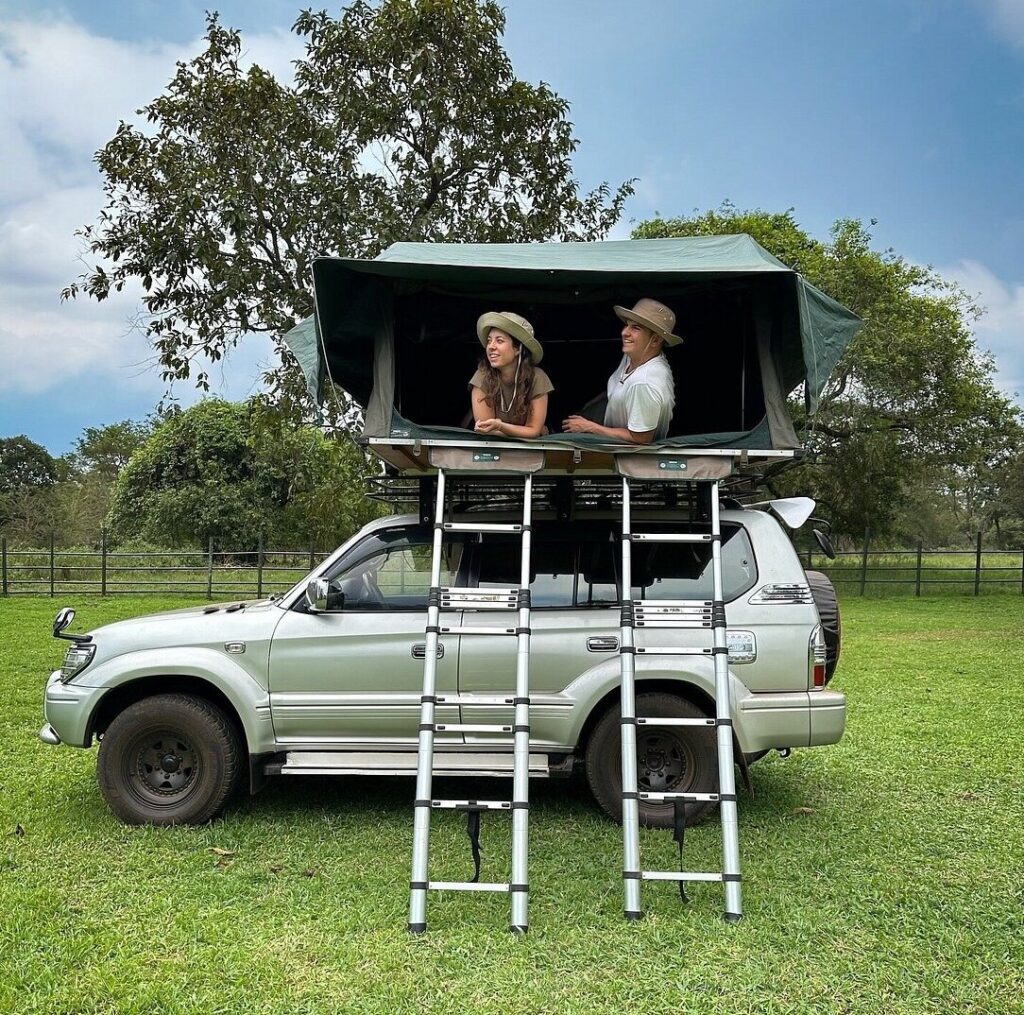
Roof-tent car hire Uganda
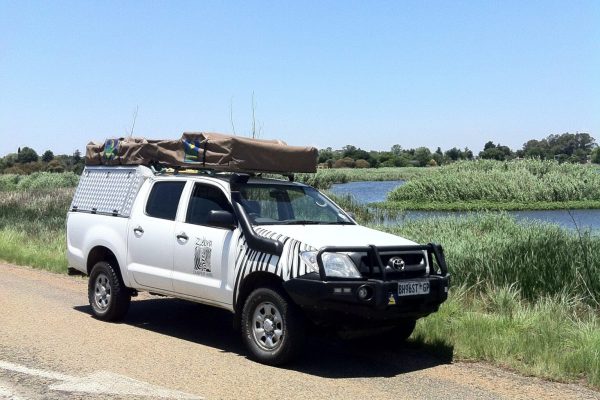
Uganda Roof Tent Hire gives travelers a flexible way to explore Uganda by road. Instead of booking a hotel every night, you travel with your sleeping space on top of your 4×4.
Therefore, the vehicle becomes much more than transport.
It becomes your bedroom, storage area, safari vehicle, and mobile base.
You can leave Entebbe and travel toward Lake Mburo. After that, you can continue to Bwindi for gorilla trekking. From there, Queen Elizabeth National Park, Kibale, and Murchison Falls can form part of a longer route.
Meanwhile, travelers with more time can add Kidepo Valley or cross into Rwanda.
Uganda is well suited to this style of travel because its major national parks cover very different landscapes. Uganda Wildlife Authority currently lists protected areas including Bwindi, Kibale, Lake Mburo, Queen Elizabeth, Murchison Falls, Kidepo Valley, Mgahinga, Rwenzori, Mount Elgon, and Semuliki.
As a result, one road trip can combine savannah, forest, mountains, crater landscapes, rivers, and primate areas.
However, rooftop camping is not as simple as renting any SUV.
The vehicle matters.
So do the tyres.
In addition, the tent, camping gear, insurance, route, fuel, and roadside support all deserve attention.
A Toyota Land Cruiser Prado may suit two travelers very well. On the other hand, a family using two tents may need a larger Land Cruiser.
Likewise, a short western Uganda circuit places different demands on a vehicle from a long trip to Kidepo.
For that reason, this guide looks at roof-tent car hire Uganda from the traveler’s point of view.
It explains what to rent, what it may cost, where to go, what to pack, and how to build a safe and enjoyable Uganda self-drive safari.
Why Uganda Roof Tent Hire Works So Well
Uganda offers a useful mix of main roads and remote safari areas.
Therefore, travelers can cover long distances while still reaching places that feel wild.
A normal lodge safari usually follows a fixed pattern.
You drive to a hotel.
Then you sleep.
The following morning, you pack again and move to another lodge.
With a rooftop tent, the system changes.
Your sleeping area travels with you.
As a result, accommodation becomes more flexible.
You still need approved campsites where required. However, you do not need a full lodge room every night.
That can help control costs.
More importantly, it creates freedom.
For example, you may choose a simple campsite one night. Then you can stay at a comfortable lodge near Bwindi before your gorilla trek.
After trekking, you can return to camping.
Therefore, roof-tent travel does not need to mean camping every single night.
A mixed trip often works better.
It gives you adventure without making comfort impossible.
How Uganda Roof Tent Hire Works
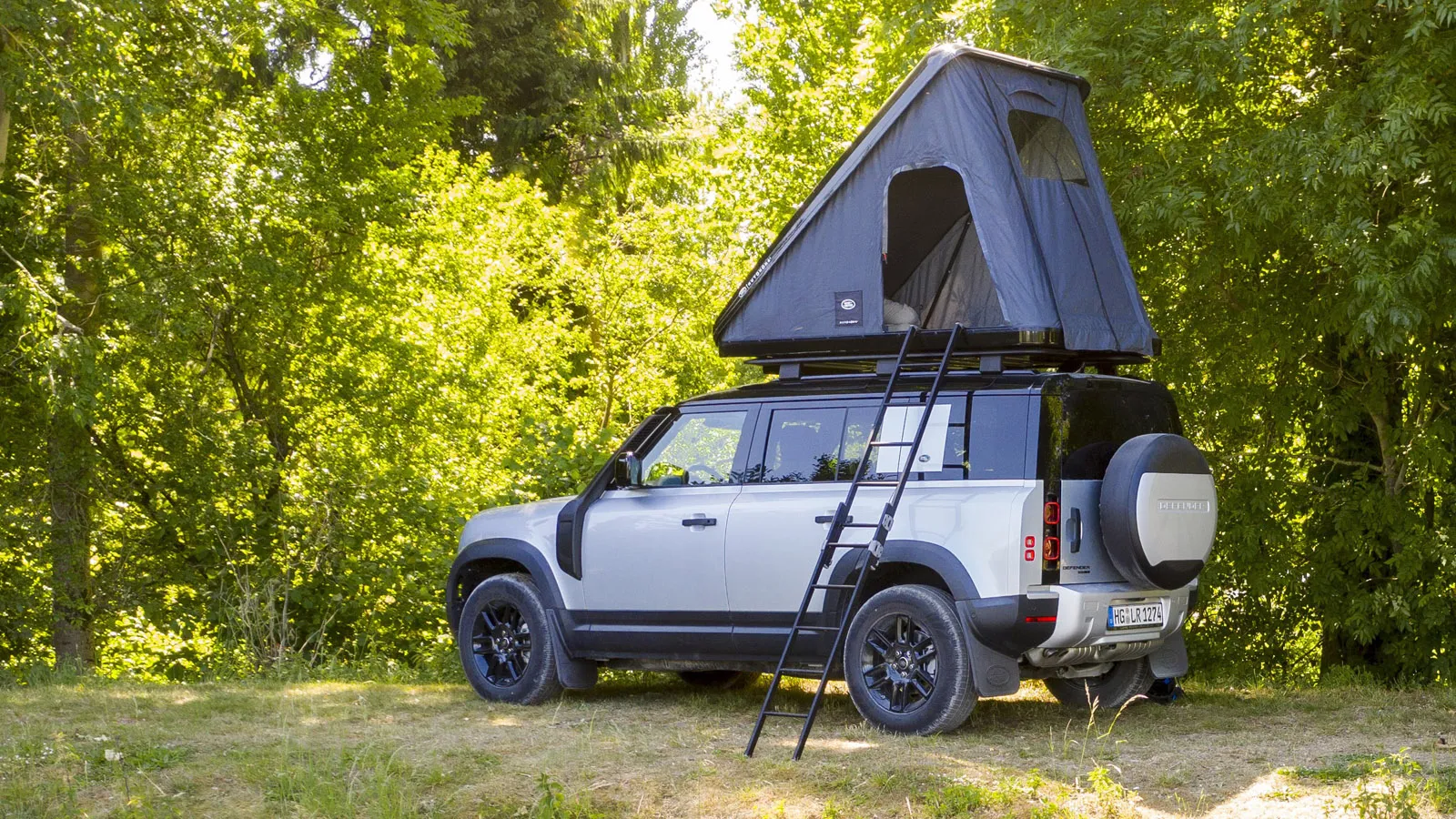
A rooftop tent is fixed to a strong roof rack.
While you drive, the tent stays folded.
Once you reach camp, you open the cover.
Next, the tent folds outward or upward.
A ladder then provides access.
Most systems include a mattress.
In addition, mesh sections help with airflow and insects.
Weatherproof outer fabric protects the sleeping area from rain.
Therefore, setup is usually faster than building a large ground tent.
However, you still need a level parking area.
The vehicle should not lean heavily to one side.
Otherwise, sleeping can become uncomfortable.
Some travelers use one two-person tent.
Meanwhile, families may carry two rooftop tents.
Larger family units also exist.
For example, one current Uganda rental provider advertises standard and family rooftop tent options, with the larger unit intended for two adults and two children.
Before booking, always ask about actual sleeping capacity.
Passenger capacity and sleeping capacity are not the same thing.
Uganda Roof Tent Hire Versus Normal Car Rental
A normal rental car provides transport.
By contrast, a roof-tent 4×4 combines transport and camping.
That changes your whole journey.
You carry more equipment.
Therefore, luggage space becomes more important.
The roof also carries extra weight.
As a result, the vehicle needs a proper rack and suitable suspension.
Road conditions matter too.
A normal car may handle paved roads without difficulty.
However, many safari access roads are not paved.
Bwindi is a good example.
Official Uganda Wildlife Authority information describes access roads that include slower dirt and highland sections around the park.
Therefore, a genuine 4×4 gives you more confidence.
Still, that does not mean you always need the largest Land Cruiser.
The right choice depends on your route.
Best Vehicles for Uganda Roof Tent Hire
Toyota vehicles dominate much of Uganda’s self-drive market.
There are practical reasons for this.
Land Cruisers have a strong record in East Africa.
In addition, many local garages understand them.
Spare parts are also easier to source than for unusual imported vehicles.
Current Uganda rental pages list several common options.
These include the Toyota Prado, Land Cruiser GX, Land Cruiser VX, Land Cruiser V8, heavy-duty 76/78 Series models, and Hilux pickups.
However, each model serves a different traveler.
A couple may value comfort and fuel use.
A family may need more storage.
Meanwhile, a long-distance overlander may care more about strength and spare tyres.
Therefore, do not choose from photographs alone.
Start with the trip.
Then choose the vehicle.
Uganda Roof Tent Hire With a Toyota Prado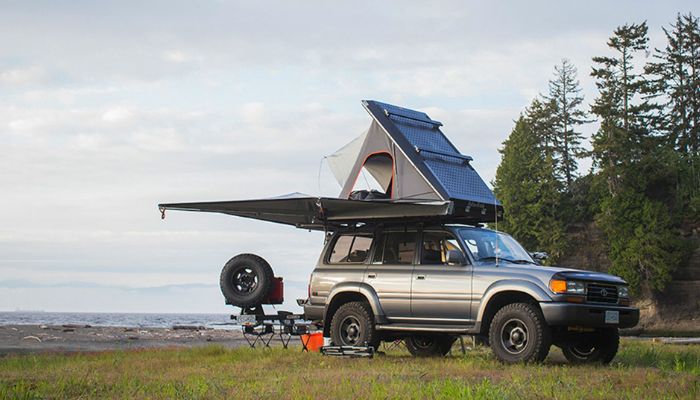
The Prado is one of the most balanced choices.
It offers real 4WD ability.
At the same time, it still feels like a normal SUV on paved roads.
That matters because Uganda road trips include many long highway sections.
For two travelers, interior space is usually generous.
Moreover, one rooftop tent leaves the cabin free for luggage.
A Prado can also suit a small family.
However, luggage must remain controlled.
Current 2026 rental guides place many Prado rooftop-tent packages broadly around US$80 to US$130 per day.
Another current provider advertises a Prado with rooftop tent from around US$110 per day.
Rates vary by vehicle age, season, insurance, rental length, and equipment.
Therefore, these are useful market references rather than fixed Uganda prices.
Why a Prado Suits Couples
Couples usually need only one tent.
Therefore, roof weight remains manageable.
There is also more space inside the vehicle.
Camera bags, food, water, and clothes can be organized without filling every seat.
Fuel use can also be lower than a large V8.
As a result, a Prado often provides enough capability without unnecessary cost.
Another benefit is comfort.
Long drives between parks feel easier in a road-focused SUV.
However, it still has the ground clearance needed for many Uganda routes.
For most first-time self-drive couples, this balance is very attractive.
Uganda Roof Tent Hire With a Land Cruiser GX or VX
GX and VX models offer more room.
They also provide strong 4×4 ability.
Therefore, they suit travelers carrying more gear.
A group of three or four may find the extra interior space useful.
Likewise, two tents can make a larger vehicle more practical.
Some current fleet listings show GX/VX rooftop-tent vehicles within roughly US$95 to US$150 per day.
Again, the final rate depends on the setup.
A basic vehicle and tent costs less than a package with fridge, camping kitchen, insurance, and extra gear.
For that reason, compare inclusions carefully.
Uganda Roof Tent Hire With a Land Cruiser V8
A V8 gives travelers more power and cabin comfort.
Therefore, long road sections can feel relaxed.
Storage can also be better.
This is useful when camping gear grows.
However, fuel use can rise.
A larger petrol engine may cost much more over two or three weeks.
Current market guides place V8 rooftop-tent rentals around US$110 to US$180 per day in some fleets.
Another current rental page advertises a V8 rooftop-tent setup from around US$130 per day.
Therefore, a V8 makes sense when you value space and comfort.
It is less attractive when your main goal is simply the lowest possible trip cost.
Heavy-Duty Land Cruiser Roof-Tent Hire
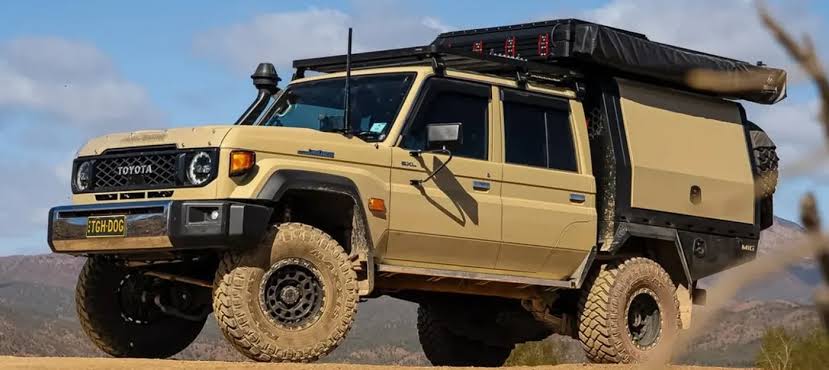
Travelers heading to remote areas may prefer a 76 or 78 Series Land Cruiser.
These vehicles are built around strength.
As a result, they can suit long overland travel.
The cabin may feel simpler.
The ride may also feel firmer.
However, rugged design can be useful on more demanding routes.
A heavy-duty model makes particular sense for remote journeys.
For example, Kidepo Valley involves much greater distance than Lake Mburo.
Therefore, reliability and range matter more.
Still, a short western circuit does not automatically require such a large vehicle.
Can a RAV4 Carry a Roof Tent?
The answer depends on the exact vehicle.
Some rental firms offer smaller SUVs for self-drive.
However, not every small SUV is approved for rooftop camping.
Roof load matters.
So does rack design.
In addition, the suspension must handle the extra weight.
Some current Uganda operators advertise limited small-SUV rooftop options. Others keep roof tents for Land Cruiser models.
Therefore, never assume.
Ask the company about the specific model.
Uganda Roof Tent Hire Prices in 2026
Prices vary widely.
That is because the products are not identical.
A basic tent on an older Prado can cost much less than a newer V8 with full camping gear.
Current market examples show a broad range.
One recent Uganda guide lists RAV4 rooftop options around US$40–60, Prado setups around US$80–130, GX/VX models around US$95–150, and V8 models around US$110–180.
Meanwhile, Uganda Car Rentals currently advertises a Prado roof-tent package from about US$110 and a V8 from about US$130.
Uganda Self Drive lists several Land Cruiser rooftop options around US$100–140.
Therefore, the real question is not, “What is the cheapest vehicle?”
Instead, ask, “What does the price include?”
What Should Uganda Roof Tent Hire Include?
A proper quote should clearly name the vehicle.
It should also explain the tent.
After that, look at camping equipment.
Many packages include a mattress.
In addition, you may receive a table, chairs, cooking gear, cutlery, plates, cups, and a gas stove.
Some companies also include a refrigerator.
Others charge extra.
For example, Safari Drive Uganda currently lists optional fridge hire alongside its tent packages.
Uganda Self Drive also advertises camping gear, cooking utensils, and fridge options with its rooftop Land Cruisers.
Therefore, request a full inventory.
Do not rely on the words “fully equipped.”
Why Camping Gear Matters
Small items shape the trip.
A missing chair is annoying.
However, a missing stove can affect every meal.
Likewise, poor water storage can create daily problems.
The tent may be the main feature in the advertisement.
Still, the kitchen and storage setup matter just as much.
Before departure, test the equipment.
Open the table.
Try the chairs.
Light the stove if allowed.
Check the fridge.
Finally, make sure pots and plates are present.
Ten minutes at the rental yard can save hours later.
Is a Camping Fridge Worth It?
For short trips, a cooler can be enough.
However, a fridge becomes very useful on longer journeys.
Fresh food lasts longer.
Cold drinks are easier to keep.
You also buy groceries less often.
Therefore, travelers on 10- to 14-day routes often appreciate it.
Still, ask how the electrical system works.
A fridge should not leave you with a flat starting battery.
Ideally, the system uses proper auxiliary power.
Otherwise, discuss safe use with the rental company.
Uganda Roof Tent Hire From Entebbe
Entebbe is a natural starting point.
International visitors arrive there.
Therefore, many rental companies can arrange airport or nearby handover.
Direct collection can save time.
However, landing after a long flight changes the decision.
Tired drivers make poor decisions.
For that reason, one night in Entebbe can be a smart start.
The following morning, you can inspect the car in daylight.
You can also learn how to use the tent.
After that, buy food, water, and other supplies.
Then begin the road trip rested.
Uganda Roof Tent Hire From Kampala
Kampala is another major pickup area.
Many rental businesses operate in or around the city.
Therefore, it can be easier to collect a wider range of vehicles there.
You can also shop before leaving.
However, Kampala traffic can be busy.
First-time East Africa drivers may find it stressful.
If that concerns you, ask for an easier meeting point.
Alternatively, use a driver for the first section.
Once outside the busiest city roads, the trip often feels calmer.
Practice the Roof Tent Before Leaving
This step is simple.
Yet many travelers skip it.
Open the tent yourself.
Then close it.
Learn how the ladder works.
Check the cover.
See how the bedding fits.
If there are two tents, test both.
Meanwhile, ask how wet fabric should be handled.
A quick demonstration is not enough.
You should physically do the process.
As a result, your first campsite will feel much easier.
Uganda Roof Tent Hire for Lake Mburo
Lake Mburo can be an excellent first stop.
It lies on the route toward southwestern Uganda.
Therefore, it fits naturally before Bwindi.
It also allows first-time campers to learn the setup without traveling too far.
Perhaps the first night reveals that your bags are poorly organized.
Maybe the cooking gear needs a new place.
These are easy problems to solve early.
As a result, the vehicle feels more organized before you reach remote areas.
Uganda Roof Tent Hire for Bwindi
Bwindi needs careful planning.
The park has different trekking areas.
Therefore, your gorilla permit should guide where you stay.
Do not simply book “somewhere near Bwindi.”
Distances can be misleading.
Official UWA material shows different access routes toward Buhoma and other trailheads, with dirt and highland roads forming part of the journey.
As a result, a proper 4×4 is a strong choice.
Weather also matters.
Rain can slow mountain roads.
For this reason, arrive near your trekking sector the day before.
Roof-Tent Camping Before Gorilla Trekking
Camping before trekking can work well.
However, gorilla morning starts early.
You also need suitable clothing, boots, and permits ready.
Therefore, some travelers choose a lodge for that night.
It gives them a proper shower.
Breakfast can also be easier.
After trekking, camping can continue.
This mixed approach is often more comfortable than forcing every night into the same accommodation style.
Uganda Roof Tent Hire for Queen Elizabeth National Park
Queen Elizabeth fits well after Bwindi.
Therefore, many western Uganda routes connect the two.
The park offers a different environment from the forest.
Savannah, wetlands, and the Kazinga Channel shape the experience.
However, rooftop travelers still need proper campsites.
Do not treat open land as free camping space.
Wildlife moves through protected areas.
Therefore, stay where park management or a private campsite allows.
Food should also stay secure.
That is important around wild animals.
Uganda Roof Tent Hire for Kibale
Kibale adds a primate focus.
Uganda Wildlife Authority lists chimpanzee tracking and habituation among the park’s main activities.
Therefore, the park works well after Queen Elizabeth.
Camp close enough to your activity meeting point.
That prevents an early-morning rush.
In addition, allow time for Fort Portal and the surrounding crater region if your schedule permits.
A roof-tent trip works best when you do not move every day.
Uganda Roof Tent Hire for Murchison Falls
Murchison Falls adds another major landscape.
The Nile creates a very different setting from southwestern Uganda.
Therefore, it is worth adding when you have enough days.
However, do not underestimate travel time.
Plan to arrive during daylight.
This also makes camp setup easier.
Uganda Wildlife Authority has published park transit rules that include a 40 km/h speed limit and daytime operating hours for transit traffic.
Because local rules can change, confirm current access conditions before travel.
Uganda Roof Tent Hire for Kidepo Valley
Kidepo deserves more time.
It is remote.
Therefore, it should not be added casually to a short itinerary.
The road journey itself is a major part of the trip.
A stronger Land Cruiser can make sense here.
In addition, tyre condition matters more.
Fuel planning also becomes important.
Carry drinking water.
Check support arrangements.
Finally, ask for current route advice before departure.
Uganda Wildlife Authority continues to manage Kidepo as one of the country’s national parks, and the park remains part of Uganda’s official protected-area network.
How Long Should a Uganda Roof-Tent Safari Be?
Seven days can work for a focused trip.
However, it will feel fast.
Ten days is better.
Two weeks gives you much more freedom.
For example, 10 days can cover Lake Mburo, Bwindi, Queen Elizabeth, and perhaps Kibale.
Meanwhile, 14 days allows a slower pace and can include Murchison.
Adding Kidepo requires even more time.
Therefore, do not measure the trip only by how many parks you can list.
Measure it by how much you can actually enjoy.
A 10-Day Uganda Roof-Tent Route
Begin in Entebbe.
Spend the first night there if you arrive late.
Next, collect the vehicle.
Drive toward Lake Mburo.
After that, continue to southwestern Uganda.
Spend enough time near Bwindi before your gorilla trek.
Then move toward Queen Elizabeth.
From there, continue to Kibale.
Finally, return toward Entebbe.
This route limits very long northern drives.
Therefore, it suits first-time self-drive travelers well.
A 14-Day Uganda Roof-Tent Route
With two weeks, the pace improves.
You can still begin with Lake Mburo.
Then spend several days in the Bwindi region.
After that, visit Queen Elizabeth.
Continue to Kibale.
Next, move north toward Murchison Falls.
Finally, return to Entebbe.
The extra days matter.
They create rest.
Moreover, they allow weather and wildlife conditions to change without destroying the schedule.
Uganda Roof Tent Hire for Couples
Couples are very well suited to rooftop travel.
One tent is often enough.
Therefore, the vehicle stays simple.
There is also room for luggage.
A Prado can work particularly well.
One traveler can set up the tent.
Meanwhile, the other can organize food or chairs.
As a result, evening camp routines become quick.
Couples also have fewer opinions to balance when changing plans.
That flexibility is one of the biggest benefits of self-drive travel.
Uganda Roof Tent Hire for Families
Families need more planning.
First, consider sleeping space.
A normal two-person tent will not serve four travelers.
Therefore, you may need a family tent or two units.
Current Uganda suppliers advertise both standard and larger family rooftop setups.
Next, think about luggage.
Children add clothes, food, and personal items.
As a result, a larger Land Cruiser may make more sense.
Finally, consider ladder use.
Young children need close supervision.
Roof-Tent Camping With Young Children
Rooftop camping can be exciting for children.
However, parents should think about practical details.
The ladder is the first issue.
A young child may need help every time.
Night toilet trips are another consideration.
Therefore, families should choose campsites with convenient facilities.
A mixed lodge-and-camping trip can also help.
For example, camp for two nights.
Then use a lodge.
After that, return to camping.
This keeps the trip fun.
Uganda Roof Tent Hire for Solo Travelers
Solo travel offers complete freedom.
However, every job belongs to one person.
You drive.
You navigate.
You cook.
You open the tent.
You also deal with problems.
Therefore, itinerary pace matters.
Avoid huge driving days.
In addition, keep somebody informed of your route.
Roadside support becomes especially important.
A solo road trip should feel independent, not unsupported.
Uganda Roof Tent Hire for Photographers
Photographers often enjoy self-drive travel.
You can stop when the light is good.
Likewise, you can stay longer at a viewpoint.
However, camera gear needs protection.
Dust is common on dry roads.
Therefore, keep lenses inside closed bags during fast dirt-road travel.
Charging is another issue.
Ask about USB points.
Serious photographers may also need an inverter.
In addition, a refrigerator and camera chargers can compete for battery power.
Discuss the electrical system before departure.
Uganda Roof Tent Hire During the Dry Season
Dry weather often makes driving easier.
Mud becomes less common.
Tent setup is also simpler.
However, dust increases.
Keep electronics covered.
Clean ladder steps before folding the tent.
In addition, protect food from dust.
Even during a drier period, mountain regions can receive rain.
Therefore, always carry waterproof layers.
Do not leave rain gear at home simply because the forecast looks clear.
Uganda Roof Tent Hire During the Rainy Season
Rain changes the road.
Mud becomes more common.
Water can hide deep holes.
Therefore, tyre condition becomes very important.
A genuine 4×4 also gives more confidence.
Still, four-wheel drive does not make every road safe.
Local advice matters.
If a lodge or ranger warns you about a route, listen.
Self-drive freedom means you can change plans.
Use that freedom.
Why Tyres Matter for Uganda Roof Tent Hire
Tyres often matter more than luxury features.
A beautiful Land Cruiser with worn tyres is a poor safari vehicle.
Therefore, inspect them at pickup.
Look at tread depth.
Check sidewalls.
Then inspect the spare.
Make sure the jack is present too.
Remote routes may justify a second spare.
In addition, ask whether tyre damage is covered by insurance.
Many rental policies treat tyres separately.
Ground Clearance and 4WD
High clearance helps on rough roads.
However, it is not the only factor.
Wheelbase matters.
Tyres matter.
Driver judgment matters most.
Slow driving protects the vehicle.
It also gives you more time to react.
Therefore, do not treat a 4×4 as permission to drive quickly over bad roads.
The strongest vehicle can still be damaged by poor driving.
Manual or Automatic?
Choose the transmission you already know.
Automatic Prados and V8s are common.
Meanwhile, some heavy-duty Land Cruisers use manual gearboxes.
Current Uganda self-drive fleets advertise both types.
If you rarely drive manual, choose automatic.
Uganda is not the place to learn clutch control on a steep dirt road.
Likewise, ask for a 4WD demonstration.
You should know how high and low range work before you need them.
Fuel Planning for Uganda Roof Tent Hire
Fuel is a major part of the trip budget.
Large vehicles use more.
Moreover, a rooftop tent adds weight and wind resistance.
Therefore, real fuel use can be higher than normal highway figures.
Fill up before long rural sections.
Do not wait for the warning light.
Ask the rental company where they recommend stopping.
Local advice is especially useful on remote routes.
Finally, remember game drives.
They add distance beyond the town-to-town route shown on a map.
Water Planning
Water is equally important.
Carry enough for drinking.
Also allow some reserve.
Cooking and washing may need additional water.
Many camping packages provide containers.
However, capacity differs.
Ask before departure.
Reusable bottles make daily use easier.
Meanwhile, do not assume every campsite supplies safe drinking water.
Confirm at check-in.
Food on a Uganda Roof-Tent Safari
Keep meals simple.
That saves time.
Breakfast can include fruit, eggs, oats, or bread.
Lunch may be light.
Dinner can be rice, pasta, vegetables, or other easy food.
In addition, towns allow you to restock.
You do not need to carry two weeks of groceries from Entebbe.
Buying along the road also supports local businesses.
A fridge gives you more choice.
However, simple meals work even without one.
Cooking at Camp
Use designated cooking areas when required.
Keep the stove stable.
Also keep flames away from dry grass.
Wildlife areas need extra care.
Food smells can attract animals.
Therefore, store ingredients properly.
Clean after cooking.
Take rubbish away.
Never leave scraps around the campsite.
These habits protect both travelers and wildlife.
Can You Camp Anywhere?
No.
A rooftop tent gives you accommodation.
It does not give you unlimited land access.
National parks have rules.
Private land has owners.
Communities also deserve respect.
Therefore, use official or approved campsites.
This approach is safer as well.
Staff know where animals move.
They also know where camping is permitted.
A random location may look peaceful but still sit on a wildlife path.
Uganda Roof Tent Hire Inside National Parks
Camping inside or near parks can be one of the highlights of the journey.
However, check current campsite arrangements.
Facilities vary.
Some are basic.
Others have toilets, showers, and simple restaurants.
Park and campsite charges are also separate from the rental vehicle.
Therefore, include them in the trip budget.
Current UWA information confirms that Uganda’s protected-area network is managed through the national park system, and travelers should use official information when planning access.
Wildlife Safety Around Camp
Sleeping above the ground does not make animals harmless.
A roof tent is still a tent.
Therefore, follow campsite instructions.
Do not walk around wildlife areas at night without advice.
Keep children close.
Also store food well.
Hippos, elephants, buffalo, and other animals can move near camps.
Local staff understand these patterns.
Listen to them.
Insurance for Uganda Roof Tent Hire
Insurance deserves careful reading.
“Comprehensive” may still include an excess.
Therefore, ask how much you would pay after damage.
Check tyres.
Ask about glass.
Underbody damage also matters.
In addition, find out whether the tent itself is covered.
Cross-border travelers need even more detail.
Insurance that works in Uganda may not automatically work elsewhere.
Get written confirmation before leaving the country.
Roadside Assistance
Support matters greatly on a self-drive trip.
Several current competitors advertise 24/7 roadside help.
However, ask what that means.
Can a mechanic reach Queen Elizabeth?
What happens near Kidepo?
Will another vehicle be sent after a major breakdown?
How long might that take?
Clear answers matter more than the phrase “24/7 support.”
Inspect the Vehicle Before You Leave
Start outside.
Photograph damage.
Then inspect tyres.
Check the spare.
Test lights.
Next, open the tent.
Make sure the ladder works.
Look at chairs and cooking gear.
Test the fridge.
Also check air conditioning.
Finally, confirm emergency contacts.
A careful handover takes time.
However, it often prevents later problems.
Luggage for Uganda Roof Tent Hire
Soft bags work best.
Rigid suitcases waste space.
Camping equipment already fills much of the vehicle.
Therefore, flexible bags are easier to arrange.
Keep a small day bag accessible.
Important documents should stay dry.
Likewise, medication should not sit under heavy luggage.
A well-organized vehicle feels larger.
A badly packed one can feel crowded even when the SUV is big.
Organizing the Vehicle
Give every item a home.
Cooking equipment stays together.
Water stays in one place.
Frequently used items remain easy to reach.
Dirty shoes need a separate area.
Camera gear needs dust protection.
After a few days, this system saves time.
Without it, every stop turns into a search.
Good organization is one of the hidden skills of overland travel.
Charging Phones and Cameras
Power needs grow quickly.
Phones run navigation.
Cameras need batteries.
A fridge may also use electricity.
Therefore, check charging ports at handover.
Bring a multi-port USB adapter.
Power banks add backup.
Photographers may need an inverter.
Most importantly, understand how power is managed when the engine is off.
A charged phone is useful.
A working starter battery is essential.
Navigation on a Uganda Self-Drive Trip
Offline maps are very useful.
Mobile coverage cannot be guaranteed everywhere.
Therefore, download maps before leaving urban areas.
Save campsite coordinates.
Ask lodges for directions.
Local advice can beat a navigation app.
Sometimes the shortest digital route is not the easiest road.
For that reason, confirm unfamiliar routes before taking them.
A paper overview map is useful too.
It helps you understand the bigger journey.
Avoid Driving Long Distances at Night
Night driving adds risk.
Road damage is harder to see.
Pedestrians and livestock can also be less visible.
Therefore, try to reach camp before dark.
There is another benefit.
Tent setup is much easier in daylight.
You can see the ground.
Cooking is simpler too.
A calm afternoon arrival creates a better camping evening.
Uganda Roof Tent Hire and Gorilla Trekking
Gorilla trekking works very well within a roof-tent road trip.
However, the permit should come first.
Your trekking area determines where you need to be.
Therefore, confirm the permit before choosing the campsite.
Bwindi has several access areas.
Official UWA documentation shows different approaches and road conditions around the park.
Arrive nearby the day before.
Then keep the vehicle parked during the trek.
Afterward, continue the road trip.
Uganda Roof Tent Hire and Chimpanzee Trekking
Kibale is the obvious chimpanzee stop on many western routes.
UWA currently lists chimpanzee tracking and habituation as key activities there.
Therefore, booking activity times should be part of your route plan.
Stay nearby the night before.
Avoid a long drive on trekking morning.
This simple choice reduces stress.
Uganda Roof Tent Hire for Cross-Border Travel
Uganda combines well with neighboring countries.
However, cross-border use needs permission.
The vehicle requires correct papers.
Insurance must also cover the next country.
Some current rental companies actively advertise regional self-drive travel.
Still, do not assume.
Tell the company your full route before payment.
Extra fees may apply.
One-way drop charges may also appear.
Uganda to Rwanda With a Roof-Tent Car
Rwanda is a natural extension.
Travelers can move from southwestern Uganda toward Rwanda’s Volcanoes region.
Lake Kivu or Akagera can follow.
However, border time should be included in the itinerary.
Do not schedule a tight activity immediately after crossing.
Likewise, make sure the vehicle is approved for Rwanda.
Paperwork should be settled before departure.
Uganda to Kenya With a Roof-Tent Car
Kenya adds a different safari landscape.
The journey is much longer.
Therefore, allow enough time.
A regional rental may permit one-way drop-off.
However, relocation fees can be high.
Compare the cost with returning the car to Uganda.
For longer holidays, the convenience can still be worthwhile.
Uganda to Tanzania With a Roof-Tent Car
Tanzania requires an even larger plan.
Do not rush it.
Cross-border documents, insurance, and route choice all matter.
In addition, road distances can be significant.
A roof-tent vehicle gives freedom.
However, freedom disappears when every day becomes a race.
Long East Africa routes work best when they are slow.
Uganda Roof Tent Hire for First-Time Self-Drivers
A first self-drive trip should be realistic.
Do not start with the hardest possible route.
A western Uganda circuit is a good introduction.
You can combine major attractions without extreme distances.
In addition, towns and services are more frequent than on very remote routes.
Learn the vehicle first.
Then consider Kidepo or a long cross-border journey on another trip.
Confidence grows quickly once you understand the road conditions.
Common Uganda Roof Tent Hire Mistakes
One common mistake is choosing by price alone.
Another is carrying too much luggage.
Travelers also underestimate fuel.
Meanwhile, some people plan too many parks.
Others forget to check the gorilla trekking sector.
Camping gear can also be taken for granted.
Finally, cross-border paperwork is sometimes left until too late.
Most of these problems have one solution.
Plan the route first.
Then book the vehicle.
Does Uganda Roof Tent Hire Save Money?
It can.
However, the answer depends on how often you camp.
A roof-tent vehicle costs more than the same SUV without camping equipment.
Campsites still charge fees.
Fuel remains a major expense.
Park fees and wildlife permits also remain unchanged.
Therefore, savings are greatest when you camp regularly.
If you stay in hotels almost every night, the tent may add cost without much benefit.
Uganda Roof Tent Hire Versus Budget Lodges
Budget lodges offer convenience.
You arrive and the bed is ready.
There is often a shower.
Breakfast may also be available.
By contrast, camping requires work.
However, the vehicle gives you more independence.
The better option depends on what you enjoy.
A smart trip can use both.
For example, camp three nights.
Then use a lodge.
This keeps the adventure fresh.
Who Should Choose Uganda Roof Tent Hire?
Choose it if you enjoy road trips.
It also suits travelers who like camping.
Couples often love the independence.
Families with camping experience can enjoy it too.
Photographers benefit from flexible timing.
Meanwhile, overlanders value the ability to travel across borders.
However, travelers who dislike cooking, packing, and ladders may prefer a lodge safari.
There is nothing wrong with that.
The best safari style is the one you actually enjoy.
Uganda Roof Tent Hire FAQ
What is the best vehicle for Uganda rooftop camping?
A Toyota Prado is a strong choice for couples and small groups. Larger Land Cruisers work better for families, heavy equipment, or remote overland routes.
How much does Uganda Roof Tent Hire cost?
Current 2026 market examples range from roughly US$80 to US$180 per day for many Prado and Land Cruiser setups, although smaller and more expensive options also exist.
Is camping gear included?
Often, yes. However, the exact equipment differs by company. Therefore, request a written inventory.
Can I collect the vehicle in Entebbe?
Many self-drive companies arrange Entebbe or airport-area pickup. Confirm the exact meeting place before travel.
Can I collect the vehicle in Kampala?
Yes. Kampala is another common handover area.
Do I need 4WD?
Not on every paved road. However, true 4WD is strongly useful for safari roads, rainy conditions, and more difficult access routes.
Is a Prado good for Uganda?
Yes. It gives a useful mix of comfort, ground clearance, and 4WD ability.
Is a V8 worth the extra cost?
It can be if you need more space and comfort. However, fuel use may be higher.
Can families use rooftop tents?
Yes. Still, check sleeping capacity carefully. Two tents may be needed.
Can children sleep in rooftop tents?
Yes, but ladder access requires supervision.
Can I camp anywhere?
No. Use approved or authorized campsites.
Can I camp inside national parks?
Camping may be available in or around protected areas, but arrangements differ. Therefore, confirm current options before travel.
Is a fridge necessary?
No. However, it becomes very useful on longer trips.
Should I choose automatic or manual?
Choose the transmission you already know well.
What luggage is best?
Soft bags are much easier to organize than large hard-shell suitcases.
Can I self-drive to Bwindi?
Yes, with a suitable vehicle and careful planning. Official UWA information describes dirt and highland access routes around Bwindi.
Can I combine roof-tent travel with gorilla trekking?
Yes. Confirm your permit and trekking area first. Then choose nearby camping or lodge accommodation.
Can I take the rental into Rwanda?
Some providers allow it with advance permission and proper insurance.
Can I take it to Kenya?
Some regional companies permit Kenya travel. However, written approval is required.
Is roadside assistance important?
Yes. It is one of the most important parts of a self-drive rental.
How many days should I spend in Uganda?
Ten to fourteen days works very well for many western circuits. More time is better when adding Murchison, Kidepo, or another country.
Final Advice on Uganda Roof Tent Hire
A successful Uganda Roof Tent Hire trip starts with the route.
First, choose the parks.
Next, confirm major permits.
Then count passengers and tents.
After that, choose the vehicle.
For two travelers, a Prado is often enough.
Meanwhile, larger families may need a bigger Land Cruiser.
Remote routes require more preparation.
Therefore, pay attention to tyres, support, fuel, and insurance.
Once the vehicle is booked, check the camping gear.
Practice opening the tent.
Test the stove.
Check water storage.
Understand the fridge.
Most importantly, do not rush.
Uganda deserves time.
Stay near Bwindi.
Enjoy Queen Elizabeth.
Slow down around Kibale.
Spend a quiet evening at camp.
Then move again.
That rhythm is what makes roof-tent car hire Uganda special.
The vehicle stops feeling like a rental car.
Instead, it becomes your small home on the road.
Book Uganda Roof Tent Hire With Universal Ventures Rwanda
Universal Ventures Rwanda can assist travelers planning Uganda Roof Tent Hire, private 4×4 transport, Uganda safari routes, gorilla trekking journeys, and wider East African adventures.
For roof-tent car hire Uganda, 4×4 safari transport, Uganda road-trip planning, or combined Rwanda–Uganda–Kenya travel, contact:
Universal Ventures Rwanda
Email: info@universalventuresrwanda.com
Phone / WhatsApp: +250 781 441 853
Address: KK 15 Road, Opposite IPRC Kicukiro Main Entrance, Sangwa/BGRD Building, Kigali, Rwanda

Related Posts