Rooftop Tent Hire Kenya gives independent travelers an affordable and flexible way to combine a…
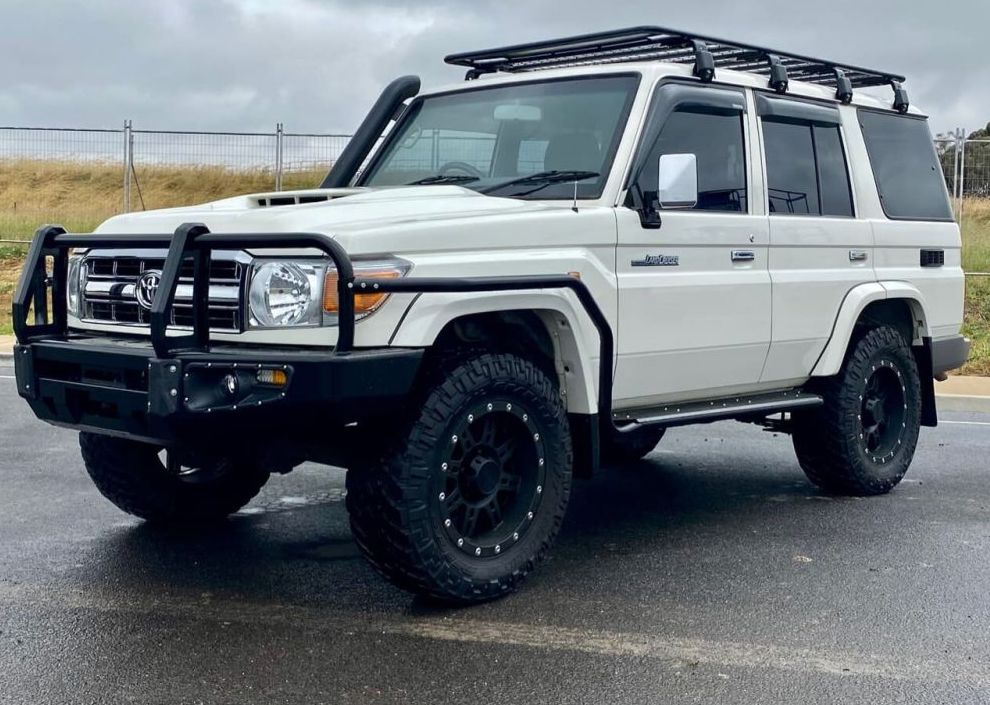
Self-drive roof-tent car hire Kenya
A good rooftop tent rental Kenya package combines transport, sleeping space and camping equipment in one practical safari setup. It works especially well for couples, photographers, families and independent travellers who want more freedom than a conventional guided safari usually provides.
Travelling across Kenya in a 4×4 with your accommodation mounted above the vehicle offers a completely different safari experience. Instead of following a fixed lodge-to-lodge schedule, you can move through wildlife areas, Rift Valley landscapes, mountains and remote camps at your own pace.
Why Rooftop Tent Rental Kenya Is Growing in Popularity
Independent safari travel has become increasingly attractive because many visitors want flexibility rather than a tightly controlled itinerary.
With a self-drive 4×4, you can leave Nairobi in the morning, spend several nights near a national park, continue toward another wildlife region and adjust your schedule according to road conditions or personal interests.
A rooftop tent adds another level of freedom because your accommodation travels with you.
Instead of searching for a hotel every evening, you can reserve campsites close to wildlife areas and create a route based around landscapes rather than hotel availability.
The experience is also more immersive.
Morning coffee beside the vehicle feels different from breakfast inside a large lodge dining room. Evening becomes quieter, and sounds from the surrounding bush become part of the safari.
For many travellers, this combination of independence, nature and practical mobility explains why rooftop tent rental Kenya has become an attractive alternative to conventional safari travel.
What Is Rooftop Tent Rental Kenya?
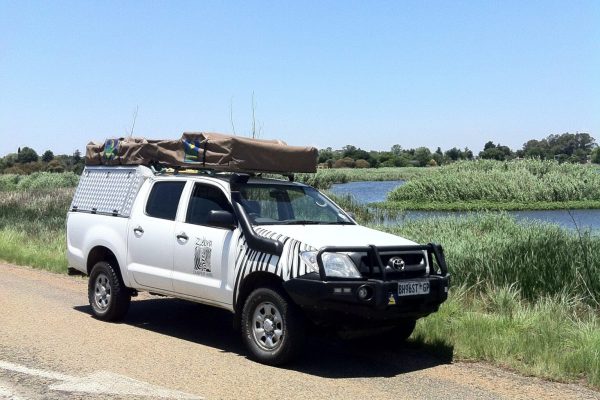
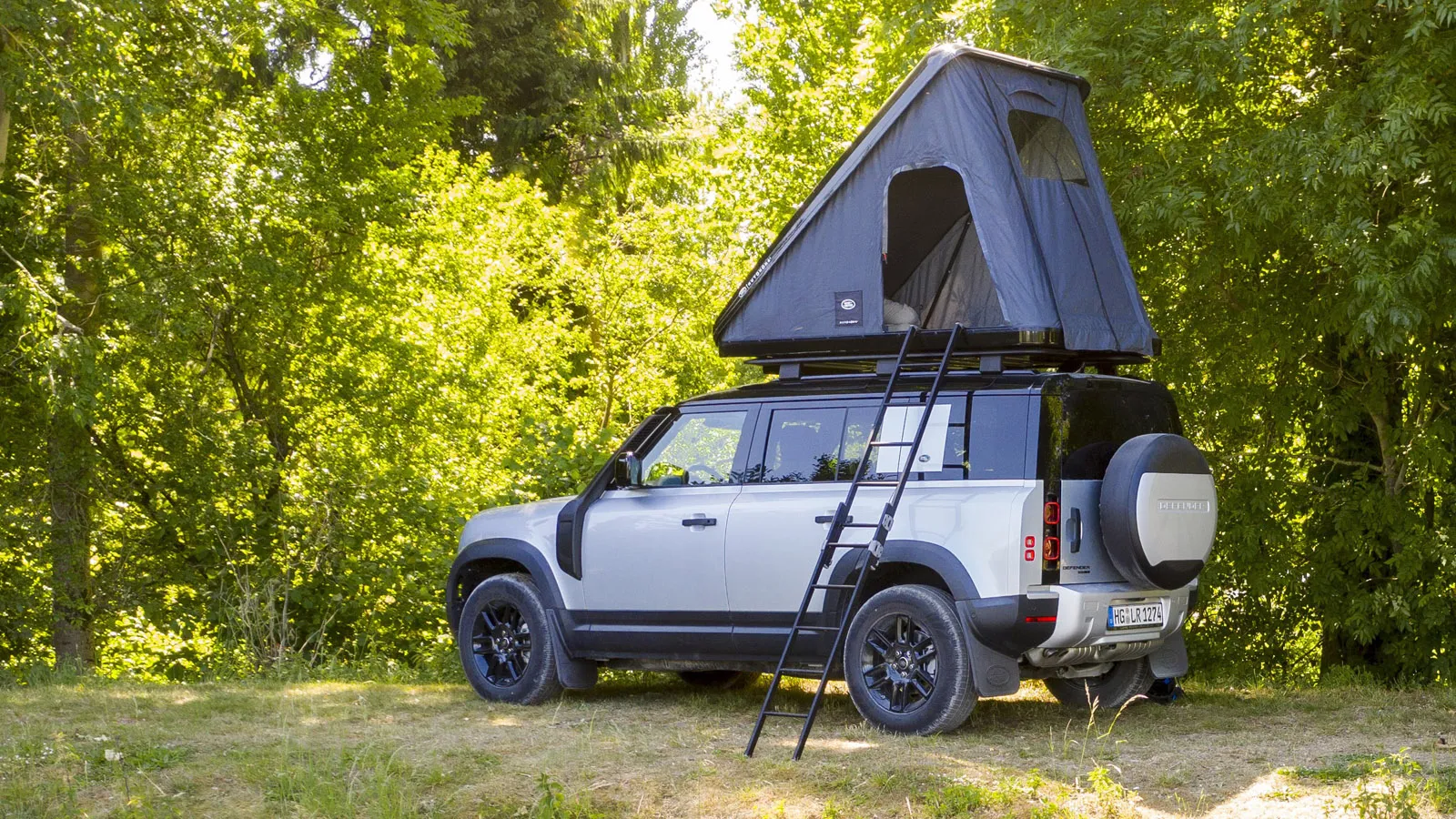
A rooftop tent is a foldable sleeping unit permanently secured to the roof rack of a safari vehicle.
Once the vehicle reaches a campsite, the tent opens into a raised sleeping platform. Access is normally provided through a ladder, while a mattress remains inside the tent.
The biggest advantage is convenience.
There is no need to clear stones, level soft ground or pitch a traditional tent every evening. Most rooftop tents can be opened relatively quickly once the traveller becomes familiar with the system.
A typical Kenya setup may include a Toyota Land Cruiser, Prado, Hilux or another capable 4×4.
Depending on the rental package, the vehicle can also include camping chairs, a table, cooking equipment, water containers, bedding, recovery equipment and sometimes a refrigerator.
Not every company includes the same equipment.
For that reason, comparing a rental should involve much more than looking at the daily vehicle price.
Rooftop Tent Rental Kenya for a Self-Drive Safari
Self-driving changes the rhythm of a safari.
Travellers are no longer dependent on a permanent driver-guide deciding departure times or how long to remain at a particular location.
You decide when the day begins.
Wildlife photographers may choose to spend longer near a productive area. Birdwatchers can stop when they notice an interesting species. Couples can enjoy a slow afternoon without feeling they are delaying a group.
Independence also allows travellers to combine national parks, conservancies, towns and scenic areas in ways that conventional packages may not offer.
However, freedom requires preparation.
You become responsible for navigation, fuel, road conditions, camp planning and vehicle care.
Anyone considering rooftop tent rental Kenya should therefore balance adventure with sensible planning.
Choosing the Right 4×4 for Rooftop Tent Rental Kenya
Vehicle selection can determine whether a road trip feels comfortable or exhausting.
The cheapest 4×4 is not automatically the best option.
Passenger numbers, luggage, fuel consumption, ground clearance, transmission, camping equipment and route difficulty should all influence the decision.
For a couple travelling with limited luggage, a medium-size 4×4 may be enough.
Longer itineraries or remote routes usually benefit from a stronger vehicle with larger storage capacity.
Families need to think about passenger space as carefully as tent size.
Hours spent on safari roads can become tiring if the vehicle is overcrowded.
Toyota Land Cruiser for Rooftop Tent Rental Kenya
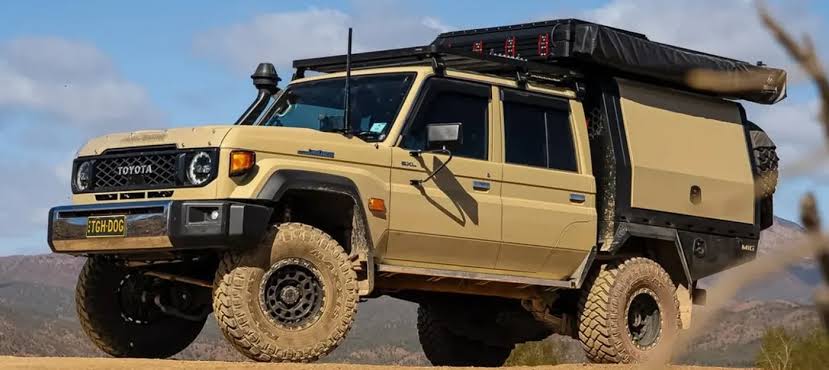
The Toyota Land Cruiser remains one of the most familiar safari vehicles in East Africa.
Its reputation comes from durability, four-wheel-drive capability and suitability for rough terrain.
Different Land Cruiser versions serve different travel styles.
A hardtop model is often chosen for practical expedition use, while a Prado can provide a more comfortable interior for travellers spending long periods on paved roads.
Classic Land Cruiser safari models offer strong ground clearance and enough load capacity for camping equipment, water and luggage.
If your itinerary includes remote parks or difficult tracks, choosing a properly prepared Land Cruiser can provide additional confidence.
Toyota Hilux for Rooftop Tent Rental Kenya
A double-cab Toyota Hilux is another practical option.
Its pickup design allows luggage and camping equipment to be separated from the passenger area.
Depending on the setup, one or two rooftop tents can be installed.
That makes the Hilux suitable for couples, friends and smaller families.
Before booking, confirm whether the load area is weatherproof and secure.
Camping gear should remain protected from rain, dust and theft.
Prado and Comfortable Self-Drive Options
Travellers who want a combination of safari capability and everyday driving comfort may prefer a Toyota Land Cruiser Prado or similar SUV.
These vehicles are often easier to drive in towns and on paved roads.
A Prado can still handle many safari routes when equipped properly, although it may offer less storage space than a larger expedition vehicle.
Your itinerary should determine the choice.
A relatively straightforward route through Nairobi, Naivasha, the Maasai Mara and Amboseli may require a different setup from a remote journey into northern Kenya.
Why 4×4 Capability Matters in Kenya
Many major roads in Kenya are paved and relatively straightforward.
Conditions change once you move into national parks, conservancies or remote rural areas.
Safari tracks may include corrugations, loose stones, sand, mud and deep ruts.
Heavy rain can transform a road surprisingly quickly.
A track that looked easy earlier in the day may become slippery after an afternoon storm.
Four-wheel drive provides better traction when conditions deteriorate, but having 4×4 capability does not mean every road should be attempted.
Good judgment remains more important than equipment.
During vehicle collection, ask the rental company to demonstrate the four-wheel-drive system.
Learn how high range and low range work.
If the vehicle has differential locks, understand when they should be used.
Knowing these features before leaving Nairobi is far better than trying to understand them when stuck in mud.
Single Rooftop Tent Rental Kenya
A single rooftop tent is normally the most practical arrangement for one or two adults.
Couples appreciate this setup because it is relatively quick to open and close.
The vehicle remains lighter, and there is normally more space on the roof for other equipment.
Tent dimensions still matter.
Two adults may fit inside a tent advertised for two people, but tall travellers should ask for actual measurements rather than relying only on the description.
Mattress thickness should also be considered.
A thin mattress may seem acceptable during a short demonstration, yet become uncomfortable after several nights.
Double Rooftop Tent Rental Kenya
Groups of three or four travellers often prefer two tents.
A Land Cruiser or Hilux may be fitted with a front and rear rooftop tent, depending on the roof rack and weight limits.
This arrangement works well for friends and families.
Privacy improves because travellers do not need to share one sleeping area.
Setup takes slightly longer, but experienced users can still prepare camp quickly.
Ask whether both tents include mattresses, bedding and ladders.
Never assume that equipment shown in marketing photographs is included automatically.
Family Rooftop Tent Rental Kenya
Families require more planning than couples.
Children need proper seating inside the vehicle and enough sleeping space at night.
Some rooftop tents are designed to accommodate two adults and a smaller child, while others are larger family models.
Two separate tents may be more comfortable for families with older children.
Parents should also consider nighttime ladder access.
Young children who frequently need the toilet may find a rooftop tent less convenient than a ground tent or permanent accommodation.
A mixed safari can solve the problem.
Families can camp in suitable locations and book lodges every few nights for additional comfort.
Softshell and Hardshell Rooftop Tents
Softshell rooftop tents are common across East Africa.
They normally fold outward and create a sleeping platform larger than the roof footprint.
The design provides generous space and works well for couples.
Hardshell models open differently.
A rigid outer shell forms part of the structure and can make setup faster.
Some travellers prefer hardshell tents because closing them in poor weather can be easier.
Others prefer the space offered by softshell designs.
Neither option is automatically better.
Tent condition, mattress quality, waterproofing and ease of use matter more than appearance.
Rooftop Tent Rental Kenya With Camping Equipment
A fully equipped safari vehicle can eliminate the need to bring bulky camping items from home.
Nevertheless, the meaning of “fully equipped” varies between companies.
One rental package might include cooking equipment, chairs and bedding.
Another might charge separately for a fridge, table, sleeping bags or additional water containers.
Ask for a written inventory before booking.
It should clearly explain what comes with the vehicle.
The sleeping section should cover the tent, mattress, pillows and bedding.
Kitchen equipment should include basic cookware, utensils, plates, mugs and a stove.
A table and camping chairs make evenings far more comfortable.
Water storage is equally important.
Longer journeys require enough containers to carry both drinking and cooking water.
Rooftop Tent Rental Kenya With a Fridge
A 12-volt camping refrigerator can dramatically improve a long road trip.
Fresh food lasts longer, drinks remain cold and travellers do not need to search constantly for ice.
The electrical system deserves attention.
Ask whether the refrigerator runs from a second battery.
A dual-battery system protects the main starting battery while the fridge operates when the vehicle is parked.
If there is only one battery, understand how long accessories can be used safely.
For short trips, a quality cooler box may be sufficient.
Longer safaris benefit much more from a proper fridge.
Rooftop Tent Rental Kenya and Water Storage
Water capacity becomes increasingly important as destinations become more remote.
Never depend entirely on campsites.
Some have dependable water supplies, while others are intentionally basic.
A safari vehicle should carry enough water for drinking, preparing food and basic washing.
Refill whenever a reliable opportunity appears.
Do not wait until containers are almost empty.
Remote road travel becomes far more comfortable when water is treated as an essential resource rather than an afterthought.
Essential Recovery Equipment
A safari-ready vehicle should carry basic tools for common roadside problems.
At minimum, there should be a usable spare tyre, jack and wheel spanner.
Recovery straps can help when a vehicle becomes stuck, although they must be attached to proper recovery points.
A shovel can be useful in mud or sand.
Tyre-pressure equipment may be included with more specialized vehicles.
Before departure, inspect everything physically.
Knowing that a jack appears on an equipment list is not enough.
Confirm that it is actually inside the vehicle and compatible with the vehicle’s weight.
Rooftop Tent Rental Kenya and Roadside Support
Mechanical support deserves as much attention as the vehicle itself.
A reliable rental company should explain what happens if the car breaks down.
Ask whether support is available twenty-four hours a day.
Find out whether assistance covers remote areas.
Understand whether the company sends a mechanic, arranges a local garage or replaces the vehicle when necessary.
Save emergency numbers on at least two phones.
Roadside support can be more valuable than a small reduction in the daily rental rate.
Vehicle Inspection Before Starting Your Safari
Do not rush the collection process.
Walk around the vehicle slowly.
Photograph existing body damage.
Check the windscreen, mirrors, lights and tyres.
Inspect the spare wheel.
Test the refrigerator.
Open the rooftop tent completely.
Climb inside.
Close and reopen windows and zippers.
Fold the tent away yourself.
Ask the rental representative to watch while you repeat the process.
That short practice session can save time and frustration later.
Insurance for Rooftop Tent Rental Kenya
Insurance terminology can be confusing.
A vehicle described as insured may still involve a substantial excess.
Certain types of damage can also be excluded.
Ask about tyres, windscreen damage, underbody damage, water damage and roof damage.
The rooftop tent itself may be covered under separate conditions.
Read the rental agreement carefully.
If a clause is unclear, request an explanation before paying the full rental amount.
The best time to understand insurance is before the safari begins.
Mileage Policies for Rooftop Tent Rental Kenya
Some rental companies provide unlimited mileage.
Others impose daily or total kilometre limits.
This becomes important on long itineraries.
A traveller planning Nairobi, Samburu, Maasai Mara, Amboseli and Tsavo could accumulate substantial mileage.
Calculate the approximate route before booking.
If an allowance exists, ask how excess kilometres are charged.
A seemingly cheap rental can become expensive if a long road trip exceeds the mileage limit.
Rooftop Tent Rental Kenya From Nairobi
Nairobi is the main starting point for many self-drive safaris.
The city has access to specialist 4×4 rental companies, supermarkets, fuel stations and travel services.
Collecting a vehicle in Nairobi also makes route planning flexible.
Travellers can head north toward Samburu, west toward the Rift Valley, southwest toward the Maasai Mara or south toward Amboseli.
Avoid collecting the vehicle immediately after an exhausting overnight flight unless the first transfer is very short.
Resting in Nairobi and beginning the safari the following morning can be safer and more enjoyable.
Airport Pickup or Rental Office Collection
Airport delivery sounds convenient.
A dedicated rental office often provides a better handover experience.
Mechanics and spare equipment are more likely to be available.
Missing camping items can be replaced immediately.
You can test the tent without rushing.
Some travellers therefore use an airport transfer on arrival and collect the safari vehicle the next morning.
The additional planning is often worthwhile.
Best Routes for Rooftop Tent Rental Kenya
Kenya offers many excellent self-drive combinations.
The ideal route depends on trip length, wildlife interests, season and confidence behind the wheel.
Trying to include every famous destination usually creates too much driving.
A better approach is choosing a few strong locations and staying longer.
Rooftop Tent Rental Kenya for Maasai Mara
The Maasai Mara remains one of Africa’s best-known safari destinations.
Large open plains support a rich variety of wildlife, including lions, elephants, buffalo, giraffes, antelope and many other species.
Self-drivers need to think carefully about which part of the ecosystem they want to explore.
The Mara is extensive.
A campsite located far from the gate or wildlife area you intend to visit can add unnecessary driving.
Reserve a campsite with location in mind.
During busy periods, advance booking is sensible.
Rooftop Tent Rental Kenya for Amboseli
Amboseli National Park fits naturally into many southern Kenya itineraries.
The landscape is famous for elephant herds and views toward Mount Kilimanjaro.
Road conditions can vary significantly according to rainfall.
Dry weather creates dust, while heavy rain can make sections slippery.
A capable 4×4 provides useful reassurance.
Amboseli combines well with Nairobi, Tsavo and longer journeys toward the coast.
Rooftop Tent Rental Kenya for Tsavo
Tsavo East and Tsavo West offer a stronger sense of wilderness than many compact safari destinations.
The scale of the ecosystem makes the region particularly suitable for overland travellers.
Tsavo East is associated with wide horizons and red soils.
Tsavo West provides more varied terrain and volcanic landscapes.
Travellers continuing toward Mombasa, Diani or the wider coast can integrate Tsavo into a logical road trip rather than returning to Nairobi.
Rooftop Tent Rental Kenya for Samburu
Northern Kenya changes the character of a safari.
Drier scenery, rugged mountains and river systems create a striking contrast with southern grasslands.
Samburu can be combined with Laikipia and the Mount Kenya region.
A northern circuit also appeals to travellers who enjoy the overland journey itself.
Longer distances require more attention to fuel.
Carry enough water and avoid assuming that every settlement will have all the supplies you need.
Rooftop Tent Rental Kenya for Lake Naivasha
Lake Naivasha is one of the easiest places to include in a first self-drive itinerary.
Its relative proximity to Nairobi makes it a useful first or final stop.
Travellers can camp near the lake, enjoy local activities and adjust to the vehicle before entering more remote areas.
Naivasha is also well positioned for routes toward Nakuru and the Maasai Mara.
A relaxed first day can improve the entire safari.
Rooftop Tent Rental Kenya for Lake Nakuru
Lake Nakuru National Park can be included as part of a Rift Valley circuit.
The park offers wildlife viewing within a relatively manageable area.
Travellers should verify current campsite availability and park procedures before arrival.
Facilities vary.
Some camps provide basic washrooms and water.
Others are far more simple.
Knowing what to expect helps you pack properly.
Rooftop Tent Rental Kenya for Laikipia
Laikipia offers another side of Kenyan safari travel.
Private conservancies, ranches and wildlife areas create a diverse region between central and northern Kenya.
The experience differs significantly from one property or conservancy to another.
Some areas are ideal for camping.
Others focus more strongly on lodge-based experiences.
Planning in advance is important.
Laikipia works particularly well when combined with Mount Kenya and Samburu.
Rooftop Tent Rental Kenya Around Mount Kenya
High elevation changes the camping experience.
Temperatures can become much cooler than many international visitors expect.
Warm clothing is essential.
Pack a fleece, light jacket and suitable sleeping layers.
A clear evening can feel pleasant, then become noticeably colder after midnight.
Altitude also means weather may change quickly.
Travellers who assume every Kenyan destination is hot can be surprised by highland conditions.
Rooftop Tent Rental Kenya and the Indian Ocean Coast
Longer journeys can finish on Kenya’s coast.
Tsavo provides a natural bridge between the safari interior and Mombasa.
From there, travellers can continue toward Diani, Kilifi or Watamu depending on their plans.
After many nights of camping, a beach hotel can feel particularly rewarding.
Some travellers keep the vehicle and continue camping.
Others return the 4×4 and spend the final days relaxing.
One-way rental options should be confirmed before designing the route.
A 7-Day Rooftop Tent Rental Kenya Itinerary
A seven-day trip works best when the route remains focused.
Start in Nairobi and drive to Lake Naivasha.
Spend the next part of the journey in the Maasai Mara.
After several nights there, return toward Nairobi.
Another option combines Nairobi, Amboseli and Tsavo.
Avoid trying to include both northern and southern Kenya within a single week.
Too many destinations reduce the amount of time available for wildlife viewing.
A 10-Day Rooftop Tent Rental Kenya Itinerary
Ten days creates much better flexibility.
A classic route could include Nairobi, Naivasha, Maasai Mara and Amboseli.
Travellers who prefer northern landscapes could choose Nairobi, Mount Kenya, Samburu and Laikipia.
Each major destination deserves at least two nights whenever possible.
One-night stays should be used mainly for transit points.
Moving camp every morning quickly becomes tiring.
A 14-Day Rooftop Tent Rental Kenya Itinerary
Two weeks is an excellent duration for a first extended road trip.
One route could begin in Nairobi, continue to Naivasha and the Maasai Mara, then move south toward Amboseli and Tsavo.
Travellers might finish at the coast or return to Nairobi.
A northern version could include Mount Kenya, Samburu, Laikipia, Nakuru and the Mara.
Two weeks allows more rest days and gives weather problems less power to disrupt the itinerary.
A 21-Day Kenya Self-Drive Safari
Three weeks allows a much deeper exploration.
A broad route can combine central Kenya, northern safari areas, the Rift Valley, Maasai Mara, Amboseli, Tsavo and the coast.
Even with three weeks, avoid driving every day.
Add rest periods.
Use those days for laundry, shopping, vehicle organization or simply enjoying the campsite.
A slower itinerary normally creates better safari memories than an aggressive route covering as many parks as possible.
Driving Times on a Kenya Self-Drive Safari
Distance does not always predict travel time.
Two hundred kilometres on a good highway can be straightforward.
The same distance on rough roads may take most of the day.
Traffic around major towns also matters.
Park tracks reduce average speed dramatically.
Weather adds another variable.
When planning transfers, include more time than the navigation app suggests.
Arriving at camp before dark gives you time to choose a parking position, open the tent and prepare dinner calmly.
Why You Should Avoid Night Driving
Night driving introduces unnecessary risks.
Pedestrians, livestock, motorcycles, road works, potholes and unlit vehicles become harder to see.
Wildlife may also move onto roads.
Safari areas present additional complications.
Gate operating hours can restrict access after dark.
Organize each day around daylight whenever possible.
Leaving earlier in the morning is usually better than trying to recover lost time after sunset.
Fuel Planning for Rooftop Tent Rental Kenya
Fuel consumption varies according to vehicle size, engine, road conditions and weight.
A heavily loaded Land Cruiser with rooftop tents and camping equipment may consume significantly more fuel than a standard road car.
Fill the tank before entering remote regions.
Do not wait for the warning light.
Ask the rental company how far the vehicle typically travels on one tank under safari conditions.
Additional fuel containers may be appropriate for remote routes.
Store fuel only in suitable containers designed for that purpose.
Food Shopping for Rooftop Tent Rental Kenya
Nairobi is the best place to buy initial supplies.
Large supermarkets offer food, drinking water, toiletries and camping basics.
Buy enough for several days without overloading the vehicle.
You can resupply in towns along the route.
Simple food works best.
Breakfast may include oats, eggs, fruit and coffee.
Lunch can remain light while travelling.
Dinner might involve pasta, rice, vegetables or grilled food depending on the equipment available.
A camping fridge makes meal planning significantly easier.
Drinking Water on a Kenya Camping Safari
Carry a comfortable reserve.
Do not assume every campsite provides drinking-quality water.
Water is needed for more than hydration.
Cooking and washing also consume part of your supply.
Refill when reliable water is available.
Hot weather increases consumption quickly.
A good water system is one of the most important practical elements of any self-drive safari.
Electricity and Charging
Cameras, phones, navigation devices and power banks all require charging.
Check the vehicle’s USB and 12-volt outlets before departure.
Some expedition vehicles provide an inverter.
Others include solar charging.
A secondary battery is especially useful if the vehicle also powers a refrigerator.
Carry at least one high-capacity power bank.
Do not depend on electricity being available at every campsite.
Navigation for Rooftop Tent Rental Kenya
Mobile network coverage is good in many parts of Kenya but becomes less reliable in remote regions.
Download maps before travelling.
Offline mapping applications can provide backup navigation.
Keep a broad route overview as well.
A paper map may seem old-fashioned, yet it remains useful when a phone battery dies or signal disappears.
Ask the rental company whether they provide recommended routes or park maps.
Local advice can sometimes be more useful than automated navigation.
Weather and Rooftop Tent Rental Kenya
Weather should influence both route planning and packing.
Kenya contains several climate zones.
The coast can be hot and humid.
Central highlands may be cool.
Northern areas can become extremely warm.
Mountain regions can feel cold at night.
Rain affects road conditions as much as comfort.
Heavy rainfall can make unpaved tracks slippery or temporarily difficult.
Flexibility is therefore one of the best advantages of self-drive travel.
Rooftop Tent Rental Kenya During the Rainy Season
Camping during wet periods is entirely possible with appropriate equipment.
A good rooftop tent should remain waterproof.
Check the rainfly before leaving the rental base.
Keep clothing and electronics in waterproof bags.
An awning helps create a dry working area beside the vehicle.
Mud management also matters.
Keep wet shoes outside the sleeping area.
Use a small towel to wipe moisture.
Most importantly, adjust driving decisions according to conditions.
There is no prize for forcing a vehicle through a track that has become unsafe.
What to Wear on a Kenya Camping Safari
Pack clothing for temperature variation.
Lightweight shirts and trousers work well during the day.
A fleece or warm jacket becomes useful during early game drives.
Long sleeves provide additional protection from sun and insects.
Comfortable closed shoes work well around camp.
A waterproof jacket is useful during unpredictable weather.
Include a hat, sunglasses and sunscreen.
Practical clothing normally performs better than fashionable safari outfits.
Rooftop Tent Rental Kenya Morning Routine
Camp mornings become faster with organization.
Keep frequently used equipment in the same place.
Prepare breakfast before reorganizing the entire vehicle.
Check the tent carefully before closing it.
Phones, glasses and torches are easily forgotten inside.
Secure every strap properly.
Walk around the vehicle before departure.
Look for rubbish.
Inspect tyres.
A consistent routine reduces mistakes.
Rooftop Tent Rental Kenya Evening Routine
Arrive at the campsite with enough daylight to organize calmly.
Choose a reasonably level parking area.
Check for low branches above the roof.
Open the tent before darkness.
Set out chairs and cooking equipment.
Know where your torch is.
Keep food organized.
Follow campsite rules regarding wildlife.
A simple evening routine quickly becomes one of the most enjoyable parts of an overland safari.
Wildlife Safety While Camping
A rooftop tent raises the sleeping area but does not create a wildlife-proof environment.
Animals can pass through campsites.
Listen carefully to camp staff and rangers.
Avoid walking around unnecessarily after dark.
Food should not be left unattended.
Waste needs to be stored and disposed of correctly.
Never approach wildlife for photographs.
Responsible behaviour protects travellers and animals.
Driving Around Wildlife
Wild animals always deserve space.
Slow down when approaching elephants, giraffes, buffalo or predators.
Do not block their movement.
Avoid crowding sightings.
Professional safari guides often understand an animal’s behaviour better than inexperienced visitors.
Watch how responsible guides position their vehicles.
Patience normally produces better viewing than aggressive driving.
Rooftop Tent Rental Kenya for Photographers
Self-drive travel gives photographers control over time.
A good sighting can be enjoyed without another traveller pressuring the group to move.
Morning and evening light can become the foundation of the itinerary.
Keep camera equipment secure.
Dust enters vehicles easily on safari roads.
Lens-cleaning supplies should remain accessible.
Carry additional batteries.
Back up important photographs regularly.
A beanbag can create stable support on a vehicle window.
Rooftop Tent Rental Kenya for Birdwatchers
Kenya’s varied habitats make the country excellent for birding.
Self-driving allows birdwatchers to stop whenever something interesting appears.
Wetlands, forests, open savannah and semi-arid regions support very different species.
A slower itinerary works best.
Trying to cover long distances every day reduces opportunities for observation.
Carry binoculars within easy reach rather than packed inside luggage.
Rooftop Tent Rental Kenya for Couples
Couples are particularly well suited to rooftop-tent travel.
One 4×4 and one tent create a simple setup.
Equipment requirements remain manageable.
Camp can be opened and packed quickly.
Privacy is another advantage.
There is no need to share the vehicle with strangers.
Couples planning a special trip can mix camping with comfortable lodges.
Several adventurous nights followed by a luxury stay creates an excellent balance.
Rooftop Tent Rental Kenya for Families
Family road trips should prioritize comfort and safety.
Children need proper seats.
Long transfers should be limited.
Include rest stops.
Choose campsites with appropriate facilities whenever possible.
A refrigerator becomes especially useful for families.
Extra drinking water is equally important.
Instead of planning game drives from sunrise until sunset every day, leave time for children to relax.
The camping experience itself often becomes one of their favourite parts of the trip.
Rooftop Tent Rental Kenya for Solo Travellers
Solo self-drive trips offer remarkable independence.
They also place all responsibility on one person.
Driving, navigation, camp setup and vehicle checks cannot be shared.
Daily distances should therefore remain conservative.
Tell someone your route.
Maintain regular communication.
Choose well-travelled safari circuits for a first solo journey.
Long remote expeditions are better suited to travellers with substantial overland experience.
Self-Drive Versus Guided Safari
Self-drive and guided safaris provide different advantages.
A professional guide brings local knowledge, wildlife interpretation and driving experience.
Independent travel provides privacy and flexibility.
Some travellers combine the two.
They self-drive between destinations, then hire local guides for selected park activities.
This hybrid arrangement can provide independence without sacrificing expert wildlife knowledge.
The right choice depends on what you value most.
Camping Versus Safari Lodges
Camping usually creates a stronger sense of adventure.
Lodges provide more comfort.
The best itinerary does not need to choose only one style.
Mixing the two often works better.
Spend several nights in the rooftop tent.
Follow them with a lodge night for laundry, a long shower and restaurant meals.
Return to camping afterward.
This pattern keeps the journey fresh.
Ground Tent Versus Rooftop Tent
Traditional ground tents have advantages.
They can remain set up while the vehicle leaves camp.
They also avoid adding weight to the roof.
Rooftop tents offer quicker sleeping setup and keep the mattress away from wet ground.
They are especially convenient for travellers changing camps frequently.
Choose according to your itinerary.
A traveller staying four nights at one campground may value a ground tent.
Someone moving every second day may prefer a rooftop system.
Rooftop Tent Rental Kenya Cost
There is no single standard daily price.
Rates vary according to vehicle type, season, rental duration, insurance and equipment.
A basic 4×4 with a simple tent costs less than a fully prepared Land Cruiser carrying two tents, fridge, kitchen equipment and recovery gear.
Long rentals often receive lower daily rates.
High season can cost more.
Request an itemized quotation.
The total should show the vehicle, camping equipment, insurance, taxes, delivery charges and any cross-border costs.
Additional Safari Costs
Vehicle rental is only one part of the travel budget.
Fuel needs to be included.
National park fees add another major cost.
Campsites charge separately.
Food, occasional hotels and activities should also be considered.
Some parks charge vehicle entry fees in addition to passenger admission.
Budgeting everything together gives a more realistic picture than comparing only daily rental prices.
Is Rooftop Tent Rental Kenya Cheaper Than Lodges?
Camping can reduce accommodation costs, particularly over a long trip.
However, savings vary significantly.
Premium campsites inside wildlife areas can still be expensive.
The rental vehicle itself costs more than an ordinary compact car.
Fuel use is higher with large 4x4s.
Camping equipment can also add daily charges.
The best way to evaluate cost is by calculating two complete itineraries: one based largely on lodges and another using a combination of camping and occasional accommodation.
High Season for Rooftop Tent Rental Kenya
July through September is one of the busiest safari periods.
Vehicle availability becomes tighter.
Popular campsites may also fill quickly.
Christmas, New Year and other holiday periods can experience strong demand.
Travellers with fixed dates should book specialized 4x4s early.
A normal sedan may remain available at short notice, while a properly equipped Land Cruiser with rooftop tents can already be reserved months ahead.
Low and Shoulder Seasons
Travelling outside peak periods offers advantages.
There may be more vehicle availability.
Some rental rates can be lower.
Safari areas may feel quieter.
Rain becomes an important consideration during certain months.
Instead of avoiding shoulder seasons automatically, compare weather, road conditions and the type of safari experience you want.
Green landscapes can be beautiful.
Rooftop Tent Rental Kenya and One-Way Hire
One-way rentals can remove unnecessary backtracking.
A traveller could begin in Nairobi and finish near Mombasa.
The possibility depends on the rental company.
Repositioning a safari vehicle can be expensive.
One-way charges should therefore be confirmed early.
Do not book flights from a different city until the vehicle return arrangement has been accepted in writing.
Cross-Border Rooftop Tent Rental Kenya
Some travellers use Kenya as the starting point for a longer East African journey.
Uganda, Tanzania and Rwanda can potentially be combined when the rental company allows international travel.
Written authorization is essential.
Insurance must remain valid.
Vehicle documents need to be correct.
Additional border charges may apply.
Never assume that a Kenyan rental vehicle can automatically cross into another country.
Kenya and Tanzania Self-Drive Safari
Combining Kenya and Tanzania creates an attractive wildlife itinerary.
The Maasai Mara and Serengeti may appear closely connected geographically, yet border procedures and road routing need careful planning.
Confirm the permitted crossing points.
Ask whether the rental insurance covers Tanzania.
Check national park vehicle requirements.
A multi-country safari should be planned around regulations rather than distance alone.
Kenya, Uganda and Rwanda Overland Journey
A longer expedition can connect Kenya with Uganda and Rwanda.
This provides remarkable variety.
Savannah wildlife in Kenya can be followed by chimpanzee and gorilla regions farther west.
Three countries require more time than many travellers initially expect.
Allow several weeks rather than trying to compress the journey.
Border crossings, rest days and vehicle servicing should be part of the schedule.
Common Rooftop Tent Rental Kenya Mistakes
One of the biggest mistakes is planning too many destinations.
Another is choosing a vehicle based only on the lowest rate.
Travellers sometimes forget to ask what equipment is included.
Others assume every campsite offers hot showers and electricity.
Late departures frequently create stressful arrivals after dark.
Ignoring insurance conditions can cause expensive surprises.
Driving too fast on rough roads increases the chance of tyre and suspension damage.
Good preparation prevents most of these problems.
What to Do if You Get a Flat Tyre
Punctures can happen on rough safari roads.
Know how to access the spare.
Learn where the jack is stored.
Before the safari, ask the rental company to demonstrate any unusual system.
If the tyre is changed successfully, repair the damaged one at the next suitable location.
Continuing deep into remote country without a spare is unnecessary risk.
What to Do if the Vehicle Gets Stuck
Avoid making the situation worse.
Stop excessive wheel spinning.
Assess the surface.
Use four-wheel-drive settings correctly.
If you have proper recovery equipment and know how to use it, proceed cautiously.
Otherwise, contact the rental company or seek qualified assistance.
Improvised recovery can damage the vehicle or cause injury.
Turning around before becoming stuck is always the better outcome.
Mechanical Problems During a Self-Drive Safari
Dashboard warning lights should be taken seriously.
Contact the rental company.
Describe what happened clearly.
Photographs or short videos can help their mechanic understand the problem.
Do not authorize major repairs independently unless instructed to do so.
Rental companies may have preferred garages.
Keep receipts for any expenses they approve.
Security During Rooftop Tent Rental Kenya
Use normal travel precautions.
Keep valuables out of sight.
Lock the vehicle when leaving it.
Avoid displaying large amounts of cash.
Ask local staff for advice when uncertain about a route.
Urban areas require different awareness from national parks.
Common sense remains the strongest protection.
Health and Medical Preparation
Pack a basic personal first-aid kit.
Carry enough prescription medication for the entire journey.
Sun protection matters.
So does hydration.
Travellers should obtain current health advice relevant to Kenya and any additional countries on their route.
Medical preparation should reflect the actual itinerary rather than general assumptions about Africa.
Travel Insurance for a Self-Drive Safari
Personal travel insurance is separate from vehicle insurance.
A suitable policy can provide coverage for eligible medical emergencies, interruptions and other events depending on the contract.
Read exclusions carefully.
Remote travel and adventure activities may require additional coverage.
Keep policy information available offline.
Responsible Rooftop Tent Rental Kenya
Self-drive travellers have direct responsibility for how they use parks and campsites.
Stay on authorized tracks.
Remove rubbish.
Avoid disturbing wildlife.
Use established campsites.
Respect community land.
Keep music low.
Use water responsibly.
Responsible travel protects the landscapes that make the journey worthwhile.
Sustainable Camping Practices
Reusable water containers reduce disposable plastic.
Shopping locally can support communities along the route.
Avoid leaving food waste behind.
Never burn plastics.
Use designated fire areas when fires are allowed.
Choose biodegradable cleaning products where appropriate.
Small habits become important when thousands of visitors use the same natural areas every year.
Questions to Ask a Rooftop Tent Rental Kenya Company
Before paying a deposit, confirm the exact vehicle class.
Ask whether the transmission is manual or automatic.
Check fuel type.
Request the tent dimensions.
Ask what camping equipment is included.
Confirm the fridge and battery system.
Understand water capacity.
Review insurance and excess amounts.
Clarify mileage restrictions.
Ask about emergency support.
If crossing borders, request written confirmation that international travel is permitted.
A professional company should answer these questions clearly.
How to Compare Rooftop Tent Rental Kenya Offers
Start by comparing equivalent packages.
A low daily price may exclude essential items.
Another company may appear more expensive while already including camping equipment, fridge, bedding and insurance.
Look at vehicle age and condition.
Examine support quality.
Review cancellation terms.
Consider the company’s experience with the routes you plan to drive.
Total value matters more than headline price.
Final Rooftop Tent Rental Kenya Checklist
Before leaving Nairobi, confirm that the rental agreement is signed and understood.
The vehicle should have been inspected.
You should know how the four-wheel-drive system works.
Open and close the tent yourself.
Count the camping equipment.
Test the fridge.
Fill the water containers.
Download maps.
Buy initial food supplies.
Save emergency contacts.
Check the first day’s route.
Start the journey with a full fuel tank whenever practical.
Once these basics are handled, the road trip becomes far more relaxed.
Frequently Asked Questions About Rooftop Tent Rental Kenya
Can tourists book rooftop tent rental Kenya?
Yes. International visitors can rent properly equipped self-drive safari vehicles from specialist companies operating in Kenya, subject to the rental company’s licence and age requirements.
What vehicle is best for rooftop tent rental Kenya?
Toyota Land Cruisers are among the most popular choices because of their durability and 4×4 ability. Hilux pickups, Prado models and other suitable 4×4 vehicles can also work.
Does rooftop tent rental Kenya include camping gear?
It depends on the company. Some packages include the full camping setup, while others charge separately for bedding, cooking equipment, fridge and chairs.
Can two people sleep in one rooftop tent?
Most standard rooftop tents are designed for one or two adults. Confirm the exact dimensions before booking.
Can four people use a rooftop tent vehicle?
Yes. Larger vehicles can sometimes carry two rooftop tents or a family-size setup.
Can I drive myself in Kenyan national parks?
Many national parks and safari areas permit self-driving, although visitors must follow the rules of the individual park, reserve or conservancy.
Should I use a 4×4 in Kenya?
A 4×4 is strongly recommended for many safari routes because unpaved roads can become difficult, particularly after rain.
Can rooftop tent rental Kenya include a fridge?
Yes. Many specialized safari vehicles can be equipped with a camping refrigerator. Confirm whether it is included or charged separately.
How long should my Kenya self-drive safari be?
Ten to fourteen days works very well for many first-time visitors. Seven days can work for a focused route, while three weeks allows broader exploration.
Can I drive from Nairobi to Maasai Mara myself?
Yes, but route conditions and travel times need to be considered carefully. A suitable vehicle and realistic schedule are important.
Can I camp inside national parks?
Camping is possible in many wildlife areas, but only at authorized campsites. Booking procedures and facilities vary.
Is rooftop tent camping safe?
It can be safe when travellers use recognized campsites, follow wildlife rules and avoid unnecessary movement after dark.
Can I take a rooftop tent rental from Kenya to Tanzania?
Some rental companies permit cross-border travel. Written permission, correct insurance and vehicle documentation are essential.
Can I take the car into Uganda or Rwanda?
Potentially, yes. Cross-border approval must be arranged with the rental company before departure.
Is self-drive cheaper than a guided safari?
Sometimes. Costs depend on vehicle hire, fuel, camping fees and park charges. Camping may reduce accommodation expenses, while guided safaris include professional driving and wildlife interpretation.
Do I need to book campsites in advance?
Advance booking is recommended during busy travel periods and for popular locations.
Is automatic rooftop tent rental available?
Automatic 4×4 vehicles are available from some companies, but availability varies.
Can families do a Kenya rooftop tent safari?
Yes. Families should choose a spacious vehicle, appropriate seating and enough sleeping capacity.
Can solo travellers rent rooftop tent vehicles?
Yes. Solo travellers should use conservative routes, keep daily driving distances realistic and maintain regular communication.
Can I combine camping and lodges?
Absolutely. Combining rooftop-tent camping with occasional lodge stays is one of the most comfortable ways to enjoy a longer self-drive safari.
Why Rooftop Tent Rental Kenya Creates a Different Safari
A guided safari focuses primarily on the destinations.
A self-drive camping journey makes the travel between those destinations equally memorable.
You remember preparing coffee beside the vehicle.
You remember learning how to close the tent quickly.
You remember long views across the Rift Valley.
You remember dusty roads leading toward wildlife areas.
You also gain more control over the pace.
There is no requirement to rush through a beautiful location simply because the schedule says it is time to leave.
That flexibility is one of the strongest reasons travellers choose rooftop tent rental Kenya.
Plan Your Rooftop Tent Rental Kenya Safari With Universal Ventures Rwanda
Universal Ventures Rwanda can assist travellers planning customized East African safaris, self-drive journeys and multi-country itineraries combining Kenya, Rwanda and Uganda.
Whether you are looking for a 4×4 road trip, wildlife safari, gorilla trekking extension or complete East African adventure, the itinerary can be designed around your available time, travel style and preferred level of comfort.
For the best results, provide your travel dates, number of travellers, preferred vehicle type, planned destinations and whether you require rooftop tents, camping equipment or cross-border travel.
Universal Ventures Rwanda
Kigali, Rwanda
Email: info@universalventuresrwanda.com
Phone / WhatsApp: +250 781 441 853
Website: universalventuresrwanda.com
A carefully planned rooftop tent rental Kenya journey gives you something a normal safari cannot always provide: the freedom to experience East Africa at your own pace while carrying your accommodation with you from one landscape to the next.

Related Posts