Rooftop Tent Hire Kenya gives independent travelers an affordable and flexible way to combine a…
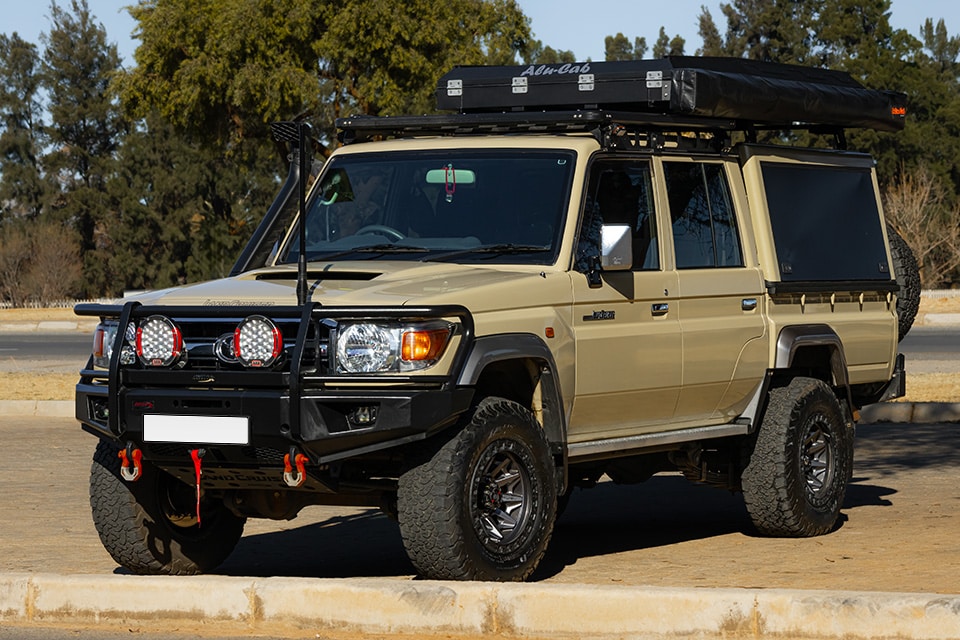
Roof-tent car hire for Uganda safaris
Uganda is one of East Africa’s most rewarding countries for independent road travel. Mountain forests, open savannahs, crater lakes, tropical rainforests, wetlands and remote valleys can all be combined within a single journey. For travelers who want more freedom than a conventional lodge safari provides, roof-tent car hire for Uganda safaris offers an exciting way to explore the country at a personal pace.
Instead of moving between hotels every night, you travel in a capable 4×4 equipped with a rooftop tent and camping equipment. Your vehicle becomes transport, wildlife-viewing platform, luggage carrier and mobile bedroom at the same time.
It is an especially attractive option for couples, photographers, overlanders, long-term travelers and adventurous families who want to experience Uganda beyond a fixed safari schedule.
A typical journey might begin in Entebbe, continue north to Murchison Falls National Park, turn south through Kibale Forest and Queen Elizabeth National Park, reach the mountain gorillas of Bwindi Impenetrable National Park and then finish beside Lake Bunyonyi before returning to Kampala or Entebbe.
With more time, travelers can venture north toward Kidepo Valley National Park or combine Uganda with Rwanda and other East African destinations.
However, hiring a vehicle with a rooftop tent is not simply a cheaper alternative to booking safari lodges. It is a different style of travel.
You need to understand your vehicle, road conditions, fuel stops, campsite locations, food supplies, national park regulations and driving distances. Good preparation makes the difference between an exhausting road trip and one of the most memorable adventures in Africa.
This complete guide explains everything you should consider when planning roof-tent car hire for Uganda safaris, from choosing your vehicle to designing your itinerary.
What Is Roof-Tent Car Hire for Uganda Safaris?
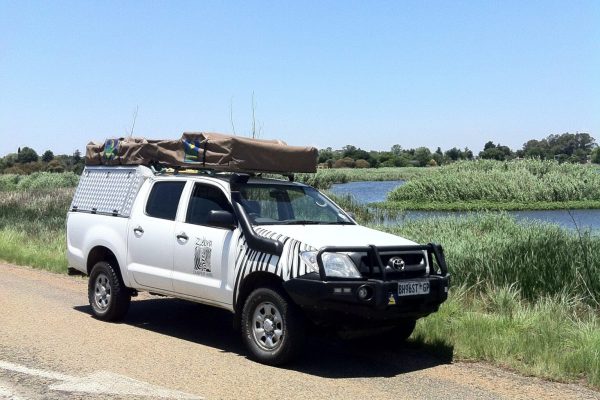
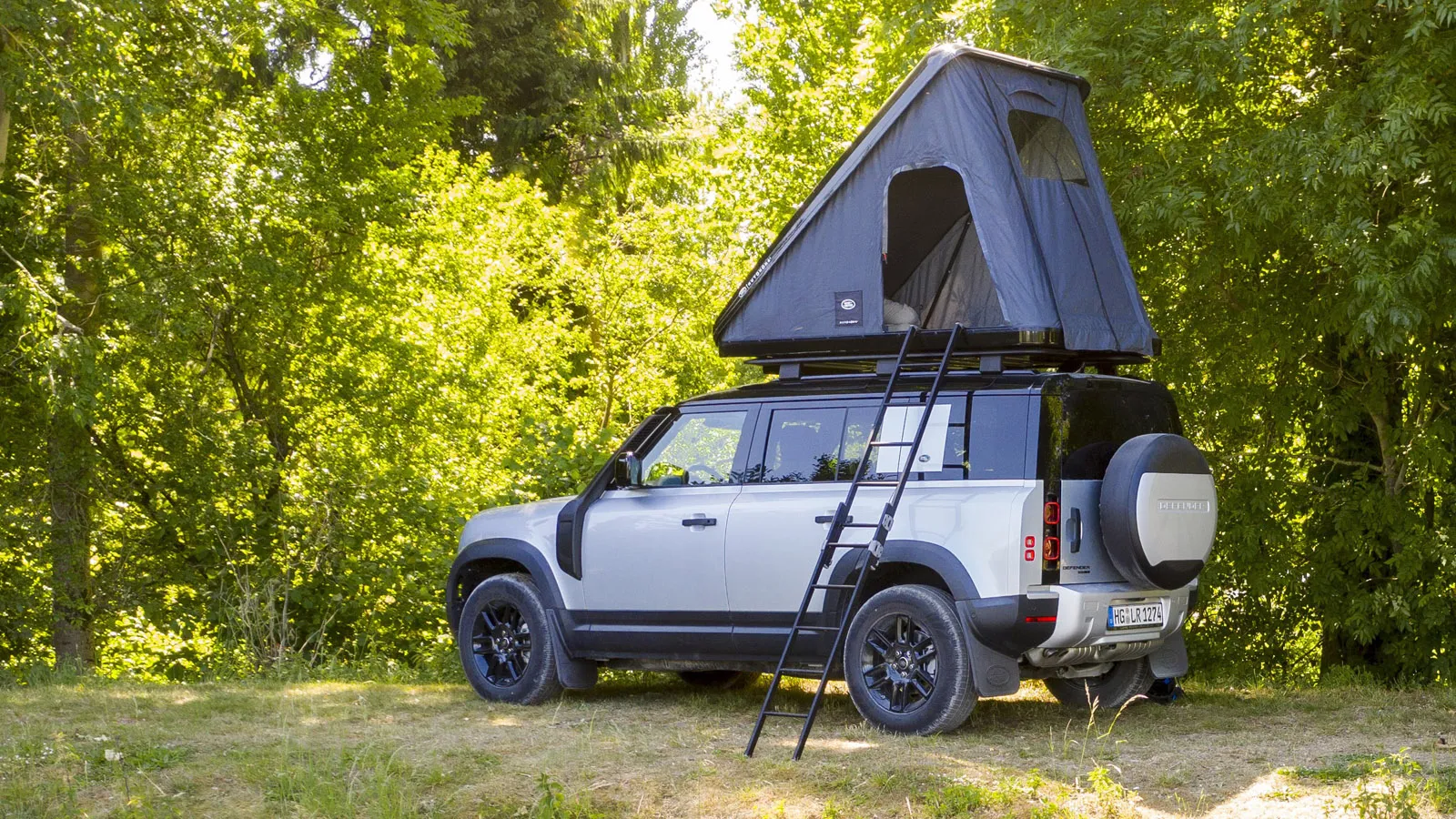
Roof-tent car hire combines a four-wheel-drive safari vehicle with a folding tent permanently secured to a strong roof rack.
When you arrive at your campsite, you park the vehicle on level ground, unfold the tent, extend its ladder and prepare your sleeping area. Most rooftop tents contain a mattress, which means you do not have to assemble a traditional tent on the ground every evening.
The concept is popular throughout Africa because it works particularly well for long-distance road trips.
Uganda is suited to this travel style because its major safari destinations can be connected by road. Travelers can move through completely different environments without flying between parks.
One week can include savannah wildlife. The following days may take you into rainforest, highlands and gorilla country.
Your accommodation moves with you.
This gives independent travelers considerable flexibility while still allowing them to stay at established campsites with facilities such as toilets, showers, restaurants or cooking areas.
A rooftop-tent safari should nevertheless be carefully planned. Camping inside or around wildlife areas is very different from stopping anywhere you find an empty piece of land.
Use recognized campsites and follow the instructions of park authorities, campsite staff and your rental company.
Why Choose a Rooftop Tent Safari in Uganda?
The biggest attraction is independence.
On a traditional safari, accommodation determines much of your itinerary. You generally need to reach a particular lodge by evening, eat at scheduled times and leave according to a prearranged program.
A rooftop-tent road trip gives you more control.
You can stop for scenery, spend longer photographing wildlife, visit a roadside market, enjoy lunch overlooking a crater lake or change the pace of your journey when circumstances allow.
That freedom should not be confused with having no itinerary at all.
Uganda is large enough that a badly designed route can result in long days behind the wheel. A successful self-drive itinerary gives you flexibility inside a sensible geographical framework.
Another benefit is immersion.
Camping places you much closer to the sounds and atmosphere of the landscape. Evenings become part of the safari rather than simply the period between game drives.
You may hear birds settling into the trees, insects becoming active after sunset or distant wildlife from the safety of an established campsite.
There is also the economic advantage.
Safari lodges can represent a considerable percentage of the total price of an African holiday. Camping may reduce accommodation expenditure, particularly for trips lasting two or three weeks.
But travelers should avoid assuming that a rooftop safari is automatically extremely cheap.
Vehicle rental, fuel, camping fees, park entrance charges, activities, food, insurance, permits and cross-border documentation can still create a significant overall budget.
The real advantage is that you decide where to spend your money.
You might camp for several nights, then book a comfortable lodge near Bwindi before gorilla trekking. You could camp inside a savannah park but choose a guesthouse after a long transfer day.
That mixed approach works exceptionally well in Uganda.
Roof-Tent Car Hire for Uganda Safaris Versus a Normal Rental Car
A standard rental car may be perfectly adequate for driving around Kampala, Entebbe and other urban areas.
Safari travel is different.
National park tracks can become rough, muddy, rocky or deeply rutted. Roads leading toward remote attractions may change considerably depending on the season and recent weather.
For that reason, travelers planning an extensive Uganda road trip generally benefit from a genuine 4×4 with suitable ground clearance.
Adding a rooftop tent creates additional requirements.
The roof rack must safely support the tent. The suspension should be appropriate for the combined load of passengers, luggage, fuel and equipment. The vehicle must also have enough storage capacity to prevent camping equipment from filling the passenger cabin.
A rooftop camping vehicle therefore needs to be selected as a complete expedition setup rather than simply a car with a tent added to its roof.
Before accepting your rental, inspect the vehicle carefully.
Ask the representative to demonstrate how to open and close the tent. Do it yourself while the representative watches.
Learn where the jack is located.
Check the spare wheel.
Understand the four-wheel-drive system.
Ask how to change from normal road driving to four-wheel drive if the particular model requires manual engagement.
Know what warning lights mean.
Find the emergency contact information.
A 15-minute vehicle briefing before departure can save hours of frustration later.
Choosing the Best 4×4 for a Uganda Rooftop-Tent Safari
The best vehicle depends on your group size, itinerary, comfort expectations and season.
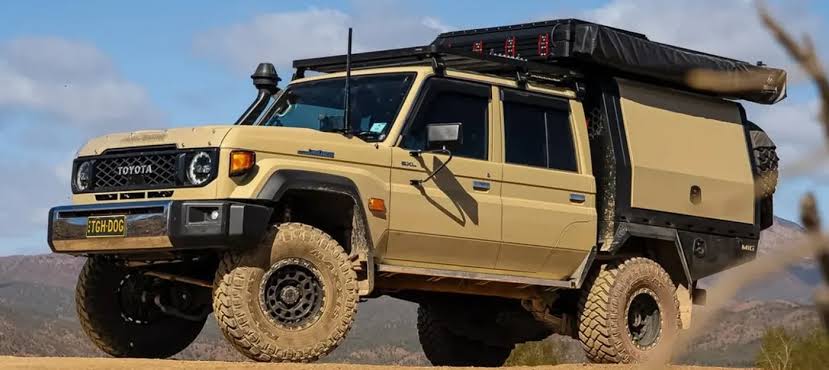
Toyota Land Cruiser models are widely associated with safari travel because they offer useful ground clearance, robust construction and enough space for equipment.
Different Land Cruiser configurations provide different experiences.
A couple traveling for ten days may be comfortable in a Prado-type vehicle fitted with one rooftop tent.
A group carrying two rooftop tents, several bags and substantial camping equipment may need a larger vehicle with better payload capacity.
Older expedition-oriented Land Cruisers can feel more rugged but may offer excellent off-road capability and storage.
Newer models may offer greater interior comfort, improved air conditioning and a smoother experience on paved roads.
The most expensive vehicle is not automatically the most suitable one.
Think about how you will actually travel.
A 16-day route involving Kidepo, Murchison Falls, Queen Elizabeth, Bwindi and remote camping places different demands on a vehicle from a seven-day journey between Entebbe, Lake Mburo, Bwindi and Lake Bunyonyi.
Your rental company should ask about your itinerary before recommending the car.
If they do not, you should.
Toyota Land Cruiser With Rooftop Tent
For many travelers, a Land Cruiser provides the ideal balance between capability and comfort.
The vehicle is particularly suitable when your itinerary includes national parks, mountain regions or long stretches of unpaved road.
It also offers sufficient roof strength for properly installed camping systems.
Fuel consumption may be higher than a smaller SUV, so this should be included in your budget.
The advantage becomes more apparent when road conditions deteriorate.
Good ground clearance, strong tyres and genuine four-wheel-drive capability can matter far more than a small saving in fuel when you encounter mud or badly damaged tracks.
For travelers considering roof-tent car hire for Uganda safaris, reliability should be the first priority.
A cheap rental that loses a day because of mechanical trouble is rarely cheap by the end of the holiday.
Can You Use a Toyota RAV4 for Rooftop Camping in Uganda?
Some Uganda self-drive operators offer Toyota RAV4s for ordinary self-drive trips.
They can work well on many established routes in reasonable conditions.
However, a smaller SUV should not automatically be treated as equivalent to a larger expedition vehicle.
The suitability depends on the vehicle model, roof-load limits, rental company’s installation, road conditions and planned route.
For a lodge-based itinerary using major roads and accessible destinations, a smaller 4×4 may be sufficient.
For a heavily loaded camping trip involving remote park tracks, a Land Cruiser or similarly capable vehicle may provide greater confidence.
Ask specifically whether the vehicle is approved for the rooftop-tent system being supplied.
Single Rooftop Tent or Double Rooftop Tent?
A single rooftop tent generally suits one or two travelers.
Couples often find this arrangement simple and efficient because they can keep the vehicle relatively compact.
Families or groups may use a vehicle supporting two rooftop tents, although weight and storage become increasingly important.
Having sleeping capacity for four people does not automatically mean four people will travel comfortably in the same vehicle for two weeks.
Remember that everyone also has luggage.
Then add sleeping bags, chairs, cooking equipment, drinking water, food, perhaps a fridge and personal photography equipment.
Ask your rental operator to show you actual photographs of the exact vehicle configuration for your group size.
This gives you a much better understanding than simply reading that the vehicle “sleeps four.”
What Should Be Included With Roof-Tent Car Hire?
Rental packages vary significantly.
Never assume that “fully equipped” means the same thing to every operator.
At a minimum, determine whether your package includes the rooftop tent, mattress, bedding, chairs, table, cooking stove, gas, cooking utensils, plates, cups, cutlery, water container, cooler or fridge and basic recovery equipment.
Check whether sleeping bags are included or rented separately.
Ask whether towels are provided.
Confirm whether the fridge is powered continuously or only when the engine is running.
Find out whether the car has one or two batteries.
Ask whether an electrical adapter is provided.
Confirm the number of camping chairs rather than assuming it matches the passenger count.
Look inside the kitchen box.
A photograph of “camping equipment” may look impressive until you discover that essential items are missing.
A professional operator should be able to provide a clear inventory before your arrival.
Camping Fridge or Cooler Box?
A proper camping fridge is one of the most useful accessories on a long Uganda road trip.
It allows you to carry fresh food, cold water and basic ingredients between towns.
This becomes particularly useful when camping inside or near national parks where shops may be limited.
A cooler box costs less and does not require electricity, but ice can be difficult to obtain consistently during a long journey.
For a short trip, a cooler may be enough.
For two weeks or longer, an electric fridge can make camping considerably more comfortable.
Ask how the refrigerator is powered.
A dual-battery setup is particularly useful because camping equipment can run from an auxiliary battery without leaving you worried about starting the vehicle the following morning.
Essential Recovery Equipment
Uganda is not an extreme off-road expedition destination for every traveler, but a safari vehicle should still carry sensible recovery and safety equipment.
A usable spare tyre is fundamental.
Two spares can be worthwhile on remote routes.
The jack must be appropriate for the vehicle.
You should know how it works before leaving.
Basic equipment may also include a wheel spanner, tow rope, tyre-pressure gauge, warning triangle and first-aid kit.
More expedition-oriented vehicles may carry traction boards or additional recovery tools.
Equipment is valuable only if you understand how to use it safely.
If you become badly stuck, particularly in a national park or isolated area, contacting your rental provider or park personnel can be safer than attempting aggressive recovery techniques without experience.
Roof-Tent Camping and Wildlife Safety
Sleeping above the ground can feel reassuring, but a rooftop tent is not a protective wildlife enclosure.
Safari camps exist inside ecosystems used by wild animals.
Your safety therefore depends on correct behavior.
Use authorized campsites.
Follow campsite instructions.
Never leave food scraps around your vehicle.
Do not deliberately approach animals.
Avoid walking around after dark where campsites advise against it.
Use a torch when movement is permitted.
Keep children close to you.
Never feed wildlife.
Do not store strongly scented food carelessly.
If a campsite has specific procedures for elephants, hippos, baboons or other animals, follow them.
The best wildlife encounter is one that takes place without forcing the animal to change its behavior.
Camping responsibly protects both visitors and wildlife.
Where Can You Camp During a Uganda Self-Drive Safari?
Uganda offers different styles of camping.
Some sites are located within or near national parks. Others operate alongside lodges, guesthouses, farms and independent campgrounds.
Facilities vary widely.
One campsite may have hot showers, a restaurant, electricity and Wi-Fi.
Another may provide little more than a designated sleeping area and basic washrooms.
That variety is part of the experience, but it makes advance research worthwhile.
During busy periods, reserve important campsites in advance, particularly in destinations with limited capacity.
Do not plan your journey around the idea that you can simply camp beside the road.
Apart from safety and land-ownership issues, that approach can conflict with conservation rules and community expectations.
A professionally planned Uganda camping safari uses recognized places to stay.
Murchison Falls National Park
Murchison Falls is one of the classic destinations for a Uganda road trip.
The park combines savannah wildlife, the Nile and one of the country’s most dramatic natural landmarks.
A rooftop safari allows you to spend several days exploring instead of racing through the park in a single morning.
Game drives are usually most productive around the cooler hours of early morning and late afternoon.
The Nile adds another dimension to the visit, with boat activities complementing time spent driving.
Allow sufficient time for entering, moving through and leaving the park.
Driving distances inside African national parks are deceptive.
A route that appears short on a map may take considerably longer because you are traveling slowly, watching wildlife or using rough tracks.
Do not design your day based entirely on kilometres.
Kidepo Valley National Park
For experienced road-trip travelers, Kidepo is one of Uganda’s most exciting destinations.
Its remote northeastern position means fewer travelers include it in short itineraries.
That isolation is also its attraction.
Wide landscapes, dramatic mountains and long overland approaches create a genuine sense of expedition.
Kidepo deserves time.
Trying to include it in a short Uganda holiday can result in too many driving days and too little safari time.
If Kidepo is important to you, consider designing the entire itinerary around it rather than treating it as an extra stop.
A capable 4×4 becomes particularly valuable on routes where road conditions can vary with rainfall.
Fuel planning is also more important in remote regions.
Do not allow the tank to become nearly empty before starting to search for fuel.
Queen Elizabeth National Park
Queen Elizabeth National Park fits naturally into the classic western Uganda safari circuit.
It combines open landscapes, wetlands, crater areas and wildlife-viewing opportunities while lying conveniently between Kibale and the gorilla regions of southwestern Uganda.
For self-drive travelers, it is an excellent place to slow the itinerary down.
Rather than arriving late in the evening, doing one game drive and leaving immediately, consider staying two or more nights.
This gives you time for early wildlife viewing, rest during the hotter middle of the day and another activity later.
Roof-tent travel works particularly well when the objective is not simply to collect destinations but to spend meaningful time inside them.
Ishasha and Southern Queen Elizabeth
The southern Ishasha region is widely associated with its tree-climbing lions.
Wildlife sightings can never be guaranteed, which is precisely why spending time in an area matters.
Ishasha also works geographically as part of a route continuing toward Bwindi.
Instead of treating the drive between Queen Elizabeth and Bwindi as transportation only, the southern sector can become an important safari experience in its own right.
Road conditions should always be checked locally because seasonal weather can affect routes.
Lake Mburo National Park
Lake Mburo is an excellent first or final safari stop for travelers moving between Entebbe or Kampala and southwestern Uganda.
Its relatively convenient position makes it easier to incorporate into shorter journeys.
The park also offers a change of atmosphere from the larger wildlife destinations.
A night in or around Lake Mburo can break up the drive toward Bwindi and provide an introduction to Uganda’s savannah landscapes.
For first-time self-drive visitors, beginning with a relatively accessible park can also help them become comfortable with the vehicle before moving deeper into the country.
Bwindi Impenetrable National Park
Bwindi is one of the destinations that makes Uganda exceptional.
Travelers come primarily for mountain gorilla trekking, but road-trip planning around Bwindi requires more detail than simply entering “Bwindi” into a navigation application.
Gorilla trekking operates from different sectors.
Where you stay should correspond with the sector linked to your permit.
A booking in the wrong part of Bwindi can create a difficult early-morning transfer on mountain roads.
This is particularly important for self-drive visitors.
Check your permit details before finalizing accommodation or camping.
The night before a gorilla trek is one occasion when many rooftop travelers choose to stay in a lodge, guesthouse or comfortable permanent camp.
A good night’s sleep, easy access to breakfast and a hot shower can be welcome before an active trekking day.
After trekking, you can return to rooftop camping.
A Uganda self-drive safari does not have to be all camping or all lodges.
Mgahinga Gorilla National Park
Mgahinga is another important primate destination in southwestern Uganda.
It sits within a striking volcanic landscape close to Rwanda and the Democratic Republic of Congo.
Travelers combining Uganda and Rwanda may find this region particularly interesting because of its geography.
As with Bwindi, activities involving gorillas or other primates should be planned around confirmed permits rather than assuming you can decide on arrival.
Permits are limited and can sell out during popular travel periods.
Book the permit first.
Build the road trip around it second.
That principle prevents many itinerary problems.
Kibale National Park
Kibale is famous for primates and is an important stop on the western Uganda circuit.
It pairs naturally with Queen Elizabeth National Park.
Travelers interested in chimpanzee tracking can include Kibale between Murchison Falls and Queen Elizabeth or as part of a more concentrated western itinerary.
The surrounding area is lush and offers a completely different landscape from Uganda’s open savannah parks.
Camping here gives a pleasant sense of changing environments as your journey moves from grasslands into forest country.
Again, confirm activity arrangements before arrival.
Highly requested primate experiences should not be treated as spontaneous additions.
Lake Bunyonyi
After several days of driving, trekking and wildlife watching, Lake Bunyonyi can provide an excellent pause.
The landscape is scenic, accommodation options are varied, and travelers can slow down before continuing to Rwanda or returning toward Entebbe.
It is particularly appealing after gorilla trekking.
A road trip should include recovery time.
Many itineraries fail because every day contains a major activity or long transfer.
One quieter day can improve the entire journey.
Jinja and the Source of the Nile
Jinja can be included at the beginning or end of a Uganda safari, depending on your interests.
The area is well known for activities connected with the Nile and offers a different style of travel from western Uganda’s national parks.
If your schedule allows, it can create a relaxed conclusion after a demanding multi-park road trip.
Travelers flying from Entebbe should still allow generous transfer time on the final day because traffic conditions can affect journey times.
Do not schedule an international flight based on the fastest driving estimate shown by an online map.
The Best Uganda Rooftop-Tent Safari Route
For first-time visitors with roughly two weeks, western Uganda offers one of the most logical circuits.
A journey could begin in Entebbe before continuing toward Murchison Falls National Park.
From Murchison, travel south through the Fort Portal region toward Kibale.
Continue to Queen Elizabeth National Park, explore both the main park and Ishasha where appropriate, and then drive toward Bwindi.
After gorilla trekking, relax around Lake Bunyonyi before continuing through Lake Mburo and returning to Entebbe.
This route creates variety without requiring you to cover every corner of the country.
The objective should be quality of experience rather than number of destinations.
Example 7-Day Uganda Self-Drive Route
Seven days is relatively short for a road trip, so discipline is important.
A practical journey can focus on southwestern Uganda.
Begin in Entebbe and drive toward Lake Mburo.
Continue the next day toward Bwindi or Mgahinga.
Spend sufficient time around the gorilla destination to complete your trek without worrying about arriving late the previous evening.
Then continue toward Queen Elizabeth National Park.
After wildlife activities, begin the return journey toward Entebbe.
Trying to add Murchison, Kibale, Bwindi, Queen Elizabeth and Lake Mburo to seven days may look exciting on paper but creates excessive driving.
A shorter trip becomes better when you remove destinations.
Example 10-Day Uganda Roof-Tent Safari
Ten days provides more breathing room.
You might travel from Entebbe to Murchison Falls, then continue toward Kibale.
From Kibale, move into Queen Elizabeth National Park.
Continue south toward Bwindi for gorilla trekking.
Finish with Lake Bunyonyi or Lake Mburo before returning to Entebbe.
This still requires good time management, but it provides a strong combination of savannah wildlife and primate experiences.
Camp on nights where the location suits camping and use simple lodges strategically when you want additional comfort.
Example 14-Day Uganda Camping Safari
Two weeks is an excellent duration for a first self-drive safari.
You can travel without making every transfer feel urgent.
Spend two or three nights around important parks.
Include a rest day.
Allow time for chimpanzees and gorillas.
Add Lake Bunyonyi.
Choose a scenic campsite simply because you enjoy it rather than because you need to leave immediately the following morning.
Travel becomes substantially more enjoyable when you have room for the unexpected.
Wildlife does not work according to your spreadsheet.
Neither does African weather.
A flexible 14-day plan can absorb both.
Example 21-Day Uganda Road Trip
Three weeks allows you to consider Kidepo.
A longer itinerary can move north from Entebbe or Kampala toward Murchison and then Kidepo, although the exact order should be designed around road conditions and your interests.
After the north, continue toward western Uganda for Kibale, Queen Elizabeth, Bwindi and Lake Bunyonyi.
Finish through Lake Mburo.
This type of expedition is where roof-tent car hire for Uganda safaris really becomes valuable.
The savings from camping accumulate over a longer period, while having your equipment permanently with you makes moving between remote areas more convenient.
How Much Does Roof-Tent Car Hire in Uganda Cost?
There is no single correct daily rate.
The price depends on the vehicle, age, transmission, camping configuration, rental duration, season, included equipment, insurance and whether you are driving within Uganda or crossing international borders.
Online Uganda rental listings show a broad range of prices rather than a universal standard.
For that reason, compare complete packages rather than headline daily rates.
One vehicle may appear cheaper but charge separately for the tent, fridge, bedding, airport delivery or cross-border paperwork.
Another may bundle those items into the daily rate.
Your real comparison should be the total rental cost for the entire trip.
Then add fuel.
Add campsite charges.
Add park fees.
Add activities.
Add food.
Add permits.
Add border costs if relevant.
Only then do you have a useful safari budget.
Is Rooftop Camping Cheaper Than Lodges?
Often, yes.
But the answer depends on your travel style.
A couple paying for a vehicle regardless of where they sleep may save significantly by replacing repeated lodge nights with camping.
The difference can become substantial on a 14- or 21-day safari.
Families can also benefit because accommodation for several people adds up quickly.
However, if you rent an expensive expedition vehicle for only a few nights, add full camping equipment and then use lodges anyway, the savings may disappear.
Think about the whole journey.
Camping is most economical when you genuinely want to camp.
It should not be selected purely because the word “budget” sounds attractive.
Hidden Costs to Ask About Before Booking
Rental contracts matter.
Ask about insurance excess.
Ask whether tyres are covered.
Ask whether windscreens are covered.
Check whether there is a mileage limit.
Confirm airport delivery and collection charges.
Ask about additional drivers.
Confirm whether camping gear is included.
Ask about cross-border authorization.
Check whether roadside assistance is available outside normal business hours.
Ask who pays for recovery if the vehicle becomes stuck because of driver error.
Understand the company’s rules about driving after dark.
Check whether there are restricted roads or regions.
Confirm fuel policy.
Ask whether cleaning charges can apply.
A low advertised daily rate becomes irrelevant if essential extras appear after you have committed to the booking.
Request a written quotation.
Fuel Costs on a Uganda Self-Drive Safari
Fuel can become a major budget category, particularly with larger Land Cruisers.
Your total depends on distance, engine type, load, road conditions and driving style.
Instead of trying to calculate the budget using only straight-line distances between parks, estimate the complete itinerary.
Remember that game drives also consume fuel.
Two nights in a park may involve significant additional driving beyond the transfer distance.
Maintain a sensible fuel reserve.
When moving toward remote areas, refuel in major towns rather than assuming the next small settlement will have the fuel type you need.
If your route is particularly isolated, discuss fuel availability with the rental company before departure.
Local knowledge is more useful than assumptions.
Park Fees and Activity Costs
Car hire does not normally include Uganda Wildlife Authority entrance charges and activity permits unless your operator explicitly creates an inclusive safari package.
National park pricing may involve separate visitor entrance and vehicle-related charges.
Some activities also have their own fees.
Gorilla trekking, chimpanzee tracking, boat trips, specialized wildlife experiences and selected guided activities should therefore be included separately in your budget.
Official tariffs can change.
Always confirm the applicable rates for your travel dates before paying the final safari balance.
This becomes especially important when a trip crosses from one tariff period into another.
Uganda Gorilla Trekking and a Roof-Tent Safari
Gorilla trekking is one of the easiest high-value experiences to combine with a self-drive trip when planned correctly.
The permit is the anchor.
Once the trekking location and date are confirmed, build your route around them.
Do not plan a long transfer into Bwindi on the morning of your trek.
Arrive the previous day.
Preferably arrive before dark.
Check your vehicle.
Prepare your trekking bag.
Eat properly.
Sleep early.
Then report for the official briefing according to the instructions associated with your trek.
After the experience, you can continue camping or spend another comfortable night near the forest.
Many travelers find the combination of rugged rooftop camping and one or two strategically chosen lodge nights gives them the best of both styles.
Uganda Chimpanzee Tracking and Self-Drive Travel
Chimpanzee experiences can be combined with a road trip through western Uganda.
Kibale is the best-known destination, while other locations may also offer primate activities.
As with gorillas, advance reservations are important.
Your rooftop tent provides accommodation flexibility, but it does not replace the need to secure limited activity spaces.
Plan your arrival so you are not rushing between destinations.
When an activity has a fixed briefing time, staying nearby the previous night is usually the safest approach.
Driving in Uganda: What International Visitors Should Expect
Uganda drives on the left.
For travelers from countries that drive on the right, the first day requires extra concentration.
Start gently.
Avoid collecting the vehicle after a long overnight flight and immediately attempting a difficult six-hour drive.
Spend the first night around Entebbe if necessary.
Become familiar with the mirrors, controls and vehicle dimensions.
Driving styles, motorcycles, pedestrians, livestock, speed humps and roadside activity can all require careful attention.
Urban traffic may feel busy.
Outside major towns, conditions change constantly.
Defensive driving is more important than speed.
The objective is not to prove that your 4×4 can travel quickly.
The objective is to arrive safely.
Why You Should Avoid Driving at Night
Night driving adds unnecessary difficulty to many Uganda self-drive itineraries.
Visibility decreases.
Pedestrians and bicycles become more difficult to see.
Animals may enter the road.
Potholes are harder to identify.
Finding a campsite after dark can also be frustrating.
Plan each travel day so that you reach your destination during daylight.
This gives you time to check in, understand campsite rules, prepare dinner and open the tent without rushing.
If delays make daylight arrival impossible, speak with your accommodation or rental support contact rather than simply pushing ahead.
Uganda Road Conditions
There is no useful single description of “Uganda roads.”
Some major highways are paved and straightforward.
Others may have construction, broken surfaces or heavy traffic.
Park tracks can be dusty in dry weather and difficult in rain.
Mountain roads around southwestern Uganda can involve steep gradients and slower driving.
Conditions also change.
A road described as excellent in a travel report six months ago may be completely different after heavy rain or construction.
Before long transfers, ask people who have recent local information.
Your rental company, campsite staff, guides and accommodation providers can all provide useful updates.
Using Google Maps on a Uganda Safari
Digital navigation is extremely useful, but it should not replace judgment.
A mapping application may identify a road without understanding whether that road is currently suitable for your vehicle.
It may suggest shortcuts that save theoretical kilometres but create much slower real-world journeys.
Within national parks, follow official routes and local instructions.
Download offline maps before traveling into areas with limited connectivity.
Carry a charging cable.
A power bank is useful.
Most importantly, know your destination before you leave.
Do not wait until you lose mobile service to decide where you are going.
Driving in the Rainy Season
Rain changes a self-drive safari.
It can transform dry tracks into slippery mud and make steep sections more challenging.
The scenery, however, can be wonderfully green and birdlife excellent.
Traveling in wetter months is not necessarily a problem if you use the correct vehicle and allow additional time.
Avoid rushing through water or mud simply because another vehicle did.
Assess the situation.
If you are unsure, seek advice.
The 4×4 system helps provide traction but does not cancel the laws of physics.
Large safari vehicles are heavy.
Mud, slopes and braking distances still matter.
Dry-Season Self-Drive Safaris
Drier months generally make camping and driving simpler.
Tracks are less likely to become muddy, and setting up camp is more pleasant when rain is not falling.
Dry conditions can also produce considerable dust.
Keep luggage protected.
Close the rooftop tent carefully every morning.
Clean camera equipment appropriately.
Drink sufficient water.
Temperature varies significantly between Uganda’s regions and elevations, so do not assume every campsite will be hot simply because you are near the equator.
Highland nights can feel cool.
Setting Up a Rooftop Tent
Practice before your first real campsite.
The basic procedure is normally straightforward.
Park on reasonably level ground.
Avoid positioning directly beneath unstable branches.
Check the surrounding area.
Apply the parking brake.
Follow the rental company’s specific opening procedure.
Release the tent cover.
Unfold the sleeping platform.
Secure the ladder correctly.
Arrange windows and ventilation.
The precise process differs between tent models, so instructions from the equipment owner should take priority.
When leaving in the morning, check that no bedding is preventing the tent from closing properly.
Make sure every strap and latch is secure before driving.
Never move the vehicle with the tent partially open.
How Comfortable Is Sleeping in a Rooftop Tent?
Modern rooftop tents can be surprisingly comfortable.
A built-in mattress eliminates one of the biggest inconveniences of traditional camping.
You also sleep above uneven ground.
Ventilation can be excellent.
The elevated position may provide pleasant views from certain campsites.
There are still compromises.
You climb a ladder each time you enter or leave.
Getting out during the night is less convenient than stepping out of a lodge room.
Packing the tent in heavy rain takes patience.
Privacy is limited compared with hotel accommodation.
Tall travelers should confirm mattress dimensions before booking.
For many adventurous travelers, those compromises are small compared with the enjoyment of sleeping close to nature.
Roof Tent Versus Ground Tent
Ground tents are cheaper and can be disconnected from the vehicle.
Once camp is established, you can drive away without packing your sleeping area.
That is useful when staying several nights at the same location.
A rooftop tent is faster to deploy, keeps your sleeping surface away from wet ground and requires less campsite floor space.
The downside is that you normally need to close it whenever you want to drive somewhere.
If you camp inside a national park and plan an early game drive, you must pack your rooftop tent before departure.
Neither system is universally better.
The correct choice depends on your travel style.
Rooftop Tent Versus Safari Lodges
This is not simply a comparison between cheap and expensive accommodation.
It is a comparison between experiences.
A lodge gives you a private room, bathroom, staff, meals and somewhere to return after activities.
Camping requires more personal effort.
You organize equipment.
You may cook.
You set up your sleeping space.
You deal with changing weather more directly.
In exchange, you gain independence and a stronger sense of participation in the journey.
Many travelers find a combination ideal.
Camp inside national parks.
Use a guesthouse during long transit nights.
Book a comfortable lodge around the gorilla trek.
Return to camping afterward.
There is no requirement to choose only one style.
Cooking on a Uganda Camping Safari
Self-catering becomes easier with good organization.
Buy basic supplies before entering remote areas.
Major towns provide far more choice than small settlements around national parks.
Simple meals work best.
Breakfast does not need to become a culinary project when you want to begin a game drive at sunrise.
Keep lunch easy.
Save more elaborate cooking for evenings when you arrive early.
Fresh fruit, vegetables, bread, pasta, rice, eggs and locally available ingredients can all form part of the trip, depending on storage conditions and personal preferences.
Keep food sealed.
Clean your cooking area.
Never deliberately leave scraps for animals.
A campsite is not a wildlife feeding station.
Drinking Water
Carry sufficient drinking water at all times.
Do not rely on finding bottled water exactly when your supply runs out.
A water container supplied with the camping kit can be useful for washing and basic campsite use, but clarify whether water from a particular source is considered suitable for drinking.
When uncertain, use properly treated or sealed drinking water.
Hot weather, hiking and long driving days increase fluid requirements.
Gorilla and chimpanzee trekking can be physically demanding, making hydration especially important.
Packing for Roof-Tent Car Hire for Uganda Safaris
Packing light is one of the best gifts you can give yourself.
Soft travel bags are generally easier to store than large rigid suitcases.
Bring lightweight clothing suitable for warm days, but include warmer layers for highlands and cool mornings.
Rain protection matters even outside the main wettest periods.
Sturdy footwear is important for trekking.
Long trousers help for forest activities.
Gardening-style or protective gloves can be useful during gorilla trekking because vegetation can be dense.
Carry sun protection, insect repellent, personal medication and a small daypack.
Camera equipment should be protected against dust and rain.
The principle is simple: bring what you will use, not what you might theoretically need.
Every unnecessary bag must travel with you for the entire safari.
Photography From a Self-Drive Safari Vehicle
Independent travel is attractive to photographers because you control your time.
You can remain at a wildlife sighting rather than following a group schedule, subject to park rules.
However, photography should never interfere with safe driving.
Stop the vehicle in an appropriate place before using a camera.
Do not block tracks.
Do not approach wildlife excessively closely.
A long lens is more useful than driving into an animal’s personal space.
Keep batteries charged.
Dust can be a major challenge, so avoid unnecessary lens changes in exposed environments.
Back up photographs regularly if possible.
A two-week safari can produce thousands of images.
Internet and Mobile Connectivity
Mobile coverage is available across many parts of Uganda but should not be assumed everywhere.
Remote national parks and mountain areas may have limited or inconsistent service.
Download essential information in advance.
Keep offline copies of your booking confirmations.
Save campsite contact numbers.
Store a copy of your rental agreement.
Download relevant maps.
Tell someone your intended route when traveling into remote areas.
A self-drive journey becomes easier when you are prepared for temporary periods without connectivity instead of treating them as emergencies.
Electricity During a Camping Safari
Charging is easy at some campsites and limited at others.
Use driving time to recharge devices where the vehicle setup safely supports this.
A power bank provides useful backup.
Photographers carrying several batteries may benefit from a charging system compatible with the vehicle.
Ask the rental company what electrical outlets are provided.
Do not assume that a vehicle marketed as expedition-equipped automatically includes the adapters you need.
Is Uganda Safe for a Self-Drive Safari?
Thousands of visitors travel Uganda by road, but safe travel depends on preparation, current local conditions and responsible decisions.
Use reputable rental operators.
Follow official travel guidance applicable to your nationality.
Stay informed about regional conditions.
Avoid unnecessary night driving.
Do not display valuables carelessly.
Use recognized accommodation and campsites.
Keep emergency contacts.
Inform your operator before making major route changes into unfamiliar remote areas.
Most importantly, distinguish adventure from recklessness.
Being independent does not mean ignoring local advice.
The strongest self-drive travelers know when to ask for help.
What Happens if the Rental Vehicle Breaks Down?
Clarify this before signing the contract.
A professional Uganda car-rental company should explain its assistance procedure.
Ask who you call.
Ask whether support operates 24 hours.
Determine what happens if the car cannot be repaired locally.
Find out whether replacement vehicles are available.
Understand what costs the company covers and what costs become the renter’s responsibility.
Minor mechanical issues can happen even to well-maintained vehicles, particularly on long and rough journeys.
The quality of the support system can therefore matter as much as the age of the vehicle.
When comparing companies, do not ask only, “How much per day?”
Ask, “What happens if I have a problem 300 kilometres from Kampala?”
The answer tells you much more.
Insurance for a Uganda Rental Vehicle
Read the insurance conditions carefully.
Words such as “fully insured” can mean different things depending on the contract.
Find out the excess or deductible.
Check whether tyres, underbody, roof, windows and mirrors are included or excluded.
Ask whether damage caused on prohibited roads is covered.
Understand what happens if you drive after the hours allowed by the rental agreement.
Cross-border travel may also require additional insurance arrangements.
Never rely solely on verbal statements.
Get important conditions in writing.
International Driving Licence Requirements
Requirements can depend on your licence and rental conditions.
Before travel, confirm what documentation the rental company requires for your nationality.
Carry your original valid driving licence.
Where appropriate, arrange an International Driving Permit before leaving your home country.
Keep your passport and rental documentation accessible while traveling.
Do not wait until vehicle collection to discover that a document is missing.
Cross-Border Roof-Tent Car Hire From Uganda
Some travelers want to combine Uganda with Rwanda, Kenya or Tanzania.
This can create an outstanding East African road trip, but the rental company must authorize the vehicle to cross international borders.
Do not simply drive a rental vehicle to the frontier.
The owner may need to provide documentation.
Insurance must remain valid.
You may also face additional cross-border charges.
Immigration and vehicle requirements differ between countries and can change.
Discuss the complete itinerary with the rental operator before booking.
A company experienced in cross-border car hire can prepare documentation and explain the process.
Uganda and Rwanda Self-Drive Safari
Uganda and Rwanda combine naturally from a geographical perspective.
A traveler could explore southwestern Uganda, cross into Rwanda and continue toward Volcanoes National Park, Lake Kivu, Kigali or Akagera National Park.
Alternatively, begin in Rwanda and continue into Uganda.
This kind of trip works particularly well for travelers interested in primates.
Both countries offer extraordinary landscapes within comparatively manageable distances.
The vehicle paperwork must be arranged correctly before crossing.
Confirm where the car can be returned because one-way international rentals may involve repositioning fees.
Can You Take a Uganda Rental Car Into Kenya or Tanzania?
Some companies allow it.
Others restrict particular vehicles or destinations.
Do not assume that permission to drive in Uganda automatically gives permission to enter every neighboring country.
Long international trips also create questions about roadside assistance.
If the rental company is based in Kampala and the vehicle develops a problem deep inside Tanzania, what support will actually be provided?
Ask before booking.
Cross-border capability should mean more than receiving a letter at the frontier.
Family Roof-Tent Safaris in Uganda
Families can have wonderful camping adventures, but the vehicle configuration deserves careful attention.
Children need secure seating.
Everyone needs adequate sleeping space.
Luggage must be stored safely.
Parents should consider how comfortable children will be using a rooftop ladder repeatedly.
Campsite wildlife rules become even more important.
A family of four may technically fit into a dual-tent setup but still require a larger vehicle simply because of equipment.
Plan shorter driving days than you might as a couple.
Include swimming, relaxation or non-driving periods when appropriate.
A family safari becomes memorable because children enjoy it, not because the parents successfully completed the maximum possible number of kilometres.
Rooftop Tent Safari for Couples
Couples are ideally suited to this style of travel.
One rooftop tent keeps the vehicle relatively compact and allows generous luggage space.
Responsibilities can be divided naturally.
One person closes the tent while the other organizes breakfast.
One navigates while the other drives.
For honeymooners who enjoy adventure, combining camping with selected high-quality lodges can create an exceptional itinerary.
Spend several nights under canvas, then enjoy a comfortable lodge after gorilla trekking.
The contrast can make both experiences better.
Solo Self-Drive Safari in Uganda
Solo travel provides complete independence but demands more careful risk management.
You have no second driver.
Long distances become more tiring.
If you become stuck, you have fewer hands available.
Choose conservative daily distances.
Tell people where you are traveling.
Avoid unnecessary remote detours.
Keep your phone charged.
Use an established rental company with strong support.
For travelers uncertain about driving alone, another solution is a 4×4 camping safari with a professional driver-guide.
You can still use rooftop camping while gaining local expertise.
Self-Drive or Driver-Guide?
Self-drive gives you maximum independence.
A driver-guide removes much of the logistical workload.
Neither is automatically superior.
Experienced independent travelers may love navigating Uganda themselves.
First-time African safari visitors might prefer having someone who understands roads, wildlife, park procedures and local culture.
A guide can also help spot animals that inexperienced visitors may drive past.
If you want the camping experience but not the responsibility of driving, ask for a 4×4 with rooftop equipment and professional safari driver.
Adventure does not require doing everything alone.
Responsible Camping in Uganda
The landscapes you enjoy should remain intact after you leave.
Use designated areas.
Take rubbish with you or dispose of it properly.
Avoid unnecessary plastic.
Do not wash chemicals into waterways.
Do not collect plants or natural objects inside protected areas.
Respect local communities.
Ask before photographing people.
Buy locally where appropriate.
Use water responsibly.
Keep noise low.
A rooftop safari gives travelers unusual access to beautiful environments.
That access carries responsibility.
Cultural Respect During a Uganda Road Trip
One of the benefits of driving across Uganda is that the journey exposes you to much more than national parks.
You pass towns, villages, agricultural areas and markets.
These are communities, not safari scenery.
Drive carefully through populated places.
Respect speed limits.
Be patient around pedestrians and motorcycles.
Ask permission before photographing individuals.
Support local businesses.
Learn basic greetings if possible.
The quality of a road trip often comes from these small human interactions as much as from headline attractions.
Common Mistakes on Uganda Rooftop-Tent Safaris
The most frequent problem is trying to travel too far.
Uganda looks manageable on a map, but road speed varies dramatically.
A transfer that appears straightforward can take most of the day.
Another mistake is relying completely on navigation applications.
Then there is overpacking.
Too much equipment makes the vehicle uncomfortable and wastes time every morning.
Some travelers also choose the cheapest car without considering route demands.
Others forget to confirm activity permits before finalizing the itinerary.
Another common mistake is booking every night at a campsite simply because the trip is described as a camping holiday.
There is nothing wrong with using a lodge occasionally.
A hot shower and comfortable bed halfway through the trip can restore energy for the second half.
Finally, some visitors underestimate how tiring self-drive travel can be.
Driving, navigating, watching wildlife, setting up camp and cooking all require energy.
Include rest.
How Many Kilometres Should You Drive Per Day?
There is no universal maximum.
A 250-kilometre day on smooth paved roads can be easier than 100 kilometres through mountains or poor tracks.
Safari days also operate differently from ordinary road trips.
You may spend four hours covering only a small distance while looking for wildlife.
Think in hours rather than kilometres.
If an itinerary requires you to drive from dawn until sunset almost every day, it is too ambitious.
Long transfers are sometimes unavoidable.
The problem occurs when they become the structure of the entire holiday.
How Long Should You Stay in Each Park?
Two nights is a useful minimum for many major destinations.
Three can be even better.
Arriving one afternoon, staying two full days and leaving the following morning feels completely different from arriving at night and leaving after breakfast.
Gorilla areas should be arranged according to permit dates.
For large savannah parks, additional time increases your chances of experiencing different wildlife encounters.
Nature cannot be scheduled precisely.
Time is therefore one of the greatest luxuries on safari.
When Is the Best Time for Roof-Tent Car Hire in Uganda?
Uganda can be visited throughout the year.
Different seasons produce different advantages.
Drier periods often simplify road conditions and camping.
Wetter months can produce beautiful green landscapes and may appeal to travelers who do not mind occasional rain.
Availability and pricing can also vary.
Gorilla permits, popular campsites and vehicles may become harder to secure during busy travel periods.
The best time therefore depends on your priorities.
If easy driving and outdoor camping comfort matter most, target generally drier periods.
If fewer travelers and greener landscapes appeal to you, consider other months while preparing appropriately for rain.
Because weather patterns are not perfectly predictable, pack for changing conditions regardless of the season.
How Far in Advance Should You Book?
Book early when gorilla trekking is central to the safari.
The permit is often the least flexible part of the itinerary.
Once the permit date is confirmed, reserve the correct vehicle and key campsites.
During busy seasons, high-quality rooftop-equipped Land Cruisers can also become limited.
Travelers requiring automatic transmission should mention this immediately because fleet availability may be smaller than for manual vehicles.
Cross-border journeys require additional preparation, so they also benefit from earlier arrangements.
Automatic Versus Manual 4×4
Choose the transmission you can drive confidently.
A manual vehicle may provide a traditional expedition experience, but that advantage disappears if you are uncomfortable operating it on steep, muddy or congested roads.
Automatic Land Cruisers can make long journeys easier, particularly for travelers already adjusting to left-side driving.
Confirm the exact vehicle rather than assuming “Land Cruiser” tells you the transmission.
If an automatic is essential, have that requirement written into the booking.
Diesel Versus Petrol
Diesel engines are widely associated with expedition vehicles because of torque and fuel characteristics, while many Prado models use petrol.
Either can complete a successful Uganda safari when the vehicle is well maintained and matched to the route.
Availability of fuel and total consumption matter more than theoretical arguments about which engine is universally better.
Ask the rental company for realistic consumption figures for the exact vehicle.
Then build a fuel allowance into your budget.
What to Check When Collecting the Car
Vehicle handover deserves your full attention.
Do not rush because you are excited to leave.
Walk around the vehicle and record existing damage.
Check tyre condition.
Inspect the spare.
Test lights.
Test air conditioning.
Check indicators.
Try the locks.
Confirm the fuel level.
Open the rooftop tent.
Close it again.
Inspect the mattress.
Count chairs.
Check cooking equipment.
Start the fridge.
Locate the jack.
Find the wheel spanner.
Understand the 4×4 controls.
Save the emergency contact number.
Ask what fuel the vehicle uses.
Ask about tyre pressure.
Confirm where and when the car must be returned.
This process is far more valuable than discovering a missing item after reaching your first remote campsite.
Questions to Ask a Roof-Tent Car Hire Company
A strong rental company should be comfortable answering detailed questions.
Ask what exact vehicle you will receive.
Ask its approximate age and configuration.
Ask whether photos show the actual setup or merely an example.
Find out which camping equipment is included.
Request the insurance terms.
Ask about breakdown support.
Confirm the mileage policy.
Ask where the vehicle is permitted to travel.
Check cross-border requirements.
Confirm airport delivery.
Ask whether you need to clean camping equipment before return.
Confirm the deposit amount and refund procedure.
Find out what happens if your flight is delayed.
Ask whether the company can arrange gorilla or chimpanzee permits.
Finally, send them your planned route.
An experienced local operator may immediately identify a driving day that looks unrealistic.
That advice can be worth more than a small discount.
Why Cheap Roof-Tent Car Hire Is Not Always the Best Deal
Price matters, but safari vehicle rental is an unusual purchase.
You are not simply renting transportation between a hotel and an airport.
The vehicle becomes part of your accommodation, kitchen, storage and safety system.
A difference of a few dollars per day becomes less important if one company provides better tyres, reliable roadside support, quality camping equipment and a properly maintained tent.
Focus on value.
The cheapest quote and the best-value quote are not necessarily the same.
Ask enough questions to understand what you are purchasing.
Combining Camping With Luxury Safari Lodges
A roof tent does not mean abandoning comfort.
One of the smartest Uganda itineraries alternates travel styles.
Camp in Murchison Falls.
Use a pleasant forest lodge around Kibale.
Camp around Queen Elizabeth.
Book a comfortable property near Bwindi before gorilla trekking.
Return to camping at Lake Mburo.
This keeps the spirit of adventure while providing strategic moments of rest.
It can also make premium accommodation more affordable because you are booking only the nights where it adds the greatest value.
Roof-Tent Safari for Birdwatchers
Uganda is exceptionally attractive to bird enthusiasts because its varied ecosystems create remarkable diversity.
A self-drive vehicle gives birders flexibility to spend more time in productive habitats.
Early starts become easier when sleeping close to the area you want to explore.
However, specialist birding is one situation where hiring a local guide can add enormous value.
You can still drive independently between destinations and arrange knowledgeable guides in selected locations.
That hybrid approach combines freedom with expertise.
Rooftop Safari for Wildlife Photographers
Photographers benefit from controlling their schedule.
You can prioritize morning and evening light, wait patiently at sightings and carry camera equipment without moving bags through a different hotel every night.
Choose a vehicle with enough interior storage to protect equipment.
Avoid leaving expensive cameras visible when away from the car.
Bring dust protection.
Carry multiple batteries.
Think about how you will charge laptops or storage devices.
Photography creates additional electrical needs that ordinary camping packages may not anticipate.
Uganda Self-Drive Safari With Gorilla Trekking and Wildlife
For many international travelers, the ideal first Uganda journey combines three experiences: savannah wildlife, chimpanzees and mountain gorillas.
This is exactly where a self-drive roof-tent itinerary becomes powerful.
Instead of purchasing separate tours, you create one continuous road journey.
Begin with wildlife.
Move into the rainforest.
Continue toward the mountains.
The landscape changes gradually around you.
By the time you reach Bwindi, you have experienced Uganda as a country rather than simply flying between attractions.
That sense of progression is one of the strongest arguments for road travel.
Is Roof-Tent Car Hire Suitable for First-Time Africa Travelers?
Yes, provided you are comfortable driving independently and willing to prepare.
You do not need decades of overlanding experience.
But you should understand the difference between independence and improvisation.
Reserve essential permits.
Use a reliable vehicle.
Plan achievable driving days.
Carry water.
Know where you will sleep.
Follow park regulations.
Stay informed about road conditions.
With those basics in place, a first African road trip can be tremendously rewarding.
Travelers uncomfortable with mechanical issues, navigation or camping logistics may prefer adding a driver-guide.
There is no prize for choosing the more difficult option.
Choose the trip you will actually enjoy.
Why Local Safari Support Matters
A Uganda road trip becomes easier when someone on the ground understands your itinerary.
Local safari support can help with much more than vehicle rental.
An experienced operator may arrange gorilla permits, chimpanzee activities, campsites, selected lodge nights, cross-border paperwork and route planning.
This is especially useful when your itinerary combines independent driving with permit-based activities.
You retain freedom without having to solve every administrative detail alone.
Universal Ventures Rwanda can assist travelers designing customized journeys through Rwanda and Uganda, including wildlife safaris, gorilla trekking and cross-border itinerary planning.
Planning a Uganda and Rwanda Roof-Tent Adventure
Travelers arriving in Kigali can also build a journey that crosses into Uganda.
This is particularly attractive when your primary destinations are Bwindi, Mgahinga, Queen Elizabeth or Lake Bunyonyi.
Depending on your overall route, Kigali may provide a convenient gateway to southwestern Uganda.
A longer itinerary can then continue north toward Kibale and Murchison before ending in Entebbe.
Alternatively, arrive in Entebbe and finish in Kigali.
One-way arrangements require careful coordination with your rental company but can prevent unnecessary backtracking.
This is where customized route planning creates real value.
Sustainable Self-Drive Safari Planning
Responsible travel is also about itinerary design.
Driving enormous distances simply to tick off destinations consumes more fuel and often produces a worse experience.
Travel more slowly.
Stay longer.
Buy local products.
Use established campsites.
Respect protected areas.
Support conservation fees.
Choose activities that are operated responsibly.
The best road trip is not necessarily the one covering the greatest distance.
It is the one that gives you enough time to understand the places you visit.
Frequently Asked Questions About Roof-Tent Car Hire for Uganda Safaris
Is roof-tent car hire for Uganda safaris safe?
It can be a safe and enjoyable way to travel when you use a properly maintained vehicle, stay at recognized campsites, follow wildlife rules, avoid unnecessary night driving and keep informed about current local conditions. A rooftop tent does not replace responsible behavior around wild animals.
Do I need a 4×4 for a Uganda safari?
A genuine 4×4 is strongly recommended for itineraries involving national parks, remote destinations or seasonal rough roads. The need becomes more important when carrying rooftop camping equipment.
Can I rent a Land Cruiser with a rooftop tent in Uganda?
Yes. Land Cruiser rooftop-tent rentals are widely available from specialist Uganda self-drive companies. Configurations vary, so confirm whether the vehicle has one tent or two and exactly what camping equipment is included.
How much is rooftop-tent car rental in Uganda?
Rates vary by vehicle, season, rental duration and included equipment. Always request a full quotation rather than comparing only advertised starting prices. Fuel, park charges, campsites, activities and permits normally need separate budgeting.
Can I drive myself inside Uganda’s national parks?
Self-drive travel is possible in several major safari areas, subject to current park regulations, applicable fees and designated routes. Some specific activities or locations require guides. Always follow Uganda Wildlife Authority rules applicable at the time of travel.
Can I combine gorilla trekking with a self-drive safari?
Yes. Gorilla trekking works extremely well within a Uganda road trip. Secure your gorilla permit first and then design the itinerary so you stay near the correct trekking sector the night before.
Can I sleep anywhere in my rooftop tent?
No. Use recognized campsites and authorized camping areas. Do not assume an empty roadside or open area is available for camping.
Can I drive from Uganda into Rwanda with a rental vehicle?
Many rental companies permit cross-border travel when arranged in advance. The vehicle needs the correct authorization, documentation and insurance. Confirm everything before departure.
Is a rooftop tent comfortable for two people?
Most double rooftop tents are designed for two adults and include a mattress. Comfort depends on the tent model and personal expectations, so tall travelers should ask for mattress dimensions.
What happens when I want to go on an early game drive?
Because the tent is attached to the vehicle, you normally close it before driving away. With practice, packing it becomes part of your morning routine.
Do roof tents have bathrooms?
No. Bathroom facilities are provided by the campsite. Standards range from basic facilities to well-equipped campgrounds with hot showers and restaurants.
Can families use rooftop tents?
Yes. Larger vehicles can carry dual rooftop tents or additional camping arrangements. Check passenger seating, total roof capacity, sleeping dimensions and luggage space carefully before booking.
Is an automatic 4×4 available?
Automatic vehicles are available from some rental operators. If an automatic transmission is important to you, request it specifically when booking because availability may be limited.
Do I need to bring my own sleeping bag?
It depends on the rental company. Some camping packages include bedding, while others charge separately. Request a complete equipment inventory before travel.
Can I rent a rooftop-tent vehicle with a fridge?
Yes. Many camping-equipped vehicles offer a portable electric fridge or cooler. Check whether it is included in the price and how it is powered.
Should I book campsites before arriving?
Advance booking is sensible for important stops and busy travel periods. Some travelers keep selected nights flexible, but your overall route should still identify realistic places to stay.
How long should a Uganda self-drive safari be?
Around 10 to 14 days provides a good introduction to several western Uganda highlights. Seven days can work with a concentrated route, while three weeks gives enough time to add more remote destinations such as Kidepo.
Can I mix camping and lodge accommodation?
Absolutely. In fact, this is one of the best ways to travel. Camp where the experience is enjoyable and use lodges strategically around trekking activities, long driving days or rest periods.
Why Roof-Tent Car Hire for Uganda Safaris Is Worth Considering
Uganda rewards travelers who allow the journey to become part of the safari.
Driving from one ecosystem to another gives you a sense of the country that is difficult to experience through isolated excursions.
You see landscapes changing through the windscreen.
You stop in small towns.
You buy fruit along the route.
You cross the equator.
You wake near national parks.
You cook under the evening sky.
Then, perhaps the following morning, you walk into a rainforest and encounter mountain gorillas.
That combination of freedom and extraordinary wildlife is what makes roof-tent car hire for Uganda safaris so appealing.
It is not simply transportation.
It is a style of exploration.
The 4×4 becomes the link between every part of the journey.
Final Advice for Planning Your Uganda Rooftop-Tent Safari
Start with your priorities rather than your vehicle.
Decide which experiences you genuinely want.
If mountain gorillas are essential, secure that part first.
If Kidepo is your dream destination, give northern Uganda enough time.
If photography matters, reduce your number of stops.
If you are traveling with children, shorten the driving days.
Once the route is realistic, choose the 4×4 capable of completing it comfortably.
Then inspect exactly what the camping package includes.
Read the insurance.
Plan fuel stops.
Reserve essential campsites.
Download offline maps.
Keep some flexibility.
Most importantly, resist the temptation to turn your holiday into a race across the country.
A roof-tent safari is valuable precisely because it allows you to slow down.
Spend an extra morning in Queen Elizabeth.
Stay beside Lake Bunyonyi.
Watch the landscape change around Bwindi.
Drink coffee beside your vehicle before sunrise.
Those unhurried moments often become the memories travelers talk about long after the trip ends.
Whether you are planning a short southwestern Uganda adventure, a two-week primate and wildlife circuit or a major Uganda-Rwanda expedition, roof-tent car hire for Uganda safaris offers one of the most flexible ways to experience East Africa.
With the right 4×4, sensible route and good local support, your vehicle becomes much more than transportation.
It becomes your base for discovering the Pearl of Africa.
Plan Your Uganda and Rwanda Safari With Universal Ventures Rwanda
Universal Ventures Rwanda organizes customized Rwanda and Uganda journeys for travelers looking for wildlife, primates, culture and flexible overland adventures.
We can help you design a route connecting destinations such as Kigali, Volcanoes National Park, Bwindi Impenetrable National Park, Mgahinga Gorilla National Park, Queen Elizabeth National Park, Kibale National Park, Lake Bunyonyi and other highlights across Rwanda and Uganda.
Whether you want a self-drive adventure, private safari with a professional driver-guide, gorilla trekking experience or a customized combination of camping and lodge accommodation, your itinerary can be adapted around your dates, budget and preferred travel style.
Universal Ventures Rwanda
Kigali, Rwanda
Email: info@universalventuresrwanda.com
Website: www.universalventuresrwanda.com
Safari enquiries and customized Uganda-Rwanda itineraries: Contact Universal Ventures Rwanda directly through our website or email.

Related Posts